All Mixed Up: Mius Founder Shelley Tai on Being a Bartenders' Bartender

Asia's got a knack for knowing the best ways to unwind, and we're diving into that vibe with "All Mixed Up." You'll find us in cool bars, drink in hand, escaping the tropical heat and spicing up our nights. With this series, we're exploring Asia's hottest bar scenes, chatting with the wizards behind the concepts and drinks — mixologists, bartenders, brewers, and more. Whether you're a cocktail whiz or just curious about the craft, we're serving up the stories behind the faces that fuel our nights out. So grab a drink and relax as we uncover the secrets behind our favorite bars. Trust us, these stories are best served chilled!
Quitting was never an option for Shelley Tai.
Resilience was built into her the moment she left home at 16 and became completely independent by 18. By the time she was 20, Shelley started her bartending career — and never looked back.
"Being independent at a young age taught me to take responsibility for my own life. It shaped almost everything. There was no one else to rely on," Shelley shares. "So whenever I face challenges in my career — whether it was starting over as a barback, moving countries, or opening my own bar — I never really thought about quitting."
It's that determination that's led to her illustrious career over the last 16 years. Shelley was the first female Hong Kong bartender to join the global finals of the Diageo World Class cocktail competition when she won in the Hong Kong and Macau nationals.

This 2026, her peers crowned her the Altos Bartenders' Bartender of the Year at Asia's 50 Best Bars — the only recognition in the awarding body that's decided by fellow bartenders.
It's an award she's thoroughly earned. When Shelley first became a bartender, it was a part-time job to make ends meet. It didn't take long for her to decide this was something she could do full-time. So she worked for FINDS, then Drop, before joining Quinary — starting over as a barback and learning it all again from scratch.
She stayed with Quinary before moving to Singapore to work with the Nutmeg Collective. As Operations Director there, she helped manage Nutmeg & Clove, which placed at No. 50 in the World's 50 Best Bars 2025 (No. 36 in Asia's 50 Best Bars 2026).
After five years in Singapore, Shelley moved back to Hong Kong in 2025 and opened Mius in Gough Street.
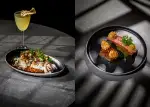
A neighborhood cocktail bar, it's grounded in a straightforward philosophy: "simple things, done right." One example would be their Highball, which blends frozen whisky and chilled Japanese soda. No ice. Crisp and clean — zero frills.


In this All Mixed Up exclusive, The Beat Asia catches up with Mius Founder Shelley Tai to talk about introversion as a strength, managing a bar versus being a bartender, and her Altos Bartenders' Bartender of the Year Award.
Congratulations on the Altos Bartenders' Bartender Award 2026. Does peer recognition land differently than a competition title?
Very much. This award comes from people whom I have met and respected for many years, and that makes it incredibly meaningful.
It also reminds me that I didn't get here alone. I have had so many mentors, colleagues, and friends who have shaped the bartender I am today, so I'm very grateful.

Is there a difference between serving a fellow bartender versus a regular guest?
For us, the service is exactly the same. Every guest deserves the same level of hospitality, regardless of whether they are in the industry or not.
I think the difference is what people are looking for when they come to a bar. Bartenders might be more curious about the techniques, ingredients, or philosophy behind a drink because it's something they're passionate about. Other guests are often simply looking for a great drink and a good time. We try our best to make everyone feel welcome and leave with a good experience.
Is there a particular kind of pressure or joy in making a drink for someone who knows mixology?
It's actually a common situation for us. We have bartenders and cocktail lovers visiting bars all the time, just as we visit theirs. It's part of the industry and part of how we learn from one another.

You've told the story of how an experience in a Japanese bar in Causeway Bay changed your view on cocktails. What contributed to that shift?
It wasn't just the drink. Until then, I still thought bartending was mainly about speed and entertainment. That "Last Word" showed that bartending had so many more possibilities than I had imagined. It could be more creative, thoughtful, and intentional.
Walking away from the nightclub scene, was it about being pulled towards mixology? Or being pushed away from the burnout?
Probably both. I knew I couldn't stay in the nightclub scene forever, even though it was really fun at that time. I was looking for something more sustainable and meaningful in the long run.

When you joined Quinary in 2016, you'd already been bartending for six years, and started again as a barback. What did it take to start over again? And would you make the same choice today?
To be honest, I didn't see it as taking a step backwards. I already had experience behind the bar, but I knew there was still so much I didn't know. Starting as a barback gave me the chance to observe, practice, and develop good habits without skipping any steps.
Looking back, I would happily make the same choice.
You mentioned that newcomers now can "learn things faster." Is there something from those long apprenticeship days that you'd still want to preserve and pass on?
I think times have changed and that's a good thing. Today, technique and knowledge are much more accessible, so bartenders can progress much faster than we did. But there are still many things that require experience and time.
You can't rush judgement, consistency, attention to detail, or genuine hospitality. Those are things you develop by repeating the same standards every single day and learning from real situations behind the bar.
Could you share one of the biggest highlights of the long apprenticeship you've experienced in the past?
Honestly, there wasn't much of a highlight! It was a very repetitive job. I guess sometimes the most boring part of the journey is what prepares you for everything that comes after.

When did you realize that introversion is an asset, an edge?
I don't think there was a choice for me.
So instead of trying to change who I was, I just focused on what I naturally enjoyed and did well. I listened more, observed more, and tried to build genuine connections with my guests in my own way. Somehow, it just worked.
How would you recommend introverted bartenders harness their introversion as a strength?
My advice is not to think that being introverted means giving up on opportunities. It just means finding your own way to take them.
Everyone has different strengths. They can all be important qualities in hospitality. Focus on what you naturally do well and develop your own style instead of trying to copy someone else's personality.
In an industry that often rewards loud personalities, has being soft-spoken ever cost you?
Not really. I have never been someone who seeks the spotlight. I prefer to focus on doing my job well and let my work speak for itself. I think this industry has room for different personalities, and being quiet doesn't mean you have less to offer.

Singapore taught you how to manage a team and build a culture. What was the hardest part of becoming a leader?
The hardest part was that I wasn't equipped with the skills to become a leader.
I was bartender-trained, not leader-trained. Everything from communication and coaching to building a culture was something I had to learn through experience. It was almost like starting from the beginning.
What are the biggest differences between being a bartender and a leader?
I think a bartender mainly focuses on becoming better themselves. A leader is very different. Your job is to bring the team together, help everyone grow, and make sure everyone is moving towards the same vision.
As a bartender, success is about how well you perform. As a leader, success is seeing the people around you succeed.
What made you decide to open your own bar, Mius?
I wanted to create a place that brought together everything I had learnt throughout my career and reflected who I had become as a person. Every place I worked taught me something different. Mius gave me the opportunity to put all those experiences into one space and create something that truly felt like my own.
In many ways, Mius is a reflection of my journey and my values.

Mius runs on restraint. As something that is arguably harder to execute and easier to overlook, how do you make sure guests can understand the care and intent behind a "simple" drink?
I don't think simple means it's not enough.
We actually don't try to overexplain what we do or emphasize how much work goes into every drink. For me, hospitality is about creating a feeling. If a guest enjoys the drink, feels comfortable, and wants to come back, then we've done our job. They don't need to understand every technique behind it.
Where does this pull toward simplicity come from in you personally?
Earlier in my career, I wanted to show people what I could do.
Today, I care more about how people feel than how impressed they are. That's why simplicity is so attractive to me. It removes distractions and lets the important things speak for themselves.

Why is your iceless highball the drink that represents your homecoming?
It's the drink I enjoy most after work, so it felt natural to introduce it at Mius. Everyone is familiar with a highball served over ice. Our iceless highball is simply another possibility.
I think that's what I enjoy the most about bartending; there's always room to look at something familiar from a different perspective.
Do you believe that what a person orders tells you who they are?
Maybe a little. But I don't think it tells you everything. Sometimes it reflects a person's mood more than their personality. I think what's more interesting is the conversation behind the order.
Which bar right now makes you feel like a guest again, the way that "Last Word" drink in Causeway Bay once did?
I don't think it's one particular bar anymore. These days, it's more about the people and the hospitality than the cocktails themselves.
What's next for you and for Mius?
I hope Mius continues to grow naturally and become a place people keep coming back to for many years.
Personally, I want to keep learning and building. Not just better bars, but better teams and better experiences for our guests.

This interview has been edited for length and clarity.
To learn more about Shelley Tai, follow her on Instagram. Visit Mius Hong Kong's website and follow them on Instagram for more updates.
Enjoyed this article? Check out our previous All Mixed Up articles here.
Get the latest curated content with The Beat Asia's newsletters. Sign up now for a weekly dose of the best stories, events, and deals delivered straight to your inbox. Don't miss out! Click here to subscribe.