

With food now more accessible and visible than ever, thanks to social media, travel, and digital content, diners today are more involved, adventurous, and discerning. People know what’s out there, and so they expect more: bolder flavors, better ingredients, and more meaningful dining experiences. As expectations continue to rise, the pressure is on for chefs and restaurateurs to stay ahead of the curve.
A business of chefs for chefs, Unilever Food Solutions (UFS) presents The Future Menus, a report that distinguishes the ongoing trends in the global food scene. Curated from 300 million searches and shaped by insights from more than 1,000 chefs across 20 countries, The Future Menus is more than just a report but a global roadmap that blends authenticity, innovation, and practicality to help people in the industry turn these food trends into real business growth.
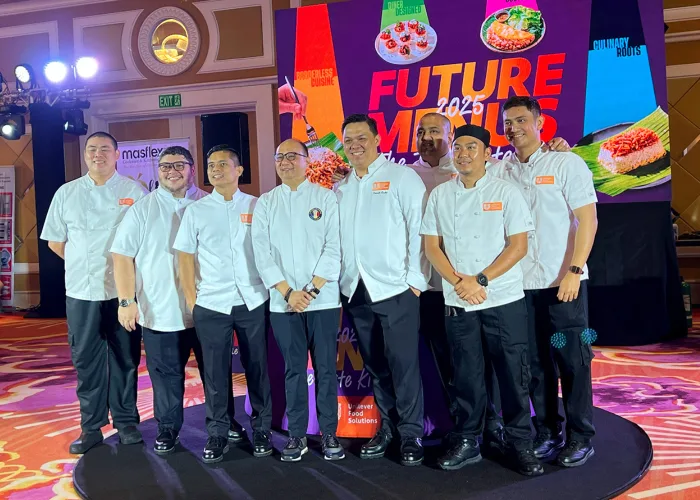
Now in its third year, The Future Menus 2025 gathered chefs, food professionals, and curious foodies at the Golden Ballroom at Okada Manila last July 15 to talk about the trends shaping both the global and local dining scene. But what made this event memorable was that, more than discussing these data-driven results, we also got to taste these trends as they were brought to life through beautifully crafted and forward-thinking dishes by UFS’ executive cooks.
From inspiring discussions with kitchen masters to fascinating cooking demos, “The Future Menus 2025: The Taste Kitchen” gave us a delicious glimpse into what the future of food could look like, and we’re here to tell you all about it.
Exploring the Trends Shaping the Food Scene
This event is all about the future of food and what diners look for in their experiences. But while it’s important to look outward and see what’s next, Chef Kenneth Cacho, Country Executive Chef at UFS, reminds us that it’s equally important to look inward — to know who we are, where we come from, and the flavors that define us.
Before these digital insights and trends, we had something else. We had a story, a memory — one that evolved into traditions, and even flavors that were passed down from generation to generation.
“It’s very important first to know where our food comes from — meaning you have to understand what the heritage dishes are. Even the traditional dishes, because innovation, for us, is creating a better version of that heritage or traditional dish,” Chef Kenneth told The Beat Asia. “When we innovate, we innovate with taste and presentation. That’s where we come in. We help bring up the level of quality. So it’s very important that we have to know, for example, what sisig (traditional pork dish) really is before we can innovate and create our own. It’s really about understanding our history so that when you create an innovative dish that comes from somewhere, you can tell a story. It’s not just about making a dish and hoping it works.”
The executive chef also discussed the four pillars of Filipino gastronomy, enumerating what makes Heritage, Traditional, Innovative, and Progressive food different from one another. He also used the Filipino dish sisig as an example, and gave us a bit of a background on how it evolved from a vegetable dish dressed in vinegar — fun fact: “sisigan” actually means “to sour” — into the pork sizzling plate we know today.
UFS Marketing Manager Sheal Ang also briefly walked us through the four trends currently shaping the culinary world, namely: Street Food Couture, Diner Design, Culinary Roots, and Borderless Cuisine.
The first of the four focuses on elevating the essence of Street Food by incorporating premium ingredients and refined techniques, while still maintaining that informal charm and casual experience. UFS Executive Sous Chef Carlos “Pipo” Aluning gave us a cooking demo of his inspired take on the fan-favorite fried chicken wings, which he stuffed with seasoned minced meat and served with a delicious Mexican-inspired corn salad.
“It’s like street food for us. Every kanto (street corner) has one. What I did to elevate it is stuff the chicken wings with meat, then deep-fry them. The inspiration is the Japanese Karaage,” he explained. “Then we have the barbecue glaze, and I paired it with some Elote — it’s like a corn salad, and some Aji Verde sauce. It’s a mixture of flavors in terms of cuisine and also techniques.”

The culinary journey continued with another tasty demo, this time from USF Executive Sous Chef Paulo Sia, who gave the classic Bistek an American twist. Taking on the Diner Design trend, which focuses on interactive and personalized experiences, chef Paulo created the Bistek Burger served with three different sauces, allowing diners the become part of the food making. It can be served as a “build-your-own” dish, or diners can simply have the choice of dipping in their preferred sauce. It’s fun, interactive, and delicious!


A factor that made this movement popular is technological advancements. We are seeing more and more unique experiences and new techniques born from tech as the use of Augmented Reality (AR) in creating interactive menus or Artificial Intelligence (AI) tailoring recommendations based on previous experiences.
When asked about how technology will influence restaurant operations in the next few years, Chef Kenneth replied, “There are pros and cons. I love the ease of use when we’re creating menus now. You can just type it in, and it could give you ideas already. Some platforms will even create a recipe for you. But in reality, these recipes are not tried and tested. They are just linked together. There’s still a big factor where the human brain has to be part of. Although I like the ease of use — the ease of generating recipes, information, et cetera, I think it still has to be worked on properly for it to really be a hundred percent useful for us. At the moment, it still has to be fixed in a way that humans still have to play a big part in creating those things.”
“Actually, we don’t see [AI and technology] as a threat but a support for us to do more, create more, and recreate even more dishes,” Chef Carlos added.


In the second part of the program, Chef Kenneth cooked Halang-Halang na Manok, a coconut-based stew from Visayas, as he took on the Culinary Roots trend. This innovative take on the famed Tinola (Filipino Chicken Stew) cleverly captures the growing trend that celebrates the revival of lesser-known regional cuisines and honors indigenous ingredients and cooking techniques. The movement is all about preserving the past while still moving forward, all the while ensuring authenticity remains at the heart of each dish.
Translated as “spicy-spicy,” Halang-Halang na Manok is an enhanced dish with the addition of coconut milk, lemongrass, chilies, basil leaves, and/or dahon ng sili (chili pepper leaves).
Rounding up the trends is UFS Executive Sous Chef J. Brando Santos with his delightful Beef Pares Tacos. This dish is a perfect example of Borderless Cuisine as it marries the comfort foods from both Mexico and the Philippines. The dish featured tender beef that is cooked Pares style on soft tortilla, and garnished with ensaladang talong (Eggplant salad), garlic-spring onion crema, calamansi (Philippine lime), and cilantro.
Everyone was also served with a special chocolate truffle inspired by the popular Filipino dish, Kare-Kare, created by CMV Txokolat head chocolatier, Christian Valdes.


Another chef taking on the Borderless Cuisine trend is Executive Chef James Antolin, owner of the Japanese restaurant, Ikomai – Tochi Desserts. He demonstrated a staple on their restaurant’s menu, which is the Ahi Tuna Poke Siracha, a recipe he learned from his father-in-law in Hawaii. Most pokes are oil-based, but the chef did an aioli instead, which is a combination of sriracha, mayo, and sesame oil.

After an afternoon packed with insights and advice from these culinary masters, we believe guests, whether they’re food business owners or chefs, have gained valuable learnings that will hopefully move their business forward or inspire them to create or recreate new dishes that will satisfy both local and international diners. A takeaway that stuck with us from this year’s report is that to evolve, one must first understand what traditional or heritage food is; to look inward in order to move forward.
“If you’ve been following us for the longest time, every year we always do these future trends. We try to bridge the gap and help our operators on what’s new, what’s in, what’s trending, and what’s going to last,” said Chef Carlos. “As part of the industry, we try to inspire, support, and help our fellow restaurateurs, chefs, and owners to stay ahead.”
“We’re a group of 250 chefs around the world, and every year we collaborate. These trends that we’re sharing are actually trends that are happening around the world, validated by data,” added Chef Kenneth. “And that’s how we would share it with everyone, not just in the Philippines but all over the world. It makes it easier for our operators, for example, to create dishes that really matter for the new market. These four trends that we’re sharing now it’s nothing new, but this is what they’re looking for.”

For more information, the full report can be downloaded here, which provides a more in-depth explanation of the trends and sample recipes that could spice up your menus.
You can also follow Unilever Food Solutions on Facebook and Instagram, or Knorr Pro Chefs on TikTok for food updates and recipe demos.