


Every year on Oct. 10, the world celebrates mental health day in efforts to raise awareness about mental issues and break the stigma around them. But our personal wellbeing isn't a one-day affair. For many people who are suffering from mental health issues, the battle is uphill—365 days a year.
The Beat Asia spoke with Damy Bedrijo, a human resource professional, to talk about ways to mobilize efforts in support of mental health. A psychology graduate currently taking up a master's degree in industrial psychology, Damy says, "self-care doesn’t mean me first, but me too."
"Before you care for others outside yourself, you shouldn't forget to look after yourself too. Only then will you be empowered to look after other people’s mental health and provide support," Damy adds.
To help you navigate the sometimes-tricky realm of personal wellbeing, Damy shares four ways to look after your—and others'—mental health:
1. Self-Awareness
No one knows you better than yourself. Start to be truly mindful of how you think, feel, and behave. Awareness of these aspects of yourself is one of the ways to look after your mental health. Some people are not necessarily aware that they are unwell. But only when you understand yourself, then you’ll be able to identify the help and support you need.
2. Seek Professional Help
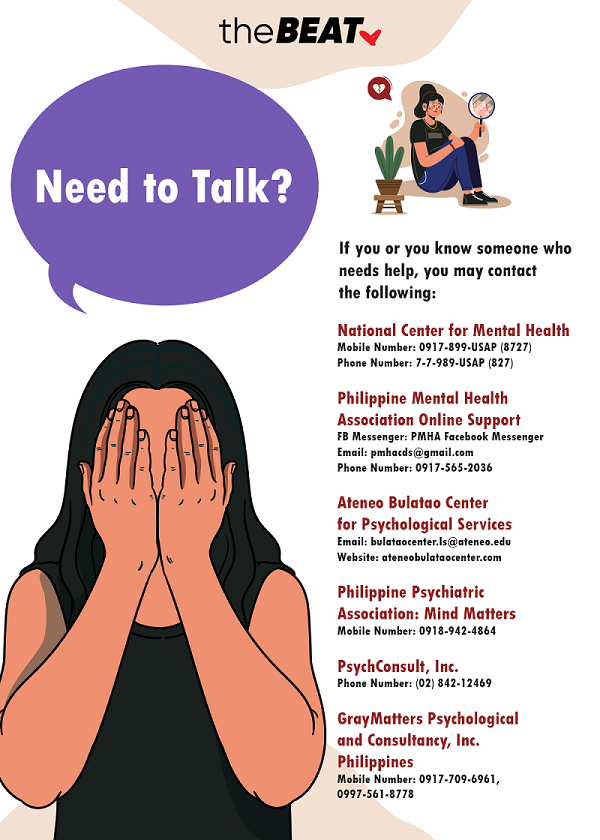
When you find yourself deviating from the norm or suffering from disturbing thoughts, do not easily be disheartened. Get yourself together and seek professional help, find ease to live life to the best of its quality. It has been proven that people who seek help feel better than those who deal with situations alone.
3. Stay Connected
Connecting and building meaningful relationships with family and closest friends help your mental health. According to studies, social connections are proven to be beneficial as they boost your mood, contribute to better health, and help lengthen your life span.
4. Strengthen Your Physical Health
Getting enough sleep is a necessity that is often taken for granted by people. There are a lot physical illnesses and mental disorders that may arise due to sleep deprivation. Be sure to have a regular sleep schedule and get enough quality snooze every night.
Exercise increases the overall well-being of a person. Being physically active releases endorphins, a feel-good, happy hormone that helps improve the mood of a person.
Aside from having a goodnight's sleep and being physically active, the food that we consume is also important. Studies found that a nutritious diet is not just good for the body, but for the brain, too. There are certain foods and beverages that may affect the level of certain neurotransmitters in the body.