

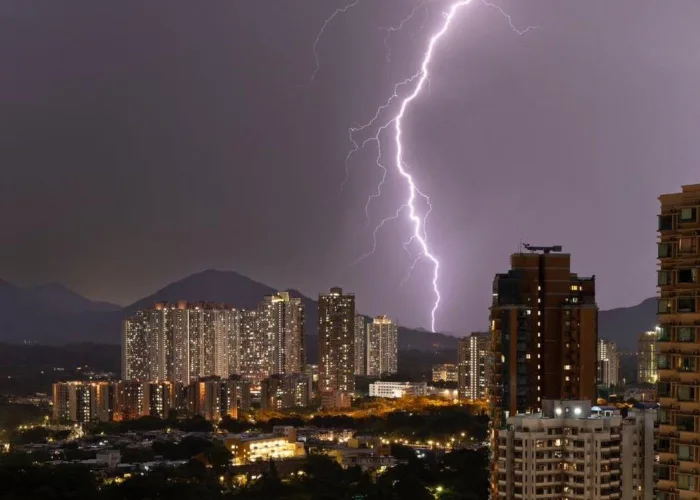
One day it was a T10 typhoon, then in the next few days, it was one black rainstorm followed by another. The last couple of weeks might have felt like a disaster movie on loop, and experts say it’s not just bad luck, it’s a sign of deeper climate instability that’s possibly only getting worse.

The Hong Kong Observatory recorded 355.7 millimetres of rainfall at its Tsim Sha Tsui headquarters on Aug. 5, 2025, marking the highest daily rainfall in August since records began in 1884. Some streets were flooded, MTR exits closed, and flights delayed as the city battled the weather.
Just days earlier, Typhoon Wipha skirted Hong Kong, prompting the Observatory to hoist the T10 Hurricane Signal, which remained in force until 3 PM on July 20, 2025. The T10 signal warns of sustained winds exceeding 118 km/h and is rarely issued; its presence underscores the severity of the storm’s impact.

In an interview, Leung Wing-mo, former Assistant Director of the Hong Kong Observatory, emphasized the link between climate change and the surge in extreme weather. “By nature, the weather fluctuates,” he said. “Climate change exacerbates these fluctuations, causing weather to be more unstable and more extreme”.
The Observatory’s rainstorm warning system, which includes Amber, Red, and Black signals, is designed to alert the public and mobilize emergency services. The Black Rainstorm Warning indicates extremely heavy rainfall exceeding 70mm per hour, often leading to serious flooding and landslides.

In response, the Observatory is accelerating its use of AI forecasting models, which successfully predicted the rainband responsible for this week’s deluge. “Our use of artificial intelligence in predicting the weather is still at a preliminary stage,” said He Yuheng, Acting Senior Scientific Officer. “But it has already shown promise in narrowing cyclone path predictions and anticipating heavy rainfall.”
Government departments are being urged to improve coordination, especially in slope maintenance and drainage systems.
As Hong Kong braces for more unsettled weather, experts warn that the frequency and intensity of such events may continue to rise. The city’s infrastructure, forecasting systems, and public awareness will be critical in adapting to this new climate reality.
For updates on and other information about Hong Kong's weather, check out Hong Kong Observatory's website here or follow their Instagram here.