

For many, the COVID-19 pandemic was a wake-up call. It was a moment of clarity, shifting priorities, changing values, and determining what truly matters.
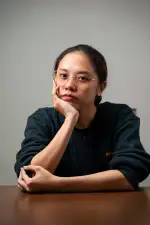
For Yidan Xiong, it meant reconsidering almost everything in her life.
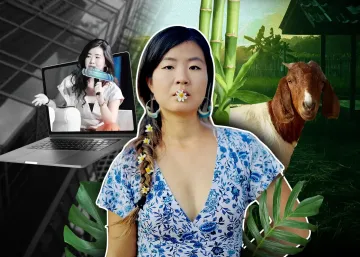
Before the pandemic, Yidan had a globe-trotting career as a FinTech cryptocurrency marketing executive. Today, she runs a farm and farmstay in Chiang Dao, Thailand.
It wasn’t an easy transition, nor was it linear. Leaving corporate life behind to live and work on a farm might be a fantasy for plenty of burnt-out professionals, but Yidan actually made the leap. She traded meetings, marketing campaigns, and international conventions for rice fields, animals, and the slow pace of farm life.


And from the looks of Yidan's Farm, it's easy to understand the appeal. Through the photos and videos she shares online, as well as the farmstay listed on Airbnb, her corner of Chiang Dao looks idyllic and quaint. With a growing list of animals she lives with — three pigs, two goats, 20 chickens, 10 ducks, four cats, four dogs, and a pond of fish — it can almost feel like stepping into the shoes of a Disney character.
But Yidan's story isn't necessarily about escaping one life for another.
She emphasizes that she loved her corporate career as much as she enjoys what she's doing on her farm now. Rather than leaving those years in her rearview mirror, she brought what she learned from them with her. Corporate, for Yidan, isn't necessarily a bad thing. In fact, she credits the skills she developed in her previous line of work as extremely valuable now that she's building, running, and promoting her farm.
In this exclusive interview, The Beat Asia sits down with Yidan Xiong to talk about her journey from FinTech marketing to farm life, the realities of running Yidan's Farm, and how building a farm was a way of coming home.

You grew up in the countryside. What was that like and do you feel like your childhood experiences influenced your decision to run a farm?
I grew up in the countryside in Zhejiang, China. My childhood was quite free, and I lived there until I was 8 years old. It's not really that long, but it was the freest, wildest, and most adventurous time of my life. Often, I feel like the decisions I make, and [ultimately] the place I found where I should build my farm, are because of my childhood memories.
[Chiang Dao] is a very similar landscape. But we didn't have so many mountains in Zhejiang. But we had rice fields, and my family had farmland. We didn't really live off of farming, but I was lucky enough to get involved with the farming activities. I still remember one of my best memories was having a picnic in the rice fields. While the adults were harvesting, I was sleeping on the straws and watching them harvest. Then later on, we'd eat the food that we packed from home. These memories followed me even when I grew up.
Even during my corporate days, I went to a lot of farms. I travelled a lot and went to many countries, and wherever I went, I always tried to look for farm stays to have a piece of the kind of life I used to have. But it's different when you're a guest, and you go to pay for a night to live there. It's not really what I want. People treat you like a guest, and you just feel like a customer taking photos of the farm.
But it's not just the landscape; it's the way of life, the sense of community. China is very modern now, but back then, living in the village, everyone was very close to each other emotionally. This kind of community is also another big part of why I really wanted to [build a farm] and experience this kind of lifestyle again.
You've mentioned that your grandfather used to work with bamboo and it's a material you currently use in your farm. What is it about bamboo and the memory of it that's important to you?
When I got the land, I actually had no idea what I was going to build for my house. I was flipping through different references on Pinterest, magazines, online, this and that. But then bamboo structures caught my attention, and that's when I started to dig into the idea.
Intuitively, I think, of course, it [was prominent in] my childhood because we had a bamboo forest next to the house. And my grandpa used to make furniture and all these things from bamboo. So it's kind of in my memory that bamboo is something very easy to work with. You can just chop it off and instantly start to work with it, unlike other building materials.
The more I dug into it and why people use bamboo as a sustainable building material, especially in tropical countries like the Philippines, which often suffers from natural catastrophes like earthquakes, flooding, etc. because bamboo is strong enough to withstand them. And it's affordable and a fast-growing material.
You've done a lot of research into bamboo and working with traditional farming methods, how do you apply that in your farm?
I have two main houses that are completely made out of bamboo. The first one is a two-floor house where I stay, but there's a common space where people can make coffee and tea and hang out, like a living room. For the foundation, we used concrete pillars; however, because bamboo will rot in one to two years, we have to use concrete footing as the pillars underneath. Besides that, almost 95% of the building is made of bamboo. The roof is made of thatch, like hay or grass, which also needs to be changed every year or two.
That is the first home on the farm, and it was finished fast, in 10 days. I rented a house in Chiang Dao. Then when I started to build the house, I camped there with my dog, Lucky. I had a little tent and watched over the construction. Every day, I needed to be there with them because I didn't really have a blueprint. I had to be there every day to help the workers visualize and relay what I had in mind. I'm also a visual person, so even though I had a picture in mind, it was also hard for me to deliver numbers, measurements, etc. Back then, I also didn't speak Thai at all. So it was a lot of body language and miming, and that's how we built the first house.
I built the second bamboo house as a guest house to host friends who wanted to come visit. They were kind of shocked by the decision I made because I didn't really tell anyone beforehand, so they got curious about why I would make such a big, sudden move. And they came to visit me. They saw how quiet it is. Not touristy. And they wanted to stay with me too.

Why did you choose Chiang Dao specifically?
Honestly, it was more like a gut feeling. An intuitive decision. At the beginning, I got to know Chiang Dao because I went hiking on Doi Luang Chiang Dao Mountain with some friends, and then we got lost. We ended up spending three days without knowing how long we would be there, but it was the best three days I spent then. It was also extreme because before that, I was used to the city and never really left my phone or went without signal for more than five hours. So that was the longest time that I was actually off-grid, and I didn't bring anything to entertain myself. No books, no board games, nothing.
At night, we were just sitting around the campfire and looking at the stars. I thought I would be scared or intimidated by nature, you know, getting lost in the jungle. But everyone was super chill, so psychologically, we calmed each other down. The experience also spiritually awoke something in me. After that, I started to roam Chiang Dao by myself on a bike, and that's when I formed the idea of staying here. Like, "It would actually be nice to own a farm here."
That was when I started to ask myself questions like, "Why am I so drawn to this kind of life?" I didn't really wonder why I always tend to pick farm stays wherever I go, even on business trips sometimes. My company back then would ask me for an invoice, and there wasn't always one, but I just wanted to stay in farm stays. I didn't want to trap myself in a hotel. And I'm also a super animal person. I would always adopt cats back then; somehow, animals would always come to me. So, the idea of building a farm and having that land where my animals could roam around freely started to form in my head.
Then COVID-19 happened, and that was a transition period for you. Could you share what that era was like for you?
I wasn't sure what I wanted to do, but I was pretty sure that I was done with [FinTech].
COVID-19 happened, and it was good timing. My decision wasn't actually very sudden; it was a period of two years. To a lot of people, it appears sudden. But there was a lot of internalization going on that I never really shared with anyone. At that point, I was just certain that I no longer enjoyed doing what I was doing, but I didn't have the courage to step away from it. And as a Chinese [person], you have to work to prove that you're valuable. So I was really struggling with the idea of not working and not getting validation through my career. But that's why COVID-19, in a way, gave me the opportunity to pause. Because the whole world was on pause, and everyone else didn't know what to do.
So, I just decided to leave my condo in Bangkok. It was the beginning of COVID-19, and everyone started to panic and hoard in the supermarket. I thought, "Okay, I can't be in Bangkok. I don't want to be trapped here, for I don't know how long." We didn't know when it was going to end, right? All I knew was that I needed to get away from the city. Packed up my stuff, got a taxi, which dropped me off at the pier. Went to an island about five to six hours away; I don't even remember the name. Then I stayed on that island for two months because of the lockdown. I was basically living in a bubble. On the island, no one talked about COVID-19. Life just carried on because it was geographically isolated.

I roamed around Thailand for almost two years.
Luckily, I had some savings. It was also then that I realized that, after I left Bangkok, after two months living on the island, I could hardly remember what I had in the condo. At that point, I realized that if everything disappeared in that condo, it actually wouldn't affect my life at all. I don't need those things.
That's when I started to ask myself: "What do I actually need for my life?"
So, I lived on my savings for two years, just roaming, adopted a cat on an island, and travelled with that cat, met some people along the way, and travelled with them too.
Two years later, I came to Chiang Mai, and that was when I felt like I needed a home. It was cool to be a nomad and roam around, but I'm tired of moving around and moving my cats around. That was when I ended up in Chiang Dao.
When you built the farm, was it always meant to be a farmstay?
Everything just kind of happened, like a flow. I have no idea what I'm doing [sometimes]. It was very spontaneous, organic in a way. Something I kind of just manifest an idea and people sometimes get on board because they agree. With this, I'm really lucky people trust me and they invested in this idea. They saw something in it, something about our farm stay that is unique, different, and interesting.
COVID-19 also pushed people to long for this kind of connection to others and to nature. Slowly we just built things and now we have five accommodations or houses. And we have a capacity to host up to 20 people.
We're now a group of six people who are living together at the farm. But I'm the one who really lives here full-time and operates everything.
A lot of people are also thinking of making a similar jump: leaving their corporate lives behind and starting something rural or closer to nature. What would you say was the hardest part of that transition?
Realistically, for most people who have worked their entire lives in a corporate setting, they don't have the actual skillset to be able to live in the countryside. But that's not really the hardest part because I also didn't know how to farm, how to build things on my own, even the language. But I grinded in all those five years. Even to this day, I'm still learning how to fix water heaters or this and that, right? I'm still learning every day. So those practical things, finances, skillsets, are not really the number one obstacle.
It's the mentality.
You have to be mentally prepared that in the years to come, you will have to learn everything from scratch. And also, the loneliness. I was alone there, living and building my farm, for two to three years. I had people but they come and go. It was actually an emotional struggle back then because I'd meet friends and people who have the same energy, and we build a connection. But they have to leave. So that was my struggle for a while, being in a fluid status where everything is constantly changing around you.
You mentioned before that you would stay in farms and being treated like a customer is not exactly what you were looking for. Now that you have Yidan's Farm, is that something you aim to do differently?
From the very beginning, we are very different. Right now, my guests, I don't really see them as my guests. I think about 30 to 40% of my guests who come to stay at our farm, they are people who have stayed with us before already, and they're just coming back again.
A lot of times you will see former guests who volunteer with tasks, like helping other guests check in. They would stay for one to two months, and our farm has become like their spiritual home. It's become a community.
In a way, they've also been part of the journey from the start. Because I started to share this whole farm building journey from Day 1 on YouTube, also on Instagram, Facebook, and on my Chinese social media platforms. I didn't have a lot of followers back then, but some of my long time followers have seen my videos from Day 1 when I didn't even know how to hammer a nail to five years later. So, for them, there's also an emotional connection [even before they visit the farm].
Finding validation in your career is something that you said you had to change. Now that you're doing the hard labor of building this farm and running it, do you find validation in being able to do these very physical tasks?
For me, the biggest validation right now is that I know that if you drop me in any corner of the world, I'm able to make a living.
And I can live a fucking great life. Because I have proven to myself that I have this ability to start from zero and adapt myself in a completely new environment and culture, connect with people, physically build a house for myself, attract people who are on the same frequency, and start a novel kind of co-living community.
I'm also able to farm my own food. So that sounds like a very complete, wholesome life to me.

Going back to your career, what led you to FinTech and cryptocurrency in the first place?
When I first heard about Bitcoin, crypto, blockchain [and more], it was like 2017. I was working in the entertainment industry back then, still in marketing. The majority of my corporate life was always about advertising, PR, and marketing.
When I started to work for a crypto brand, I was doing PR, building the brand image, hosting events and conferences. It was a whole new world [back then], I was pretty hyped about the concept. A decentralized, borderless kind of utopian world where everyone owns their own money and no one controls them. I guess that was kind of idealistic, but that's why I was really attracted to it and why I started to work in that space. Back then, it was very early stages of crypto in Beijing. I went to meetups and there would be people from twenty different countries — and everyone was so passionate. That whole vibe kind of really got me.
What did a typical day look like for you back then?
I didn't really have a typical day, to be honest. That was how the industry was like back then. It was totally chaotic. No one knew exactly what they're doing. It was kind of hectic and, I mean, in a way, I'm good with dealing with chaos. Chaos was my friend. I'm quite adaptable, flexible, a spontaneous person. So, it was easy for me to adapt to the new industry and environment.
Back then, I would fly to many different countries. [During my time there], I visited over 20 different countries. We organized and hosted a lot of meetups, events, conferences. Online digital marketing, building communities online.
A lot of it was seemingly done on the fly and you did a lot of traveling. Would you say it was a very demanding career, especially when you were in the thick of it?
Yeah, I think, although I'm good with chaos, it makes you feel lost after a while, right?
At some point, you just pause and you think like: "What am I doing here?" It's not like anything that you were building was leading to anything physical. Unlike building a house, you sketch something and a month later, you see a house standing there. But the whole business was virtual. They kind of have a sense where you don't feel where your achievement is.
Like, where did it land? What did it bring to the world and the people around you? I asked myself that [at some point] and my parents asked me all the time: "What do you do?" And I didn't have an answer for that. I didn't know how to explain it. Then I realized, it's a job where the accomplishments or the value it brings to the people or the community, or the meaning of it all, gives you pause. Like why am I spending my valuable life and energy into something that I don't see the value of?

Now that you're in a farm. What do you love most about it? What does your day at a farm look like?
My life at a farm is very simple, relaxing. It starts at around 6 or 7 o'clock. If we have guests, we make them coffee. I live with my boyfriend and he also volunteers in the farmstay. He's a barista, so he makes coffee while I entertain the guests. We also have a yoga space in the middle of the rice field and since I practice yoga, sometimes I do yoga with the guests.
I have a huge group of animals, so I check on them and feed them. Interact with them. Then online work. I spend about three to four hours focused on something online. We call the cafes around us our "office," and that's where I go to work because I can't really focus so much at the farm since there can be a lot of distractions.
In the morning, we also brief ourselves about the maintenance. What needs to be done like check ins and outs. Welcome the guests. House repairs. Farming schedule, harvesting and planting. Then in the evening, we cook. We have a big communal kitchen, and we have a community dinner. There are about two to three bars in town, but we also mix our own cocktails. I make my own plum wine [and] we ferment things too like kombucha. Sometimes we host our own parties or have outdoor movie nights.
In the past, you talked about the role of money in attaining freedom. Has your definition of freedom changed since leaving the tech industry?
My definition's changed along the way, at some point in the whole journey of building this place and the community. Before, my definition of freedom was to be able to travel or go wherever I want instantly. Now that I have many obligations at the farm — like the animals, the guests, the property — travelling is not as easy. I'm not able to leave just like that.
Now, freedom is being responsible at the same time as being able to be free. It's not just physical freedom anymore. Yes, I can go wherever I want, but what is the consequence of that? At every stage in your life, you realize that you have to redefine your idea of freedom again and again. Because things always change, so you have to change too.
Right now, [I ask myself]: What is the utmost freedom that I can reach at this stage of my life and still be able to hold onto the things that I can call valuable? My animals, my relationship with my community, my place, my farm, the things we grow here — these are valuable to me. Freedom now means balancing those things.
You talked about people coming from all these different countries, coming to stay in your farm for months. Why do you think people are drawn to this?
To a certain degree, I would say everyone is escaping from something.
I was also escaping. But what matters is what do you do after escaping? For me, the initial intention was moving out of the city to the countryside because I had enough of it. Sometimes, you just want to go: "Fuck it, I just want to run." And there's no shame in wanting to run away. Sometimes, it's too much for some people.
Everyone is going through some struggle. Modern struggles may not always look harsh, but the mental stress, loneliness, and everything our generation is going through is still a lot. First step is accepting that there's no shame in wanting to escape. But the idea of it may even make you feel guilty, especially when life may seem so perfect. But if you have that idea of wanting to leave and start a new life, acknowledge it. Face it, and once you've decided what you want to do, follow through on it.
Following through is the part a lot of people actually struggle with. A lot of people think they might be escaping one bubble only to end up in another bubble. Like a lot of people in these hippie places, they escape to the islands, but they refuse to learn the local language, eat the local food, and do what they used to do in their own country.

Is there anything from your past career that you're still trying to unlearn, or some reflex that you find yourself still doing?
Yeah, I mean now I'm marketing my own life. I'm not exaggerating it or boosting it, not trying to convince anyone of buying my lifestyle. I'm just telling, sharing that this is my life right now. And if people are interested, they can come have a look, come to the farm, stay here and see what our life is like.
When I first started to post videos, a lot of people commented that they don't believe I'm really here. They said: "She's just shooting videos in the countryside and she'll go back to her condo in the city after that." But eventually, it became less and less. No one can pretend for such a long time. Maybe a month or two, but for five years?
I understand [why they react that way]. It's not cynical. In a way, they're probably angry at themselves. They want to make the same choice, but they're not able to do it. So, they make excuses for themselves. They just tell themselves it's not real, so that they feel better.
But they can come book our farm stay, live with us for a few days, to get the feeling for it. And they can figure out if it's something they really want. Because it's not just a story. It's a lifestyle. We live here.
If you could talk to Yidan before the COVID pandemic, what would you tell her?
I'll just tell her: "You're doing great. You're on the [right] path. Whatever you haven't figured out, you'll figure it out. It's all [where] it's supposed to be." Honestly, if I get that chance, I will say nothing. Because I think whatever I chose to do at that point is supposed to be happening at that point. I never really felt like I did something that I didn't enjoy.
Even when I worked in corporate back then, I enjoyed it. Then I stopped doing it when I stopped enjoying it. It was #NoRegrets *laughs*
What's next for you and Yidan's Farm?
Five years is a milestone. Honestly, this project has grown beyond what I have anticipated in the beginning. There was no plan, no business model, and I'm very proud that we've gone so far. But is also brings a lot of challenges, for sure. I need to think about the project less in a personal way, but more in a community and business way. It's not just myself and my animals anymore. This project needs to support the people who are working for this project; they need to get paid. And it's growing, so we need to think of things in a more systematic, even in a corporate way. This is something I can probably borrow from my old corporate life.
Corporate is not a bad word. Running things in a corporate way just means bringing in professionalism and structure. It's not just being in a corporate world.
We were featured in a BBC documentary by Ben Fogle: New Lives in the Wild. One episode was about my farm and I'm travelling because of private screenings. Like business trips with my previous job. Because of these, a lot of people have come over to visit our farm.
In the near future, we're also planning on having our own coffee farm and roastery. We're also planning on an Eco Village project for two years now. We might potentially expand our land, create a sort of village for those who want to stay long-term like a couple of months or half a year whenever they come back, they have a place here they can call home.

This interview has been edited for length and clarity.
To learn more about Yidan Xiong, follow her on Instagram. For updates and information on Yidan's Farm, follow them on Instagram.
Enjoyed this article? Check out our other Venture profiles here.