

CNN is set to premiere the sixth season of “Tech for Good,” with a special feature on youth innovators shaping the future with nature-inspired robotics.
As technology advances, more researchers are turning to nature, specifically the behaviors and movements of animals, to inspire the future of robot design. CNN anchor and correspondent Kristie Lu Stout took the time to visit students who are leading the way in this extraordinary venture of blending nature with technology, packing it in 30-minute specials that highlight each of their inventions.
This season’s highlights include a visit to Daegu Gyeongbuk Institute of Science and Technology (DGIST), one of South Korea’s leading robotic universities, who is creating robots that mimic animal locomotion. Their bio-inspired robots were inspired by land, sea, and air animals, allowing them to produce incredible designs such as a robotic snake for search and rescue operations, a soft robotic fish to monitor underwater ecosystems, and a remote-controlled bird that could one day carry out aerial surveys.
In the UK, students from the University of Oxford are building tech to study the “natural algorithms” that govern how hawks move and make decisions while flying at high speeds. CNN spoke with PhD candidate Henry Cerbone from the Oxford Flight Group, a world-leading research team dedicated to the study of winged creatures, to find out how studying birds of prey could one day make robots faster and more efficient. They also met with PhD candidate, Davina Thandi, who is exploring how the shape of birds’ wings changes during flight, which can be applied in the development of advanced aerial robotics.
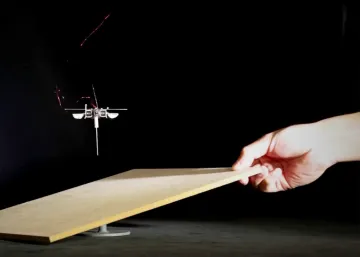
Lastly, students at Massachusetts Institute of Technology (MIT) are developing tech that addresses environmental challenges throughrobotic insects that could one day assist with tasks such as artificial pollination, infrastructure inspection, and environmental monitoring. CNN met with PhD student, Yi-Hsuan "Nemo" Hsiao, who wrote the computer algorithm for mimicking insect behavior.


The upcoming season will also be introducing an all-new segment called “Where Are They Now?,” which will revisit inventions and technologies featured in previous seasons. One of which is the “miller-spinner” technology by Stanford University Assistant Professor Renee Zhao, which was highlighted in 2022, and was believed by researchers to have the potential to improve the treatment of several ailments, such as strokes, heart attacks, pulmonary embolisms, and other clot-related conditions.
You can learn more about the show here. For updates, follow CNN on Facebook, X (Formerly Twitter), TikTok, and Instagram.