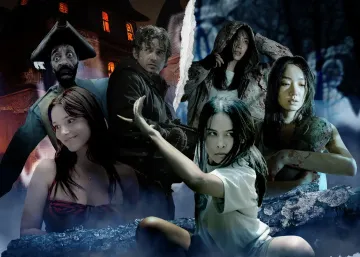


Last year, Western horror delivered certified classics like Sinners, Weapons, and Bring Me Back. The kinds of films you know people will be discussing for years. Don't get us wrong, Asian horror continues to hold a special place in our hearts. In fact, we argue that the scariest Asian horror films deliver serious generational trauma, not just one-time scares.
But in 2026, Western horror brought the fear factor to a whole new level, reeling in not just horror fans, but also genre-averse moviegoers. How did they do it? By keeping things simple.
Simplicity done well is an underrated film tactic. Some of the films on this list are masterclasses in how careful execution can beat complicated plots, and how well-crafted tension and a handful of perfectly timed jumpscares can be more effective than a film packed with them.
Horror isn't always everyone's cup of tea. These films keep you up at night, give you mini heart attacks in the cinema, make you shamelessly scream, and leave you scared of the most normal things. Like how The Grudge made us afraid to look under blankets, Final Destination made sure an entire generation would never drive behind a log truck, and Shutter made us paranoid every time our shoulders and back hurt.

This year, however, several films have managed to cross the metaphorical line into general pop culture relevance. Zach Cregger's Resident Evil cemented Austin Abrams as this year's scream king, building on his solid performances in Weapons (2025) and Whalefall, a survival thriller where he gets swallowed by a whale. Obsession has also generated plenty of fanfare, thanks in no small part to Inde Navarrette's thrilling performance.
Plus, with YouTube creators Curry Barker and Kane Parsons directing Obsession and Backrooms, respectively, audiences are getting fresh horror takes from a new generation of filmmakers. Their social media savvy and understanding of internet culture aren't coincidental to their success. They know audiences are craving something new. They know what makes people click online, and more importantly, what makes them grab a seat in the cinema.
Made with a budget of less than a million dollars, Obsession earned over $500 million worldwide. Meanwhile, Backrooms, with a $10 million budget, grossed over $400 million globally. Both films weren't just box office successes; they also won over critics and audiences alike.
It's been a good year for horror fans.
So if you're looking for a film-by-film guide on what to watch, what to skip, and what to obsess over (pun intended), The Beat Asia has put together a list of 2026 horror films and our thoughts on each scream flick:
Colony

Colony has a good premise that sets it apart from other zombie films. Just don't look too closely at the science, although the same could be said about most, if not all, zombie flicks with a rather shallow scientific basis. Its female anti-hero protagonist is generally meant to be unlikeable, but her smart choices keep audiences glued to the screen, waiting to see what she'll do next to outsmart the zombies.
The ending sets up a sequel, but it's already a bit of a stretch that they somehow managed to contain such a fast-spreading disease to just one building. It's a fun action-horror film, but it doesn't pack nearly as much punch as Director Yeon Sang-ho's incomparable Train to Busan.
Never After Dark

A Japanese-language film directed by Dave Boyle, Never After Dark is one of this year's must-watches. Moeka Hoshi, known for her award-winning role in the TV series Shogun, delivers a magnetic performance as spiritual medium Airi.
Never After Dark weaves a tension-heavy, non-linear story that trusts audiences to enjoy its atmospheric horror rather than seek scares that make them leap out of their seats. It's not a film that will render you sleepless at night, but it does drive home a point about what true horror actually means. And it's not about the ghosts.
It's so simple, it's good. You don't need to read into every action or piece together a complicated lore, and the film doesn't leave you hanging with sequel teasers. But horror fans will leave the cinema satisfied. It's a fine example of a tight, well-paced story that knows exactly what it wants to give audiences without relying on convoluted lore or the promise of more to come.
Salmokji: Whispering Water

For those seeking never-ending scares, Salmokji: Whispering Water is an easy choice. This Korean folk horror film combines modern technology and cultural references to emphasize the point that ancient, haunted things persist despite modern-day ignorance and affability. And just because you don't believe in something doesn't make it untrue. If anything, this film is a case of screwing around and promptly finding out.
But the film relies on familiar tropes and an ensemble of characters you don't get to know well enough to root for. The predictable ending is just icing on the cake. Still, if you're looking for a jumpscare-laden flick that makes your popcorn fly everywhere, add this to your watchlist.
Mudborn

This time around, it's not Darwinism at work. It's a mix of corporate greed and the classic "just because you can doesn't mean you should." And, more often than not, when the train of consequences finally arrives, it's not the ones at fault who get the short end of the stick, but regular people just trying to live their lives.
In Mudborn, a budding family becomes collateral damage when the father, who works for a VR game company, gets wrapped up in the real-life horror behind their latest game idea. Which, let's face it, is a deliberate choice. If you're making a game, why do you need to use an actual murder scene and its story instead of just inventing one from scratch? Sometimes realism isn't worth the trouble, and it certainly isn't worth the hauntings that follow.
Speaking of hauntings, the film delivers some laudable scares. It also picks up the pace in the third act by incorporating shamanic rituals. The ending hints at a sequel, and unlike Colony, we might actually stay tuned for this one.
Cerita Lila

Sometimes suffering is character-building, but sometimes too much of it can just push you over the edge. Cerita Lila explores how mental and emotional breakdowns can breed a horror that goes beyond the supernatural.
The film follows two single mothers pushed to the brink by a series of unfortunate events. One mother's tragic story leads to a haunted house that becomes the home of another whose own story resonates with hers. Unfortunately, in both cases, the kids bear the brunt of their mothers' suffering.
Also unfortunate is the film's predictability. One element that makes it marginally different is the inclusion of another horror content creator who is apparently also a trained medium. The storyline seems to enjoy the mothers' suffering a little too much, adding one too many moments of "kicking them when they're down."
Obsession

This is on everyone's watchlist this Halloween, and for good reason. Sometimes, when the hype is high, expectations are nearly impossible to meet. But Curry Barker manages to not only deliver the scares but also subvert horror tropes.
It's typically easy to define a villain in a horror film: a demon, a ghost, or a monster. All the film has to do is make sure that villain does bad things and that we feel for the victims.
Obsession, however, knows that sometimes the true monsters aren't so obvious. They're everyday people who do what they think is a normal, innocent thing. Still, there's nothing so simple about setting a woman's agency aside because of your own wants. Unfortunately, this isn't only true in the movies.
Plot aside, Obsession offers a wide array of scares, from the kind that make you leap out of your seat to those that make your blood run cold. The actors are also worth more than just a mention. Inde Navarrette is the newest industry darling, but Michael Johnston disappears entirely into his role as Bear as well.
Backrooms

There's always something creepy about liminal spaces. Like you can't stay in them or stare at them for too long. And if you do, they'll swallow you whole. Backrooms takes a simple, nearly empty set and an equally uncomplicated plot and turns them into a horror film that shows you where trauma resides.
Chiwetel Ejiofor gives the film his all, delivering a character audiences can relate to even if they're not 100% rooting for him. He draws you in with every scene, but you can't quite decide if you like him or not. It's a tightrope, and the award-winning actor treads it masterfully.
The scares are as straightforward as they come. It's up to the viewers to fill in the spaces, as it were. In the end, however, one thing is clear: we all have our backrooms. We stuff our trauma, fears, problems, and insecurities there, and we're all scared of navigating them. Are you willing to explore that space, or are you scared of getting lost?
Resident Evil

As Resident Evil fans, we had to manage our expectations. There have been a number of adaptations of the beloved video game franchise, but none have quite captured the experience of playing the game. It's always a debate whether directors should stick to the game lore and create a 1:1 adaptation with the characters players know and love, or let directors get creative with the material.
Zach Creggersomehow manages to do both, creating the most honest adaptation of the video game yet. How? By making audiences feel like they're playing the game themselves. At no point are we separated from Bryan, the medical courier caught in the viral outbreak. We get to "play" as Bryan, a presumable NPC, and it's an exhilarating ride. We miss shots with our terrible aim, curse to high heavens, and marvel at ridiculous locks. Austin Abrams is completely believable as a regular guy who is having the worst day of his life, doing his job because he was offered twice the pay.
Fans can debate how closely it sticks to the game. But seriously, how much closer can it get when every scene feels exactly like you're in the game? Read more about our thoughts in this Instagram post.
Passenger

This film has its moments, especially when it takes advantage of creative lighting. But for the most part, it's a miss. Passenger gets tired fast. It takes you on a ride, but halfway through, you want to take the next exit.
Half the film could've been resolved with a little communication. And while talking things out isn't going to get the demon off their backs, it would've made getting to the ending a lot easier. Then again, who would want that, right?
It has some decent scares. But the moment they reveal the demon, the film loses its way. Audiences don't need a GPS to find their destination, but the story sure does.
Undertone

Here we have another case of "doing it for the likes and views" and ultimately regretting it. You only really see one character throughout the film: Evy. Her mother is present, but silent. Other characters are only heard, not seen, like her friend Justin, who is also her co-host on a paranormal podcast. They receive an email that should've gone straight to spam, but over the course of ten audio files, they decide it's worth pursuing for the viewership.
Ian Tuason always sets up shots that have audiences bracing for impact. It never comes, but surprisingly, it doesn't fall flat. Because you know it's coming soon. It's a slow, tension-heavy build towards the last act, where it all comes crashing down.
Evy is a good example of how to show someone going through it and being vulnerable without shoving her despair down the audience's throats. You understand her, but she's not just a victim here. Her choices also make you want to scream at the screen. In other words, she's a real person.
Hokum

Hokum makes good use of its haunted hotel in the middle of the Irish woods setting. But instead of just shoving a regular guy into the story, we get Ohm Bauman, an American best-selling horror novelist you love to hate. He's arrogant and acerbic, but Damian McCarthy shows off his horror chops by turning him into someone worth rooting for.
Like Never After Dark, Hokum understands that real horror offers no escape. Whether it's the supernatural or actual people, audiences are pulled from both ends. But it doesn't feel convoluted. One supplements the other, and, as the film suggests, it's just a matter of opening your mind to the possibilities.
Buddy

Buddy is a giant orange unicorn. Buddy has anger management issues. Buddy is not your friend.
Styled like a '90s children's show, Buddy doesn't waste time getting to the core of its premise. It doesn't spend half the film trying to trick viewers into thinking Buddy is some fluffy, huggable, Walmart-version of Barney. And that's what makes it a unique horror film: it captures the innocent spirit of a kids' show and flips it on its head.
If you grew up in the '90s, this one's bound to make you rethink all those shows you loved. But it'll also make you laugh. It's more dark comedy than anything, though the ending posits an interesting message: maybe if these kids weren't glued to their screens, bad people like Buddy wouldn't be able to get to them. It's not entirely clear if that's what the film wants viewers to take away, though.
Levitating

A supernatural drama that premiered at the 2026 Sundance Film Festival, Levitating follows Bayu, who dreams of becoming a shaman. In their town, locals hold trance parties where people, or “hosts,” are transformed into animals and put into a hypnotic state.
It's not a straightforward horror film, despite the animal possession and some gore. The trance is clearly a way for people to forget their problems, especially for Bayu, who needs to let go of their own pain and troubles to find their center and guide others into a state of bliss.
But it's a well-made film that reels you in because nobody is phoning it in. Every actor, from the main cast to the extras, gives such believable performances that you can't help but feel pulled into the trance yourself. While it isn't a scary film by any means, the production itself keeps you watching.