Awkward Conversations: Emery Fung on Making DEI Actually Work

Corporate culture tends to paint a flat, monochrome picture. A grayscale landscape focused on faceless numbers and figures. Lately, often spurred by activism and policy changes, corporations have grown more intentional about building safer spaces for their people. These initiatives, often grouped under DEI (or Diversity , Equity, and Inclusion) programs, are bringing the full spectrum back into office buildings and virtual workspaces — from hiring to employee satisfaction and retention. DEI is about fairness, improving accessibility, and making everyone feel included.
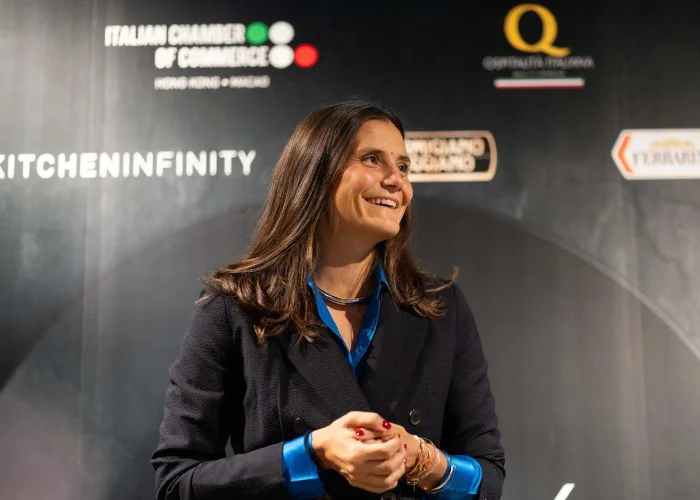
With such huge programs, it's not always easy to know where to start, or to track efficacy. That's where Emery Fung steps in, the DEI advocate who founded Awkward Conversations, a Hong Kong-based consultancy that helps corporations integrate DEI programs.
A neurodivergent trans man, Emery's day-to-day experiences inspired him to launch his business where he partners with organizations and brands to "turn awkward conversations into powerful connections."
Aside from Awkward Conversations, Emery also holds talks and workshops, and is a TEDx speaker. His podcast, "The Awkward Turtle At Work," also explores the workplace from a DEI perspective.
In this exclusive, The Beat Asia sits down with Emery to talk about Awkward Conversations, effective versus performative DEI policies, Asia's first Gay Games, and the LGBTQIA+ scene in Hong Kong.

What led you to found Awkward Conversations?
I was noticing a system flaw that kept repeating.
Working in recruitment in Hong Kong, I'd see brilliant candidates get filtered out — not because they weren't capable, but because of what was considered "presentable." In their accent, suggestion of ethnicity, a "too direct" or "too quiet" communication style, etc. What I was really watching was: "Whose way of showing up counted as normal? And whose didn't?"
At the same time, I was sharing my own lived experience as a trans man in Hong Kong — navigating a system not built for me. I learned about DEI, and I realized: there's a massive gap here.
Most companies genuinely want to be inclusive. But they approach it from a Western approach and in silos. What they miss is that these aren't separate. An Asian's perspective is different from a Westerner's, and nobody was talking about that.
I thought: What if we made intersection the foundation? Not "Here's Diversity 101," but "We're all diverse, we all have different experiences — that's where we start." Then we talk about how those intersections play out, what the real impact is, and how they amplify.
What did you see from within corporate hiring rooms that most DEI consultants tend to miss?

The biggest miss? They focus on D, forget about I and E.
Most DEI work talks about Diversity, but they barely touch Inclusion, and they gloss over Equity entirely. What happens is they bring diverse people in, the system doesn't change, and they leave. Rinse and repeat.
But the real blind spot? The allies.
We spend all our energy on "the marginalized group." But we rarely address: "What's in it for the majority? Why should someone already comfortable in the system care?" So of course people resist, feel attacked, and blamed. Nobody wants to be told they're the problem.
But inclusion isn't about molding others to fit what's normal. It's about everyone — including people in power — realizing this is better for them too. A company with psychological safety performs better. People stay longer when they feel they belong.
And when we do talk about Equity, it's abstract. It's a band-aid fix. We talk about bias a lot, but we don't ask: "What do we actually deem as 'good qualities'? Who gets promoted? What does leadership look like?" Those are root system questions.
Your identity sits at an intersection that rarely gets recognized. What's something from that overlap do you wish more DEI professionals understood?
It's human nature to categorize things. But just because we can do something doesn't mean it's the best way to think. The irony? We spend so much time trying to get people out of boxes, but we keep putting people back into boxes. We talk about inclusion, but we do it in silos.
Here's the thing: we all have intersectional identities. No one lives a single life. I'm a trans man, neurodivergent, Chinese, living in Hong Kong. That's my actual lived experience.
When DEI pros approach these in silos: "Let's do a neurodiversity session, then a trans inclusion session," then they're missing the actual lived experience. They're teaching about categories, not people.
And we'll keep missing the allies. An ally who "gets" LGBTQIA+ inclusion might not see why neurodiversity matters. Or they'll think it's just about "giving accommodations." They won't understand that for someone like me, it's about being seen — about the system making space for different ways of existing, not just different ways of working.
This is why intersection has to be the foundation. Not "Here's LGBTQIA+ 101" or "Here's neurodiversity 101." But rather: "We all show up differently. We all have different needs. That's not a problem to manage — it's the actual strength of inclusion." When you start there, everyone's invested. They start asking: "How do I show up? What do I need?" And suddenly, it's not training. It's belonging. Because we all have a stake in it.

In 2026, you mentored fellows through the RESOLVE program on issues ranging from gender equity to migrant rights. What did you learn from mentoring a new generation of changemakers?
Mentoring them was affirming and refreshing. These fellows weren't shy about letting their feelings be known. They were honest, and that honesty revealed the real frustration: the gap between what companies say and what they actually do is exhausting everyone.
They weren't frustrated because they lacked passion or ideas. It was because they kept hitting the same wall: organizations celebrating inclusion loudly while not actually moving the needle.
They'd see a company launching a "Pride Month campaign" with beautiful graphics, hire consultants for training, make announcements, and then...nothing structural changed. Six months later, their LGBTQIA+ employees are still dealing with unsafe spaces. The neurodivergent team members are still burning out in meetings designed for neurotypical brains.
People enter the workforce, see the optics, while the actual systems stay exactly the same. That's demoralizing.
What they need isn't motivation. It's to work with organizations willing to do the harder, less visible work — actually listening to the people affected instead of just talking about them.
What were the highlights of that experience?
Seeing what they're building. Real work. Intersectional work.
Linda designed Food 4 Life — not just for asylum seekers, not just for people with diet-related health issues, but for the intersection. Because for an asylum seeker with a noncommunicable disease, you can't separate the health problem from the migration reality. She's addressing both because they're inseparable.
And then Thomas, Kate, Tav, and Simran did The Clairvoyance Project together — mapping barriers to sexual and reproductive healthcare for women and AFAB individuals in Hong Kong. They're building an evidence base to actually inform policy from that understanding.
What struck me most: these fellows understand something a lot of senior professionals miss. They're not treating issues in silos. They identify where identities collide.
That's the next wave. Changemakers working at intersections, gathering evidence from lived experience, moving the needle on real problems.

One testimonial credits your "I'm just like you" message with opening doors for DEI events across APAC. What does that phrase actually mean to you?
"I'm just like you" doesn't mean we're the same. It means: my lived experience is unique, and yours is unique, and those don't cancel each other out.
I'm navigating identity stuff you might not navigate. But I'm also navigating the same things you are — relationship issues, painful insurance admin, figuring out how to move through the world.
That's what inclusion actually is. Not "celebrate how different we are" (though that matters). But "recognize we're the same and where we're different, because both are true."
We have way more in common than we think. And that common ground is what unites people.
Why do you think "I'm just like you" lands differently than other DEI pitches?
Most DEI pitches focus on difference. "Look at all the ways we're different; that's the strength!" And it's true, but it's exhausting to always be "the different one."
But when you say, "I navigate the same stuff you do, plus some unique stuff, and that's actually relatable." People go: "Oh, yeah, I get that." Suddenly you're not asking them to celebrate difference. You're asking them to recognize common humanity. And that unites people.
It's no longer "You need to understand marginalized people." It becomes "We're all in this together, and here's how."
You helped deliver Asia's first Gay Games in Hong Kong, an event with HK$200 million in economic impact. What did that experience teach you about how to convince business leaders that inclusion is worth investing in?

The biggest lesson? Anyone can pick up these skills. Anyone can take inclusion as a mindset and pull it into something tangible.
We had over two hundred volunteers from completely different walks of life — different skill sets, ideas, working styles, etc. People were giving evenings and weekends for years to bring this to life.
That taught me something crucial: inclusion isn't an expert-only game. It's something everyone can participate in. It's fun, engaging, and brings people together. And it generates revenue at the same time.
That's the biggest misconception in general: people think inclusion work has to be a charity case. It has to come from sympathy, from "helping others." But actually, it's not just about helping others, it's about helping everyone.
Does leading with a concrete dollar figure open doors that a values-based pitch can't?
Absolutely. When you have a number like HK$200 million attached to it, suddenly people understand: This is not a charity case. This is strategic business.
It helps with employee engagement, branding, marketing, productivity — in ways people can't even imagine.
But here's the thing: the dollar figure isn't the reason to do this work. It's proof that doing it right generates value. That's the shift we need. Inclusion work creates profit because it's well-designed, well-executed, and genuinely improves systems. The money follows.

What are your thoughts on the wider LGBTQIA+ scene in Hong Kong?
Hong Kong's LGBTQIA+ scene is vibrant and resilient. We've built community despite living in a system that doesn't legally protect us. The Gay Games showed what happens when we organize at scale — the energy, creativity, and power.
But there's also fatigue. We're doing a lot of the heavy lifting ourselves because institutions aren't moving fast enough. The work is there, and so is the momentum. What we need now is systemic change — legal protections, workplace equality, healthcare access — not just celebration events.
That's why the [new Awkward Conversations] Resource Hub matters. We're building resources for the community, by the community, because we know what we actually need.

"Awkward Conversations" implies discomfort is part of the professional development process. What separates a healthy, productive conversation in a workplace from one that is just mishandled?
Awkward conversations are essential. Without having them, you're dodging around topics, never addressing things head-on. And what I've learned is: the more awkward the topic, the more you're willing to sit through it, the stronger the connection you get with others becomes.
The core element is genuine curiosity. If someone's asking me something with inappropriate language, but I know there's no ill intent, I'll take that over polished words with hidden resentment any day.
In Asian culture, especially Chinese culture, it's hard for us to admit fault or say "I don't know." So the second element is humility. Humility in asking questions, not defensiveness. Willingness to sit with discomfort and work through it together.
A mishandled one is when someone shuts down, gets defensive, or pretends the conversation didn't happen.
In your experience, what are the clearest tells that a company's DEI commitment is performative rather than genuine?
Just talk to their staff.
People talk. In this age, word of mouth still travels fast. How people are treated is always a good indication of a company's actual culture. And if the culture is poor — but you see their DEI branding everywhere — you know it's performative.
The tell is the gap between the outside narrative and the inside reality.
Real commitment shows up in how people are onboarded, how they're spoken to in meetings, how they're promoted. It shows up in the quiet decisions, not the loud campaigns.

You build strategies that are "globally informed but locally resonant." From your experience, do you find that DEI frameworks don't resonate as accurately in Asia?
Most frameworks are built in Western contexts with Western assumptions about how people work, what motivation looks like, and what "healthy " personality traits are.
In Asia, we have different values, communication styles, family structures, etc. A framework built elsewhere won't translate 1:1.
That's why one-size-fits-all DEI doesn't work. You need to understand your context. You have to do the work locally.
Is there a universal piece of advice that you consistently give across brands, regardless of industry or location, that helps them bridge the DEI gap?
Yes and no.
The universal piece of advice is: each firm is so different.
I have a process I use, but it changes every time. The nature of the business itself could be vastly different. Financial budgets are different, so are priorities, even the readiness of employees.
It has to be a tailored approach. It takes time to understand the people first — where they have the strongest resistance and what's possible within their constraints.
The best way to approach it? Start identifying buy-in from diverse stakeholders — from entry-level to senior leadership. You need people in different pockets of the organization to help drive change.
It's great to have leadership buy-in. But if it's always just one direction, it's very hard to drive any sort of change on something as complex as culture, mindset, and behaviors.
You have to meet people where they are.

Several global companies have scaled back on their public DEI commitments. Where do you see Asian companies stand on theirs?
Honestly? That bubble was always going to burst.
Going back to Asia, we like to do things quietly anyway. A lot of those public statements, while important to have a stance, never really speak to actual culture. So they were never sustainable.
The scale back has some silver linings — it's forcing organizations to ask: "Okay, what can we actually do internally?"
Honestly, that's more impactful. It's providing real change rather than doing one-off events.
If a company has limited time and resources, what's the one concrete thing they could actually do to be more inclusive?
It's simple. A lot of people think this stuff has to be costly and time-consuming. But sometimes, the most powerful things are small gestures: onboarding someone and welcoming them, greeting guests, how people speak to each other, etc.
But it also extends beyond your team. Look at your marketing communications. If you're claiming inclusion, but your job ads are only posted in places certain people can see, your website isn't screen-reader accessible, then your imagery doesn't reflect diversity — you're contradicting yourself.
And here's the harder question: who are you actually serving? Are your products and services only for people who can afford them, who already have access, who fit the expected customer profile? Or are you intentionally thinking about underserved and marginalized groups? Are they part of your offering, or an afterthought?
What's an "awkward conversation" in your own life that turned out way better than you expected?
The biggest one would be coming out at work. I didn't know what the reaction would be. I didn't know how to navigate conversations about being trans. And how it might affect my job security, livelihood.
But in working it through with everyone internally, I learned: if you're open with people, people often respond well to that.
That openness changed everything. My career shifted completely because of those conversations. My life shifted because I was willing to sit in the discomfort and work through it with the people around me.

You're launching a trilingual inclusion resource hub. Could you tell us more about it?
Think of it as 1-3-8. One platform. 3 languages. 8 voices.
The inspiration was knowing that all the resources out there don't fit the audience in Asia — not from a content perspective or a language perspective.
The languages: English, Traditional Chinese, Simplified Chinese.
The 8 voices: different voices from the community and local social impact groups I've partnered with to curate the content.
Who is it built for?
It's for everyone.
There will be parts that are super layman on accessibility and inclusivity. Real, relatable examples. But we're also offering deeper dives for DEI professionals, HR teams, educators, schools, parents.
You don't have to be an expert to access this. You don't have to be in DEI to benefit. Whether you're navigating your own identity, trying to understand a family member, building a program at work, or teaching at school — there's something for you.
What inspired you to build this hub?

Everything I've learned from working with communities, mentoring fellows, being in those hiring rooms — it all pointed to the same gap: we don't have resources that are built for Asia, in Asian languages, by Asian-based voices.
Most resources are either Western-imported or generic. They don't speak to lived experience here, don't address the nuances, don't account for family dynamics, cultural values, migration, neurodiversity in Asian contexts.
The Resource Hub exists to fill that gap. To say: your experience matters. Your context matters. And here are resources built for you, by people who live this too.
What else do you have planned in the future?
I hope to expand this platform to more countries in Asia. Starting with Hong Kong as the first chapter, but more to come. Every country is so nuanced. If you're a social impact person and you know this work, reach out. We want help curating content that's relevant across Asia.
But honestly, I'm also learning what this means for me.
As my work becomes more visible, I'm actively figuring out: How much of my personal life do I share? Where are my boundaries?

I built this business on lived experience and authenticity. That's my whole edge. But there's a cost to that transparency. There are parts of my life that don't need to be public. Conversations that are for my inner circle, not for people on LinkedIn.
So I'm learning to be strategic about that. To show up authenticity without giving away everything. To build a movement without burning out in the process.
And the bigger question: How do I mobilize more people to drive this change? Not as consultants, not as paid professionals, but as changemakers in their own communities. People who take this work home, into their families, into their organizations, because they believe in it — not because I'm on a stage convincing them.
That's the real work: building a movement that doesn't depend on my personal story.
To learn more about Emery Fung, follow them on LinkedIn and Instagram. Follow Awkward Conversations on Instagram and sign up online to be notified when the Resource Hub is live!
Get the latest curated content with The Beat Asia's newsletters. Sign up now for a weekly dose of the best stories, events, and deals delivered straight to your inbox. Don't miss out! Click here to subscribe.