Teen Podcast Host Shulin Ho on Why Listening Heals and Youth Voices Matter
TEDxTinHauWomen 2025 returns to Hong Kong this November at WestK’s Xiqu Centre with a powerful theme: Reframe — a call to amplify voices that challenge norms and inspire change. This year’s lineup brings together innovators, advocates, and creators reshaping how we think about leadership, sustainability, and community.
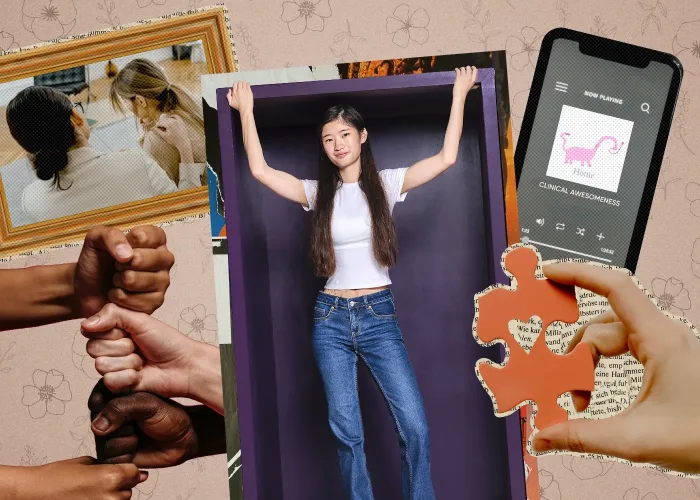
One of those voices is Shulin Ho, a high school student and mental health advocate who launched her podcast Clinical Awesomeness at just 11 years old.
Her TEDx talk will explore why listening isn’t passive — it’s a lifeline, especially for young people navigating a fast-paced, high-pressure world.
The Beat Asia had the opportunity to talk to Shulin to learn about her journey making her podcast, vision for creating safe spaces, and her hopes for a future where every voice matters.

Shulin’s story begins with a moment she never expected to define her path — a panic attack during an English lesson at age 11.
Searching for answers online led her to a forum about podcasts, and what started as curiosity became a lifeline.
That podcast, Clinical Awesomeness, became her platform to break stigma and start conversations that matter. Over the years, she’s hosted doctors, coaches, and advocates, tackling topics from anxiety to abuse. For Shulin, it was about creating space for voices that often go unheard.
Mental health advocacy starts with something simple yet profound for Shulin: listening. “Conversations stem from vulnerability,” she says.
Safe spaces aren’t built on quick fixes — they begin with trust. “When I show that I am willing to let my guard down, there will be a reciprocal reaction showing that I have trust in them, and that they could trust me.”
Her TEDx talk dives into why listening matters more than offering solutions. “Sometimes, teens don’t want solutions but just want a listening ear.”

Shulin believes young people today are more open to mental health conversations than older generations, but stigma still lingers.
Misconceptions also persist — especially around language. There are people “saying things such as ‘the weather is so bipolar’ or ‘I am so OCD’,” she says, knowing clearly OCD is a condition and not a trait.” For Shulin, awareness begins with empathy and accurate words. “There is a huge difference in saying ‘I feel depressed’ and ‘I have depression.’”
So, what started as a podcast has grown into a platform for change. One episode Shulin calls particularly powerful focused on sexual assault and abuse. “Through my research I learnt so much about the severity and prevalence of abuse as well as what could be done to prevent it,” she says.
Looking ahead, she hopes to turn Clinical Awesomeness into a nonprofit supporting youth mental health and victims of trauma.
Her ambitions don’t stop there. Shulin plans to study education and work in schools, inspired by teachers who supported her during secondary school.

Her advice to other students who want to speak up is to “just go for it.” Whether it’s starting a podcast, hosting a youth forum, or organizing a small charity event, Shulin believes action starts with courage — and community.
“Surround yourself with people that will push you to be better,” she says.
Her story is inspiring, but what stands out most is her honesty about the challenges, and the solutions, she believes can make a difference. In our conversation, Shulin shared more thoughts on youth advocacy, misconceptions about mental health, and why vulnerability matters more than quick fixes. Here’s what she told us.
Your upcoming talk at TEDxTinHau Women 2025 with Emily Kusunoki explores the feeling of being unheard. Why do you think that experience is so universal — especially for young people?

I think the idea of being unheard is so universal because of the increasing pace of life.
Many young people might feel overwhelmed as a result of stress, whether it be academic, financial, or social. As society is developing so quickly, it leaves many teens feeling like they are bombarded by information and negativity on a daily basis (through social media, or day to day interactions).
I believe that the idea of feeling unheard isn’t new, and that people have been feeling that way. But it is quite recent where people have started talking about it, instead of leaving it within them.
Do you think young people are more open to discussing mental health than older generations?
I think younger people are much more receptive to discussing mental health and sensitive topics.
That does not mean that older generations don’t, but that they do so in a different way. I would say – from my personal experience – that this generation of teens and children have been able to leap past a hurdle that prevented older generations from speaking about their mental health. When we pass that hurdle, it becomes easier for change and to discuss those tough conversations.
What do you wish schools did differently when it comes to supporting students’ emotional well-being?
This is a question that I have been focusing on for many years.
I believe the way schools can support students’ emotional wellbeing is through active communication and clear channels within the school.
This might mean that students know who to go to when they need help, children don’t feel ashamed to seek support, and that the school has an underpinning foundation that is firm. This means that the school has policies and procedures that staff are well informed/aware of, but also flexibility and the ability to treat students with compassion and kindness. This might be difficult, especially for local schools where there tends to be a stigma surrounding mental health.
One implementation that I really like is to make sure each school has ways to anonymize students that want to help their peers. Many students might not want to let their friends know that they have involved a teacher. This is as students that have poor mental health are almost sometimes ‘blinded’ by the severity of the situation. Although some students might take advantage and misuse a form that people can submit when they are concerned, it will definitely be beneficial for most of the school community.
If you could design a mental health curriculum for schools, what would be the first lesson — and why?
My first lesson would be how we can equip students with the tools to help themselves and each other.
How to support another student that might be feeling anxious. Many of us have heard about what we should do, but we struggle to do it in a real-life scenario. Like how many of us are told to listen and not judge, but many students do not know how judgement can present itself in those situations, and can unintentionally pass judgement onto someone else.
How can parents and families create safer spaces for mental health conversations at home?
A great tip I use – when I find it difficult, or when I see someone that is hesitating to share something, I will place myself in a position of vulnerability that will aid them. This is because when I show that I am willing to let my guard down, there will be a reciprocal reaction showing that I have trust in them, and that they could trust me. But it’s important to not overshare and divert the conversation to yourself (and away from the person you’re talking to!)
There is a lot of cultural stigma, especially in Hong Kong, where those safer spaces cannot be formed. I think one thing that parents can do would be to try to ‘LISTEN’ and not try to ‘FIX.’ This means not immediately offering solutions or asking ‘why didn’t you do ____ instead.’
Sometimes, teens don’t want solutions but just want a listening ear.
Do you feel young people are given enough space to lead conversations that affect them directly?
I feel like young people are slowly increasing their say in important events and conversations. This is important as older generations might not have the younger generations’ interests in mind or consider other perspectives.
But even though there is an increase, I feel like there should be even more. It shouldn’t be as difficult as it is now to lead conversations, where it can sometimes feel like social media is the only way for teenagers to ‘lead’ a conversation.
What’s next for Clinical Awesomeness?
I’ve had many ideas as to where I want it to grow into. I would like to see it grow into a non-profit, helping both people struggling with mental health as well as victims of child abuse or trauma.
I would also like to grow on social media and increase the support that could be provided for teens and students. I would definitely like to keep podcasting and sharing my ideas with the world!
I hope to one day be able to also implement better structure and policies surrounding youth mental health (suicide prevention) as well as the system regarding child abuse in Hong Kong.
I want to see better prevention as well as better support for victims, without making them feel embarrassed. I hope that not only will I see that change in my lifetime, but that I would’ve played a part in sparking that change.

Want to hear more? Get your ticket for TEDxTinHauWomen 2025 this November at Xiqu Centre via CityLine and catch Shulin Ho live. Her talk will challenge how you see the power of teens, and inspire you to contribute to building a better world through, simply, listening.
Check out Shulin Ho's LinkedIn and her podcast's Instagram for more information, and listen to Clinical Awesomeness on Apple Podcasts, Spotify or YouTube. Visit TEDxTinHauWomen's website for more information about the event this year.



Get the latest curated content with The Beat Asia's newsletters. Sign up now for a weekly dose of the best stories, events, and deals delivered straight to your inbox. Don't miss out! Click here to subscribe.