In a city rapidly catching up to its Southeast Asian neighbors in culinary innovation, two names are helping push Manila’s dining scene into sharper focus: Alexis (Alex) Offe and Michael Needham.
Offe, a French-born, Hong Kong-raised hospitality lifer who trained at the prestigious École Hôtelière de Lausanne (now EHL Hospitality Business School), cut his teeth with major hotel groups and F&B players before launching Meraki Hospitality Group with his sister, Laura in 2017
Meraki became known for culturally rich concepts like Uma Nota in Hong Kong and Paris, and Bedu, a modern Middle Eastern spot. Eventually, Alexis brought the Meraki name to Manila — teaming up with Michael to open Uma Nota’s first Philippine outpost at Shangri-La the Fort.
Needham, for his part, may be newer to the F&B industry, but he brings sharp business instincts honed by his background in finance. Half-British and half-Filipino, he experienced living in Jakarta, Hong Kong, and the UK, before planting his entrepreneurial roots in Manila. His portfolio has ranged from co-founding KOOP Studio, a salon brand with locations in London and Manila, to investing in ventures like La Pícara. But it was a chance meeting with Alexis — and a shared vision to elevate Manila’s F&B scene — that led to their first joint venture with Uma Nota, and later, their first concept built entirely from scratch: Sabai, a Thai restaurant that combines comfort, spice, and substance.
While Meraki has officially closed its restaurants in Hong Kong earlier this 2025 and shifted its focus towards Manila, the duo isn’t slowing down. Together, Offe and Needham are now setting their sights on making Manila a dining destination on par with Bangkok, Singapore, and their former base in Hong Kong. With one successful concept imported and another homegrown, they’re doubling down on thoughtful design, authentic cuisine, and creating vibrant spaces that don’t just serve food but offer an unforgettable experience.
(From left) Alexis Offe, Laura Offe, and Michael Needham | Photo from Website/ Uma Nota Manila
The Beat Asia sat down with the two as they talk about lessons from Hong Kong, challenges of building a restaurant post-COVID, and why they believe the Philippines is just getting started.
First, let’s talk about your latest concept Sabai. I heard you two did a lot of travelling and research in Bangkok?
Michael: A lot of research!
Alex: I think it’s necessary. First, that’s how we found our chef, Chef Tob. If you’re putting up a restaurant, it ultimately starts from the kitchen. And it was very important for us to get the details right, whether in service or the flavors. Also, understanding why a dish wouldn’t make it on the menu because we’re not happy with the local ingredients. It’s having a deep understanding of both the culture and cuisine in order to not adapt so much to Manila but rather bring out the most authentic version of Thai cuisine [in our] concept.
When I opened Uma Nota, I did the same and travelled to Brazil [a lot]. It’s a good excuse for us to travel; some will say that we choose the concept to be able to travel. (laughs) But no, [that effort] is super crucial. I think you can’t really cut corners in that sense. Otherwise, [it’ll be easy for others to say], ‘What are you talking about?’
Michael: It is necessary. We [visited] Bangkok maybe six times before opening [Sabai], so that we really got a feel for what is authentic. And we both grew up loving Thai food, living in the region, and visiting Thailand. But it’s different when you’re there with local chefs. Aside from Chef Tob, we found five other chefs from Thailand who moved here [to Manila]. And Kitti, our Guest Relations Manager, who is also from Thailand. From the front [of house] all the way to the back, we wanted to keep things as authentically Thai as possible.
(Left photo) Alexis Offe and Michael Needham with Chef Tob | Photo from Instagram/ Alexis Offe
What was the key to making authenticity as approachable as possible while still maintaining high culinary quality?
Michael: It actually started with the ingredients. We ran through a master list of all the different ingredients we would need, particularly the herbs. Rather than swapping in Filipino ingredients, we actually figured out the solution with Chef Tob and the other chefs to fly in the seeds of those missing herbs from Thailand, and we partnered with a supplier who grows those plants for us. So, before we even got to the concept with the design and all, it was important to have the right foundation and let Chef Tob and his team build on that.
We sort of joked, we want [people] to walk in and think they’re somewhere in Bangkok. We’ll get there eventually with the design. But certainly with the food, we strayed away from doing typical Thai dishes you kind of see around the world. It’s equivalent to going to a Chinese restaurant in China and asking for Orange Chicken, so we let Chef Tob create a menu that may not be conventional Thai but rather celebrates all the different regions within the country. Like with the Philippines, when you go to Bicol or Tawi-Tawi, you have a completely different cuisine.
That’s how we went about keeping it authentic, not just repeating the tried-and-tested way of doing Thai food. It was a lot of fun taking Chef Tob’s [cache of] recipes of 100 dishes and narrowing them down to 40, where it would be a mix of ‘familiar enough for people’ but also [new ones that] encourage people to explore.
Photo from Instagram/ Eat Sabai
Going back to your backgrounds, what drew you, Michael, to the F&B industry?
Michael: My overall thesis with Manila is where it is and where it could be, and that there are gaps in the market that need to be addressed. Honestly, before I decided on Uma Nota and partnering with Alex, I was already the customer. This is also what we’re seeing more now with well-traveled Filipinos — seeing all these different [F&B] concepts around the world and wondering, ‘Where are we [in Manila]? Why can’t we be up there too?’ So that’s where it came from, and then I started talking with Amir [Borsok], our other Co-founder, and we both realized there was demand because we were part of that demand. I’m a foodie — not to the extent that Alex is — but I enjoy travelling, even just to experience certain restaurants.
So, it grew from a sort of amateur level of love [for F&B] into a business with the right partner, of course. [Just wondering], ‘Can we really pull something off?’
(Left Photo) Nadine Lustre and Sarah Lahbati at Uma Nota (Right Photo) Uma Nota Manila interior | Photo from Instagram/ Uma Nota Manila
Your background, Alex, is very much in hospitality. How did that background help you when you launched Meraki Hospitality with your sister?
Alex: I think when you’re younger, you have to be a sponge. You take a lot of notes of what's good, what's bad, what you want to keep, and just take a lot of knowledge and experience, mistakes, and learn. But also, sometimes, it’s very important that you bring in your own way of doing [things], and I think that that’s what was very important for my sister and me in Hong Kong then, and now here.
For example, the way we want to manage our people is different. We don’t really look at experience all the time; we look at personality. We encourage making mistakes. While it sounds counterintuitive, we want to build that company culture where you can do something, take action, and be proactive because that’s the only way you can grow. If you make that decision and it doesn’t work, so be it; we move on. But that’s the only way you can learn. If you don’t make mistakes, you don’t learn from it. We’ve got long-term plans, and we want to start building our managers of tomorrow.
Another is this misconception that “Asia” is like one country where everybody thinks or functions the same, and that’s why big brands sometimes fail because they approach each country in the exact same way. But it’s a super diverse continent, so it’s very important to adapt and not come in with a big ego and try to say, ‘Hey, we’re going to impose what we have in Paris in Hong Kong, and you’re going to do it how we say.’ It doesn’t work that way. You need to be humble enough to adapt and listen to the customer. It’s not sustainable if you aren’t able to question yourself in that way. But to a degree, it’s also important to bring in your own take, cause as Michael said, people don’t always realize that they’re missing it [until you give it to them].
Can you tell us more about Meraki's story?
Alex: It started in 2017, with Uma Nota being the first concept in Hong Kong. We grew up in Hong Kong, and I moved [back] in 2000, then studied abroad, then came back. It was kind of a no-brainer for me to start there with one concept, [then] two, and then a third, but COVID [happened] which changed a lot. Obviously, Paris, which is still open, as well. But we actually closed all of our restaurants in Hong Kong in June of this year. Coming into Manila and seeing that there is more than just Hong Kong [changed things]. Sometimes, Hong Kong is a kind of free capital, but lately though, the market has not been the same.
So that’s the thing about business, you’ve got to be able to pivot, and I’m very grateful and lucky in a way to have crossed paths with Michael and clicked very quickly because while we wanted to expand, it’s one thing to want and another to actually do it.
Uma Nota Hong Kong | Photo from Instagram/ Meraki Hospitality
How did the pandemic affect your operations and how you moved forward with your different new concepts?
Alex: COVID is one of those things where, hopefully, it doesn’t happen again, but if it does, you need to strip down everything to what ultimately counts, what doesn’t, what’s extra, and what’s absolutely necessary. In the F&B industry, the lifespan is so short, especially now. You never know what’s coming up, and I think that’s what COVID taught us- finding out what’s absolutely necessary and then, even when we’re going well, [we] still continue pushing.
That’s also what Hong Kong taught me because it’s such a relentless city, such a competitive market. You need to wake up every single day and fight to bring in customers. I’m very lucky to have grown up in that market.
And it’s only going to get more competitive with the MICHELIN Guide now in the Philippines, congratulations as well on Uma Nota's Exceptional Cocktails Award and MICHELIN Selection!
Alex: Absolutely, which is amazing. We need to see it as an opportunity, how do we profit off that because [the MICHELIN Guide] is going to bring in even more travelers here [to the Philippines]. With them coming in, there are going to be a lot more elevated establishments coming in. I mean, even our street food is great, and they can be a Bib Gourmand.
(Left Photo) Chef Andres Rendon and Uma Nota Team (Right Photo, from left) Amir Borsok, Alexis Offe, and Michael Needham | Photo from Instagram/ Michael J Needham
We mentioned Meraki's Hong Kong exit and the city's competitive environment. What led you to this decision?
Alex: There are a lot of different reasons why. I grew up in Hong Kong, but even before we [made that] decision, I kind of wanted to go somewhere else. In a way, I think COVID scarred me way too much. I was thinking, ‘Okay, you’ve worked your butt off for so long, and this is what you [get].’ It was frustrating, and that’s why I’m very grateful to have met Michael. Oftentimes, you’re in this cycle of making sure the company survives and you forget that sometimes the grass is greener elsewhere. And that’s ultimately what I found out the first time I came here to Manila, when we were starting to discuss the possibility [of expanding here].
It opened my eyes: ‘Why am I trying so hard in Hong Kong for very little reward?’ And sometimes, it’s not even financial. I’m very fulfilled with the fact that we’re able to put on these big shows and high-quality collaborations, four hands, and more [in Hong Kong]. It costs a lot of money, but [the problem is] there are a lot of limitations. I just kind of asked myself, ‘Do I want to keep working within these limitations? Or do I want to explore?’
The sky is the limit in Manila; I really believe that. That’s why we’re so bullish on expanding, but at the right pace, because we obviously want to do it right. But coming here really opened my eyes, and I was like, ‘Wait a minute. I think I'd better get on a plane and stay there [in Manila].’
Photo from Instagram/ Meraki Hospitality
How about you, Michael, what are your thoughts on Hong Kong’s F&B industry?
Michael: It’s definitely a lot more cutthroat. Does that mean the cream rises to the top? Probably, but not always, I think. It ultimately forces the monetization and commercialization of what would otherwise be really nice food concepts because they’re no longer allowed to just think about the food or the service. You now have to incessantly think about the numbers and finances all the time. Your rent is really high, and labor is a big issue. There’s nothing to stop an exact clone opening 30 meters down the road. I think it’s too ruthless, to the point where you can hardly foster or promote independent, maybe chef-driven concepts.
This is just as an observer. For me, it means only the bigger [F&B] groups and those backed by private equity firms, or international brands, are the ones that succeed because they can absorb the losses and then build some market share after the first few years. It doesn’t really give a chance to good chefs or restaurateurs who can build an amazing menu, but they don’t have the backing or resources. I think it’s good that it forces only the strong to survive, but bad in that it will eliminate the potential of many, excellent concepts. It’s not fostering a platform for people to really create and innovate because the inherent risk of innovating is too costly.
Bedu Hong Kong | Photo from Instagram/ Meraki Hospitality
Michael, you were with La Picara before and now you’re with Meraki. Does it feel more like a passion project for you now that you’re more involved from the ground up with the Meraki concepts?
Michael: You’re definitely more invested when you see it start from zero. I wasn’t involved so much in the day-to-day for La Picara. I was almost kind of a silent investor. I did learn a few nuances of the industry here and there, but I think it’s a different animal to an extent.
[With Meraki,] I’ve seen these locations [at Shangri-la The Fort] before, and it still baffles me sometimes to see them now with life, and we’ve obviously worked to breathe soul into both spaces. It’s such a big, well-oiled machine now, and we seem to be getting a lot of things right, but there are always obviously things we can do better. It’s definitely more emotional when you see it from the ground up. But there’s also peace of mind cause Alex is the best operator in the country, dare I say, in the region.
"Meraki" means to do something with creativity and love. How does that translate into your concepts?
Alex: Its literal meaning is to put a piece of your soul into whatever you do. Anything we do, we’ve got to do it 100%, if not more. It just dictates our willingness for people to remember us and not cut corners. We don’t want to put something out just for the sake of a new promotion or whatever; it translates to how we treat our people and develop them. Some people in Hong Kong were with us for eight years when we shut down, so I think it’s a big testament.
Our ambition here is the same-some people have been with us for over two years before we started on the pre-opening of Uma Nota, and our Restaurant Manager here, Sam, started as our Assistant Manager. That’s the legacy that we want to have: people who believe in us, and we give that back in development and opportunities that they deserve.
Do you think your deep investment in your people impacts the customer experience as well?
Alex: We hope so! We keep telling the team that our goal is to bring international hospitality to Manila. Not in an arrogant way, just in a way that we know Manila deserves it. Are we there yet? Probably not. But every single day, we’re striving for it. That’s why we’re also not hesitant to hire amazing talent from abroad or talents that worked abroad. Quality talents are also going to pass their experience to the local talents and organically push each other.
Photo from Instagram/ Uma Nota Hong Kong
How do you feel now that Sabai is open after all of that effort and hard work?
Michael: It feels really good. But there’s always this point with any business. It’s never really at the opening where it hits me that the place is open, and it’s great. [Rather,] it’s the first time I see it’s full — and it’s full of people I don’t know. It’s one thing to make a place busy by inviting all your friends, and I think a lot of businesses do that here naturally. But with Sabai, it’s really a business where anyone off the street can walk in and eat delicious Thai food. When you see a family with a toddler trying Thai food for the first time, serious business meetings, a huge corporate celebration, and all these different aspects of life coming in — that’s when it really hits you. Hopefully, it will continue to exist and make people happy for many years.
On the other end, there’s our team, our staff. Everyone seems really happy with what we’ve offered them here. The chefs we brought in from Thailand are all loving life. I was checking in on them, and I asked what they were eating here, especially coming from Thailand with such a rich cuisine. Arthur, one of our junior chefs, said Mang Inasal. I asked, ‘The chicken place?’ He said, ‘Every day. Extra chicken oil. 2-piece pecho with rice.’ (laughs) And so they’re obviously enjoying the opportunity too. As much as I’m happy for the customers and them trying out our food, I also love the fact that our staff are happy, growing, and for a lot of them, getting this new experience of living abroad for the first time. So, on both ends, it feels very rewarding.
Alex: The opening is always [chaotic]. You run on very little sleep because there are so many moving parts and nothing ever goes to plan. Because I’m more of an operations guy, I’m kind of never satisfied, and it’s very frustrating at times. But we’re definitely happy with the opening. Of course, there are still so many more things to look forward to: our private rooms, delivery, and new tasting menus. Still, there’s always room to improve, whether it’s about the team, quality, or consistency. I [still] think it was very successful, and it was probably the smoothest opening we’ve had in terms of operations.
Chef Tob and Sabai Chefs | Photo from Website/ Sabai and Photo from Instagram/Eat Sabai
Plenty of people romanticize starting an F&B business. But what are the misconceptions that you’d like to debunk?
Alex: I think a lot of people start [an F&B business], whether it’s a bar, café, or restaurant, because it’s cool. That only works for so long. Because, ultimately, you need to get into the hospitality industry with the deep understanding that there will be absolutely no work-life balance when you start. [Sabai] is the 10th restaurant I’ve opened, our second here in Manila. It’s a lot of systems, and when it’s your first one, and you don’t have all the resources yet, you have absolutely no work-life balance, and I think a lot of people don’t necessarily understand that.
It's entrepreneurship, in general. You’ve got to be willing to sacrifice a lot of personal time, holidays, etc. A lot of people give up very easily for many different reasons, but [apart from time], you need to build a very tough skin in how you perceive criticism and feedback. I remember having plenty of sleepless nights when I first opened Uma Nota, going through people’s feedback. But you develop a thicker skin and understand what not to keep and just keep going. The consistency of waking up every single day with the same energy is absolutely crucial, and the big misconception is romanticizing that and not the 90% of the ugliness of the business, especially at the beginning.
Are you willing to put that work in, and even when it’s not working, keep waking and showing up? That’s the biggest learning, especially when COVID happened. Even when you don’t really know where you’re going, you just have to keep going. That’s business, in general. A lot of people think entrepreneurs are rockstars, but it’s actually the 1% that you see, and the rest of it is a lot of problems and failures.
A lot of people [would ask], ‘Would you recommend it?’ I absolutely would not recommend it, unless you’re absolutely passionate about what you do. Because passion is what’s going to keep you from giving up. Like, you’re so insanely convinced that it’s going to work, and it’s that insanity that keeps you going.
Michael: Yeah, I also wouldn’t recommend getting into F&B. (laughs) It’s interesting because it does then create this appreciation for other restaurateurs and a sense of gratitude for those that came before you — once you see the madness and chaos that goes behind it, just to get one dish on the table. But regardless of how daunting and tricky the industry can be, I think there are a lot of factors that [make Manila] conducive to newly opened concepts.
There’s still enough “blue ocean” that there’s a lot to explore and try and maybe fail, maybe succeed. The whole point is that it’s a good time [now] to take things to the next level, to be in Manila, to be in F&B, and we get so excited whenever we hear about these new concepts coming in.
Photo from Instagram/ Uma Nota Manila
What would you say is more important: passion, knowing your market, financial backing, or everything all together?
Alex: Everything. If you have financial backing, great, but that’s not always the solution. Sometimes when you don’t have financial backing, that’s also a good thing, because you have no room for failure. So, you’re stripping down the business to its core, what matters, and putting every single ounce of your energy into it.
It’s also having a deep, sound understanding of the market. At the same time, that passion, wanting to get better every single day and deliver something amazing — hopefully consistently. Showing up every day and demanding the same quality from every person in the company is also absolutely crucial. It ultimately comes down to whoever’s leading the company, the tone you’re setting for the teams, and the standard you’re setting. Motivating the team, pushing everyone even when there are doubts, and the money’s not always coming in.
Sabai Interior | Courtesy of Sabai
What’s next for Meraki Hospitality?
Michael: We’ve been thinking a lot about it, and we’ve got two or three concepts lined up, ones that are different from Uma Nota and Sabai. It’s just a matter of the right time and location — where you’re putting it is a big factor. Timing-wise, I think it’d be silly not to open more concepts now in the coming years because we anticipate it’s going to get more competitive.
It seems there’s also a demand for Sabai outside of BGC, such as in Makati, Ortigas, and even in [Quezon City]. We didn’t realize how much Filipinos love Thai food; that was a pleasant discovery, especially since [what we serve] isn’t a sweet, watered-down version. This is real stuff, although we did have to take the spice level down a little bit because if you eat in Bangkok, it’s a whole other level.
So as for the next few years, expect a few more concepts from the group. One or two more branches of Sabai. We’re eventually plotting towards launching a hospitality school. Education, certification, and licensing for certain aspects of hospitality. Between Alex, Laura, and their father, their experiences are up there with the very, very best, and whilst we love bringing OFWs [Overseas Filipino Workers] back and celebrating Filipinos who have made the sacrifice to go abroad and hone their skills, we also want to shift the narrative. ‘Why can’t we produce the best talent here? Why do our best talents have to go abroad?’
We think it really starts with education and formalizing it, bringing it up to a world-class level, and then it could also feed into our future concepts, where they could do training, vocational work, apprenticeships, or internships. It’ll be a full pipeline from A to Z; if there’s another Filipino Alex Offe, or the next Margarita Fores — God rest her soul — they don’t have to travel abroad, they could stay here, close to their family, and get the best education and training. We’ve already had a few very preliminary discussions with some schools here. But that’s our end target and goal. It’s also giving back to the community, which we think is very important.
Get the latest curated content with The Beat Asia's newsletters. Sign up now for a weekly dose of the best stories, events, and deals delivered straight to your inbox. Don't miss out! Click here to subscribe.
Asia's got a knack for knowing the best ways to unwind, and we're diving into that vibe with "All Mixed Up." You'll find us in cool bars, drink in hand, escaping the tropical heat and spicing up our nights. With this series, we're exploring Asia's hottest bar scenes, chatting with the wizards behind the concepts and drinks — mixologists, bartenders, brewers, and more. Whether you're a cocktail whiz or just curious about the craft, we're serving up the stories behind the faces that fuel our nights out. So grab a drink and relax as we uncover the secrets behind our favorite bars. Trust us, these stories are best served chilled!
Life rarely follows a blueprint. Steve Schneider spent four years in the Marine Corps. He had a promising military career that was unfolding as planned: finishing at the top of his class and having just volunteered for an elite unit that was meant for international deployment.
Then an accident changed everything.
In hindsight, however, Steve told The Beat Asia that his pivot to bartending came naturally. Like a river finding its way around a rock, he started his healing journey, recovered, and walked into a dive bar in Georgetown, Washington, after seeing a "Help Wanted" sign.
He became a barback.
Thus began a career now spanning more than 20 years. Today, Steve Schneider is a bona fide industry veteran. He co-owns Sip & Guzzle, which was recently awarded the Best Bar in North America in 2026. The bar, which he co-owns with Shingo Gokan and Justin Weitz, also earned the #39 spot in World's 50 Best Bars in 2025.
Photo from Instagram/ 50 Best Bars
His footprint extends well beyond New York. In 2018, Steve and Shingo also teamed up to open The Odd Couple in Shanghai, China. With the end of their lease earlier this year, the team is weighing relocating the retro 80s cocktail bar.
One of his full-circle ventures is eventually becoming a partner at the Elysian Café in Hoboken, New Jersey, where he worked in his early bartending years. The modern French bistro operates in a saloon whose history stretches back to 1895, when it first opened as Dillenger & Jeffson's.
But perhaps no place shaped him more than Employees Only NYC. The legendary, award-winning bar, which opened in 2004, redefined the speakeasy cocktail bar trend in New York City. In an interview with Eater, Steve credited Employees Only NYC as the experience that "sort of made [him] what [he is]."
Steve rose through the ranks, from apprentice to principal bartender to bar manager. When the five partners running Employees Only NYC decided to expand, they settled on Singapore — and Steve was approached to come aboard as a part-owner. Mentoring apprentices and opening the Employees Only Singapore outpost, Steve described to Difford's Guide, has been a "life-changing" experience.
Photo from Instagram/ Steve Schneider
In this All Mixed Up exclusive, The Beat Asia caught up with Steve Schneider to talk about the key to running multiple F&B businesses around the world and the recent successful bar takeover at Burnt Ends Bar in Singapore as part of the Singapore Cocktail Crossover (SGCX) 2026 event.
Your bartending career began after you were discharged from the U.S. Marines because of an accident. Was the shift to bartending intentional?
It wasn't intentional. It was natural. I walked by a sign that said: "Help Wanted" and took the job as a barback. It was a fun gig. I wasn't having much fun at this time in all other aspects of my life. So to be doing something that brought me joy was a great first step towards recovery.
What was the initial plan back then, before bartending?
I really didn't know. I wanted to be a military lifer. I was very young and I could've gone back to school or something, but it just wasn't for me. I just kept moving forward until I broke through.
Now, you're one of the most recognized figures in the global bartending industry. Looking back, is there anything about the bar industry that turned out very differently from what you expected when you first entered it?
The bar industry was very different over 23 years ago when I first started. It was pretty much non-existent. So I did not expect anything. But I didn't really consider any other path [than being a bartender].
Yet, to say I foresaw how the industry would be globally recognized would be wild. I never saw this growth in the future. It's been pretty cool to witness and participate in. As all things evolve, the size and scope [of the world of bartending] has grown. Bartenders have so much skill these days and so much access to knowledge. I'm happy for them and happy to still be here.
Photo by Andrea Grujic, from Instagram/ Sip & Guzzle NYC
Your career includes starting from the very bottom. How do you think this from-scratch experience helps you now as a bar owner and operator?
It gave me a sense of pride and a sense of "I earned this" mentality. Also, for the next person up, they can look at me and know that I earned it as well. No shortcuts.
On the technical side, knowing how to do all jobs in the house is very useful.
What are the lessons during your barback days that you still carry with you to this day?
Work well with others. Support others.
For bartenders who are looking to follow a similar path, what skills should they be learning or honing, both behind the stick and beyond?
I can't answer that to its fullest. Everyone is different. I guess the safe bet is to absorb as much information as possible and take the hits as they come. Be a good team member for whatever your role is, and eventually, the cream will always rise to the top — but be patient.
Photo from Instagram/ Steve Schneider
You co-own and operate Employees Only Singapore. What were the biggest challenges of transporting the recognizable bar brand across the globe?
Employees Only's success hinged on many things, but I think culture is the most important. Anyone can transport the product: design, drinks, and food, etc. For me, it's a certain ethos and culture that I needed to show the staff and the guests. That wasn't easy because it was unheard of.
It took several months of constantly leading from the front that took its toll on my body and mind. Eventually, it clicked.
Between being as close to the original as possible and adapting to its new location, cultures, and flavors, where does Employees Only Singapore stand?
Throughout the years, it has evolved into its own thing, which was the goal in the first place. However, when you walk in, you feel like you're in Employees Only and that's all we can ask for. Its bustling atmosphere lends to that energy of the original.
Which elements of the original Employees Only concept had to evolve once you started operating in Singapore?
Not too much. If anything, we had a lot going for us in terms of using more regional ingredients. For the core style of service and ethos, we didn't steer too far from the source material.
(From left) Former Head Bartender Ben Yabrow and Sip & Guzzle NYC Co-owners Steve Schneider and Shingo Gokan | Photo by Andrea Grujic, from Instagram/ Sip & Guzzle NYC
What is the key to running multiple F&B establishments all over the world?
Have good people working and managing there. Also, I am a partner in all these venues, not the sole owner. I have a specific job that I do, but I have partners who do their part in order to keep the machine rolling.
What are the biggest challenges when it comes to operating between North America and Asia?
I can't be everywhere at once. But you have to put your trust and belief in those who have proven they can carry the torch.
When you're sharing ownership and leadership of an establishment, what makes for a successful partnership? Does it come from having a shared vision from the get-go, constant communication, or clear boundaries in roles?
Integrity. As long as everyone, including me, is on the same page in terms of goals for the business and is willing to compromise at times, then we are generally good. It's okay to have disagreements, but [having] a channel to talk about and resolve them is important.
You pretty much nailed it, but I believe operating with integrity is paramount.
Are there differences in the way guests approach cocktails and bar culture today? And how do these affect how you operate?
I think guests today are more willing to try new things. That wasn't always the case. It's fun for someone creative to create new things when they aren't hindered by limitations. I think that level of wonder with solid fundamental bartending is what I strive for.
I really didn't change that much. I'd like to think I kept the same humor, hustle, and intensity that I had since day one. I get older, but the core person I am and my work ethic have largely remained the same.
Photo from Instagram/ Sip & Guzzle NYC
How do you and your concepts fit in with the global rise of guest shifts and bar takeovers?
I normally don't do takeovers unless it's a special event or linked to something else, such as a bar show or whatnot. I try to stay away from doing a shift on a random Tuesday or something because I like being there to celebrate something. I think it gives the shift extra juice.
At Sip & Guzzle, we only host a couple of shifts per year at specific times or city-wide events, so it keeps them special. I like quality over quantity.
Also, it's nice to showcase a couple of our drinks to a new audience, and it's always fun to meet new people.
For bargoers, how accurate a snapshot is a bar takeover of the actual experience they would get when they visit the bar itself?
Not really much, for the most part. However, I think it's a great way to get to know the bartender a little bit and meet them. So that when the bargoer comes to the guest bartender's home bar, they have a face to the name of the place. Like they can come to New York and say, "Hey, I met you at [this place] when you did a shift," and there is a nice little connection off the bat for your experience. You share that connection.
Photo from Instagram/ Singapore Cocktail Crossover (SGCX)
The Singapore Cocktail Crossover event features a bar takeover between Burnt Ends Bar and Sip & Guzzle. What excited you most about that takeover?
Being able to have our Executive Chef, Isaac Leidenfrost, be able to recreate some of our food offerings for people at a place like Burnt Ends was definitely the most exciting for me. I've been a massive fan of Burnt Ends for a very long time. It was a great, synergetic collaboration.
As you've gotten to know the team and the concept, what about Burnt Ends Bar has stood out to you the most?
The bar team was super professional, and they handled all of the prep without a hitch. They are a lot of fun and true professionals. I'm talking about everyone there. They are all great.
Could you walk us through the menu you've created for this event?
Sip & Guzzle are two different bars under one roof. Guzzle is what we call "comfort drinks." They are drinks you know with flavors you love — classics and riffs and whatnot. Sip is all about technique-driven cocktails with heavier prep and more enigmatic ingredients — more Japanese in flavor and technique as well.
I took a couple from each menu, but leaned heavily on Guzzle drinks that have more of a Sip preparation style.
Photo from Instagram/ Sip & Guzzle NYC
You mentioned that your favorite classic cocktail is a Manhattan. What is the key to a perfect Manhattan?
I stick to the classic, usually. There are thousands of bars that can execute that to perfection.
Good ingredients, good stir, and good company, of course. Don't overthink it (smiles).
What is next for you: new ventures, upcoming events, exciting crossovers?
No new ventures planned. Just back to the daily grind in the Big Apple. I'm looking forward to coming back to beautiful Singapore soon!
Guzzle team at Sip & Guzzle NYC | Photo by Andrea Grujic, from Instagram/ Sip & Guzzle NYC
This interview has been edited for length and clarity.
Get the latest curated content with The Beat Asia's newsletters. Sign up now for a weekly dose of the best stories, events, and deals delivered straight to your inbox. Don't miss out! Click here to subscribe.
Are we in a recession? With the global conflict pushing up oil and gasoline prices, it’s a question many people are already asking. But you don’t need to study the Sahm Rule, Business Confidence Index, or the Vicious Cycle Index to see how it’s affecting prices of basic necessities and goods. While ongoing conflicts are geographically distant, their impact is being felt far beyond those regions, including across Asia.
For one, nearly 90% of the region’s oil and gas supply passes through the Strait of Hormuz, which has been shut down since late February 2026. Less than two months later, countries across Asia — particularly ones vulnerable to supply shocks — are already dealing with the consequences.
In the Philippines, transport strikes and work-from-home policies from private corporations are just some of the effects of the national energy emergency declared by the President last March. In Thailand, government agencies have also adopted WFH policies, while raw material supply disruptions have led to – or nearly caused – some shortages in South Korea and Japan. China, meanwhile, has moved to cap fuel price hikes. In Hong Kong, prices of gasoline per liter have climbed to US$4.1, compared to Singapore’s US$2.55 (end of March figures). Across the region, governments are urging public and private offices, households, and individual citizens to conserve energy and raise air-conditioning temperatures, even amid intensifying summer heat.
Rising out of these challenges, ever so nonchalant and seeing the humor in every situation, Gen Zers and Millennials were quick to enter the chat with their own unique commentary, dubbing their content #RecessionCore.
Screenshot from TikTok
Still, despite the economic slowdowns and broader spillover effects from the wars, the International Monetary Fund (IMF) has yet to officially declare a global recession. Should the current situation persist, however, they warn that we may be edging closer to one. But we might not have to wait for their declaration, as people often begin to feel the warning signs in their daily lives.
From lipstick sales to skirt hemlines — and even the way people go on first dates — these unconventional “recession indicators” have been aligned with periods of economic decline. And over the decades, some experts have presented these alternative methods that are said to signal an incoming economic downturn.
The question now is whether they still hold true today.
Lipstick Index
Photo from Instagram/Estee Lauder
Pocket-sized, usually inexpensive, and does wonders for our lips — lipstick has the uncanny ability to brighten up our days (and our faces) with just a couple of swipes. The perfect color can pull together a look, or a vivid lip color can instantly transform a bare face. The cherry on top is that they’re usually cheap, if you don’t go for luxury brands. So, what is the Lipstick Index?
In 2001, Leonard Lauder, chair of Estée Lauder, noted a spike in their company’s lipstick sales after the 9/11 attacks. While he popularized the term, it was first coined by Juliet Schor in 1998 when she described the theory in her book, “The Overspent American.”
During the Great Depression, cosmetic purchases increased, specifically among women buyers aged 18 to 40 years old. And research shows it wasn’t because they were seeking new partners or employment. It was simply because lipstick is a cheaper substitute compared to buying new clothes or other similarly expensive items.
Photo from Unsplash | Instagram/ Melb Matcha Girlies
Other small luxury items have the same effect on people during times of hardship: coffee, movie tickets, and even snacks have given way to the “little treat culture.” It’s basically any item that can bring a sense of normalcy, joy, or momentary indulgence when the situation looks bleak.
Next time you’re browsing in the drugstore or going about your grocery shopping and feeling a bit guilty of wanting a lip gloss or a snack or two, don’t. As long as you’re not taking a sledgehammer to your budget, then we say get what keeps you sane and happy in challenging times.
Hemline Index
Photo from Instagram/Muni Muni Studio and Instagram/krsv.hk
In 1926, economist George Taylor theorized that hemlines — of women’s skirts and dresses — rise and fall depending on the health of the economy. During times of supposed trouble, hemlines drop down to the floor, and when times are booming, you’ll see miniskirts abound.
To put this to the test, an Erasmus School of Economics study by Baardwijk and Franses in 2010 analyzed fashion trends from 1921, specifically based on issues of the French magazine L’Officiel.
In conclusion, they found that hemlines do get longer during poor economic times and shorten during times of prosperity. But it’s not as real-time, with a time lag of three years. So, while hemlines reflect the times (with a bit of a delay), they don’t predict recessions ahead of time.
The biggest examples that are often cited are the short flapper dresses popular in the 1920s (or the Roaring ‘20s), while during the Great Depression, floor-length dresses were en Vogue.
In more recent history, maxi dresses were all the rage in 2008, following the global financial crisis. During the pandemic, athleisure and lounge wear defined the era.
Still from Film/Wicked: For Good
Dr. Dawnn Karen told InStyle, “We want to cover our bodies, wear comfy sweaters… We now have a lack of social interaction, so [fashion] can serve as a security blanket to quell the anxiety that we feel.”
Right now, fashion trends are pointing to more conservative fashion, meaning lower hemlines.
#RecessionCore has been trending since 2023, and this could be a holdover from uneven economic growth across the globe post-pandemic. This fashion aesthetic continues to persist to this day, with people leaning more towards practical and conservative fashion in 2026.
Photo from Instagram/Zara Larsson and Instagram/Paris Hilton
But some are rebelling against this very notion, being as maximalist as possible. The resurgence of Y2K fashion, for one, exemplifies this. Low-rise jeans and crop tops paired with brightly colored, eye-catching fabrics, maximalist jewelry, and even bolder and shinier makeup. It also highlights the comforting nature of nostalgia.
With millennials and Gen Xers at the peak of their corporate lives, returning to their childhood roots (even with fashion) has become one way of “raging against the machine.” So sport those low-rise jeans, platform heels, metallic eyeshadows, and be that OG bebot you truly are.
Recession Hair
Photo from Instagram/Hailey Bieber and Instagram/Cara Delevingne
Recession indicators aside, recent trends online have been pointing to being more practical and frugal. Deinfluencing, underconsumption core, mindful or conscious shopping, and anti-consumerism have populated our online vocabulary — and have actually influenced our lifestyles.
While the term “recession hair” became popular in 2009 (following the global financial crisis of 2008), a newer TikTok term has been making rounds since last year: recession blonde. Hair color aside, the trend simply means letting your natural hair grow instead of spending money on color touch-ups or hair color treatments.
Unlike the lipstick trend, which sees an increase in sales, hair treatments (which are often expensive) are seen as those luxuries that people often forego during uncertain times. This may also trickle down to other skin, face, and body treatments, such as facials, nails (beyond the basic manicure and pedicure), plastic surgery, etc.
Is this a sign of a struggling economy? Or just a fashion trend that matches well with conservative fashion? Maybe, maybe both. But if there’s a trend we’re grateful is on the rise, it’s not shaming your friends for having (and sticking to) a budget and actively encouraging financial mindfulness. It means you can show up to the next girl’s hangout with “recession hair” and there would be zero judgment from your friends — who doesn’t want that?
First Date Indicator
Photo from Website/Tinder
One narrative that’s been making waves (and fueling debates) is that people, particularly men, shouldn’t be dating if they’re not financially stable or if they don’t have the budget to go on dates. Women, it seems, are tired of splitting checks, planning dates (and shouldering them), and picking up the slack when it comes to dating.
What does this have to do with the recession? Well, some theorize that in times of prosperity, in-person first dates are par for the course. But during down times, people prefer to stick to meeting people online — and building that relationship virtually first before committing to something face-to-face.
Needless to say, online dating apps and having conversations on social media is vastly cheaper compared to a standard dinner-and-movie date. Men are vilified for low-effort dates and women are raising their standards — online dating, for now at least, seems like a low-risk middle ground where conversations propel things forward.
As global troubles continue to drive prices upwards, first dates — or dates and going out in general — are becoming less casual, impromptu plans and more like something you need to factor into your monthly budget spreadsheet.
Does this mean people on a budget can’t date? Not necessarily. Figure out their love language first. If they prefer Acts of Service, Quality Time, and Words of Affirmation, then what you need to focus on is showing up, being present, consistent, and attentive to their needs. For the most part, this won’t cost you a thing.
Recession or not, that will outlast and weather whatever happens with the economy.
Chat, Are We Cooked?
Whether we're heading into a recession or not, we likely won't find signs on your favorite lipstick shade running out, swiping left/right on dating apps, or growing out your natural hair. For one, you don’t have to be chronically online to see how your grocery bill has ballooned, or how high gasoline prices should be your sign to stay at home.
Humor and depressing world news aside, it never hurts to be practical, financially conscious, or financially stable. Gone are the days of being peer-pressured into spending more than you can afford. True friends will understand your budget and supportive partners will love your looks — even if you use press-on nails and pass on touch-up appointments. Moreover, fashion is subjective and will always reflect your inner diva. Whether the economy is booming or suffering, wear that dress, put on that lipstick, and grab that snack. Life is too short not to enjoy the little things.
Get the latest curated content with The Beat Asia's newsletters. Sign up now for a weekly dose of the best stories, events, and deals delivered straight to your inbox. Don't miss out! Click here to subscribe.
Artificial Intelligence, commonly known by its abbreviated term AI, has really taken the world by storm, albeit gradually. While it may feel like a recent phenomenon, AI didn't just appear overnight; it has been integrated into our daily lives for some time (some early AI assistants include Siri, Alexa, and Grammarly). In fact, the history of AI goes way, way back.
With the rapid expansion of these tools comes concern, particularly regarding job displacement, overreliance, and other issues. It’s also becoming increasingly difficult to determine whether what we see on the internet is real or generated by AI. And if you've been watching "Black Mirror," you know what could happen if we become a bit more careless with technology. We know that might be a stretch, but nothing is truly impossible these days… arguably.
While these concerns are valid, AI can also be an incredibly helpful tool, provided we learn how to use it responsibly. With tools like ChatGPT, Google Gemini, and other AI-powered platforms trending across the region, AI has become a practical skill. Luckily, there are online learning platforms anyone can enroll in to begin building AI knowledge.
Below are some of the best online classes and programs you can take to learn more about AI, which can help you future-proof your career or even provide a competitive edge in the job market.
OpenAI Academy
Photo from Website/OpenAI Academy
OpenAI, an American artificial intelligence research organization responsible for ChatGPT, is objectively the leading AI organization today. As the organization that ignited the generative AI boom, it is also partly responsible for guiding people and supporting AI literacy. With this in mind, they launched OpenAI Academy.
OpenAI Academy is a free learning platform designed to teach AI skills. According to the organization, the publicly available online resource hub aims to “help people from all backgrounds access tools, best practices, and peer insights to use AI more effectively and responsibly.”
The online hub offers workshops, tutorials, and discussion sessions. You can visit OpenAI Academy’s official website to learn more about the platform and stay updated on upcoming events.
Grow With Google
Grow With Google is an educational initiative that provides training and tools to help people build essential digital skills, with many resources available for free. The platform serves as a one-stop learning hub, helping people grow in their chosen fields even without prior experience. It is also ideal for those starting from scratch, offering practical resources and select certification programs. It really is called Grow With Google for a reason, as the platform helps you grow with their help.
According to Grow With Google, “AI offers powerful new ways to solve problems, unlock creativity, and boost productivity.” Helping people find opportunities in their businesses or respective careers, the platform lets users choose whether they need help navigating the digital world, getting started with business or career growth, accessing resources for crisis support, adapting to remote work, or preparing to start a career.
Some of the courses available include "Master digital tools for everyday tasks," "Tutorial: Get listed using Google My Business," “Build your competitive edge in e-commerce,” “Learn how to use Google Trends,” and more. Learn more about Grow With Google through their website.
Coursera
Coursera has been around since 2012, serving as an open online learning platform that partners with universities and organizations to offer courses and educational programs worldwide. With the rise of AI, the platform has expanded its catalog to include a wide range of artificial intelligence–related courses. Through its Artificial Intelligence section, learners can explore courses covering AI fundamentals, including IBM’s "Introduction to Artificial Intelligence," which provides an overview of the technology and its core principles.
Some courses can be accessed for free through auditing options, while others require payment, a subscription, or enrollment in certificate programs. Certain subscriptions and programs may offer a 7-day free trial, so it’s best to review the terms and make the most of the available access.
Other courses include the University of Pennsylvania's AI for Business Specialization and Google Cloud's Generative AI Leader Professional Certificate. Click this link to check out the available courses.
LinkedIn Learning: AI Skills Paths
Photo from Website/LinkedIn
LinkedIn is a platform for professional networking, primarily used for career development and job searching. An employment-oriented social network, and with AI shaping the workplace, it’s no surprise the platform has its own learning hub that helps people navigate the ever-evolving world of AI. LinkedIn Learning’s AI Skills Pathways is a curated learning program created to help professionals develop and strengthen their AI skills, ideal for beginners.
All you need to do is sign up, select the courses that best suit your interests, and start learning, with course fees depending on subscription plans or certificate options. Some of the courses include “SEO Copywriting: Crafting Content for Both Humans and Search Engines,” “Marketing Analytics in Action: Drive Growth and Communication with Data Insights,” “Introduction to Video Lighting Techniques,” “How to use ChatGPT for Content Creation,” and many more helpful learning resources.
Get the latest curated content with The Beat Asia's newsletters. Sign up now for a weekly dose of the best stories, events, and deals delivered straight to your inbox. Don't miss out! Click here to subscribe.
As we kick off 2026, more people are taking a quieter, but smarter, approach to their New Year resolutions: future-proofing their careers. This idea comes from a trend called “career cushioning,” which is all about getting ready for possible career bumps by building skills, connections, and options while you’re still happy in your current job.
According to Dictionary.com, career cushioning simply means lining up future opportunities or being prepared before you actually need them. It’s a practical approach to protecting your career, knowing that you have a backup plan instead of scrambling when things go sideways.
But unlike a side hustle, which is usually about making extra money, career cushioning is more about staying secure, keeping your options open, and being ready for whatever comes next. With tech changing fast, layoffs popping up across industries, and work expectations shifting all the time, it’s time to be smarter rather than pessimistic.
2026 might feel unpredictable, but your career doesn’t have to be if you start planning ahead now. Here are some simple ways to start.
Strengthen Your Personal Brand
The New Year is a time for reflection, which gives you the perfect opportunity to look back on recent achievements, projects, and tools that you’ve mastered. And yes, even the small wins count! Whether that’s implementing a new process that improved your team’s productivity and efficiency or you leading a cross-department project, make sure to highlight them.
Taking the time to update your resumes and CVs (curriculum vitae) doesn’t mean you’re preparing to leave; it just makes you ready for opportunities that may suddenly land on your lap, such as internal promotions or external offers.
Developing your personal brand also includes making sure you have a polished LinkedIn profile that presents an accurate and recent summary of where you are currently in your professional career and a curated portfolio. A good tip is to add a measurable result per achievement, as this showcases real impact.
Sharing your insights through various means and platforms, such as blogging, public speaking, or participating in online discussions, can also help establish yourself as a key professional in your industry or thought leader. These things can make it easier for opportunities to find you.
Create Your Own “Brag” File
Another thing you need to update is your brag file, which is basically your portfolio. This document tracks your recent project wins, feedback, and results. The brag file, however, can be more detailed, containing positive emails, performance metrics, and even examples of the challenges you overcame.
Having this on hand makes it easier to prepare for performance reviews, negotiating a raise, or showcasing your capabilities during interviews once you decide to explore other opportunities.
Start now by saving screenshots of the campaigns you led, praise on social media for articles or posts you produced, and presentations you created. Over time, this file becomes a goldmine for confidence and career leverage.
Invest in One High-Value Skill
There are a lot of new courses and skills that have come recently, and while they all have their use, learn one that aligns with your career goals and is predicted to have staying power — meaning it’s something transferable and is a skill that will still matter tomorrow.
Investing in one skill deeply is better than spreading yourself too thin. If you have to choose between becoming a jack of all trades or a master of one for your career, choose the latter, as mastery builds confidence and tangible value that will stay with you even if your role changes.
Some skills you can consider pursuing involve data analysis, project leadership, digital communication, content strategy, and problem-solving. You can start small by enrolling in short online courses or weekly practice sessions that you can do alongside your current work. Just remember that the key to mastery is being consistent, not necessarily in the intensity of your learning.
Rebuild Your Network Without “Networking”
We’re not telling you to dive right into networking events or industry parties at the start of the year. Networking doesn’t always have to be formal or big. You can simply start small by reconnecting with an old colleague, mentor, or classmate each month. The New Year can be a good excuse to reconnect. A simple “Happy New Year! How have you been?” can spark meaningful conversations.
You can also attend low-pressure events like webinars or small professional meetups where you can learn and meet new people organically. Having a strong network not only opens doors but also gives insight into trends and opportunities in your field. This way, you can stay informed and have meaningful connections with fellow professionals who may be of help to your business or career goals in the future.
Stay Informed About Your Industry
As mentioned, networking is a great way to stay on the pulse of what’s happening in your industry. Future-proofing one’s career means anticipating that change can happen at any given moment. To avoid being shaken by them, track emerging trends and other changes in your field. Some future jobs may not exist yet, but it never hurts to be prepared once the need for them arises.
Make it a habit to read industry reports, follow thought leaders on social media, and pay attention to how AI, automation, or new regulations may impact your field. You can also take introductory courses in emerging disciplines such as AI, Cybersecurity, and Holistic Health Sciences. Knowledge makes you proactive, allowing you to upskill or pivot before change comes crashing down.
Make Use of Technology and AI to Amplify Your Work
Instead of seeing them as a threat, look at AI and technological advancements as powerful tools that can advance your careers. When used wisely, they can automate repetitive tasks, summarize reports, draft content, and even adapt project management tools that can make work easier and more efficient. Even simple things like automating scheduling or using a data visualization software can take off hours from your work week and, at the same time, make your work stand out.
Being able to understand technology is also a sign to employers that you’re adaptable and forward-thinking, skills that are valued deeply in every industry.
Get the latest curated content with The Beat Asia's newsletters. Sign up now for a weekly dose of the best stories, events, and deals delivered straight to your inbox. Don't miss out! Click here to subscribe.
The hustle never stops, and neither should your professional development. If you’re looking to strengthen your expertise, expand your network, and stay aligned with industry advancements, you’re in the right place. We’ve curated a selection of high‑value business events happening across Asia this 2026, designed to deliver strategic insights, practical knowledge, and meaningful professional connections.
From executive‑level forums and thought leadership panels to international conferences and sector‑specific trade shows, these events offer opportunities to keep you informed and competitive in a rapidly evolving business landscape.
This article is updated quarterly to ensure you have access to the most relevant business events and opportunities happening near you. Bookmark this page so you never miss noteworthy industry events that can support your professional growth!
Philippine GameDev Expo 2026 (Manila)
Photo from Facebook/PGDX
The Philippine Game Development Expo (PGDX) returns from July 24 to 26, 2026, at the SMX Convention Center Manila in Pasay City to bring together game developers, publishers, content creators, industry professionals, and gaming fans for three exciting days of innovation and entertainment. Expect hands-on game demos, developer and creator meet-and-greets, interactive stage activities, technology showcases, and a larger exhibition floor packed with new discoveries.
Whether you're looking to network, explore industry trends, or experience the latest in gaming culture, PGDX offers a dynamic glimpse into the future of the Philippine gaming scene. Tickets are available from P550.
Philippine GameDev Expo (PGDX) 2026 SMX Convention Center Manila Fri, July 24 10:00 AM
onwards
Level up at PGDX 2026: PGDXpandin from July 24-26, 2026, at the SMX Convention Center Manila.
World Food Expo 2026 (Manila)
Photo by WOFEX - World Food Expo
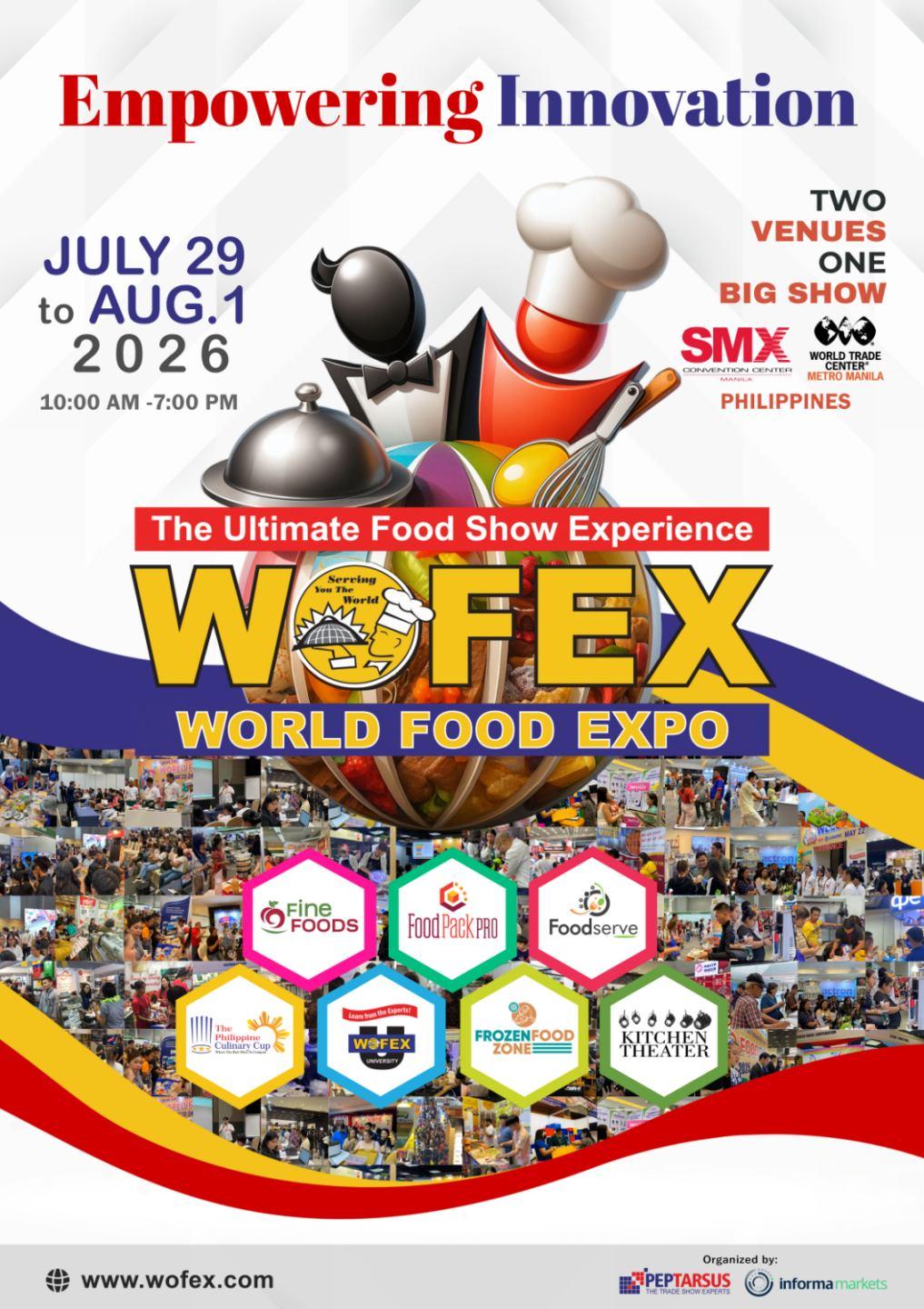
The World Food Expo (WOFEX) takes over the World Trade Center Manila and SMX Convention Center Manila from July 29 to Aug. 1, 2026, offering four days of discovery for anyone involved in the food and beverage industry. From sourcing premium products at Fine Foods to exploring the latest innovations in food processing, packaging, baking, manufacturing, cold chain solutions, and HORECA supplies, there's plenty to uncover across both venues.
The event also features the WACS-certified Philippine Culinary Cup, educational sessions at WOFEX University, live demonstrations at the Kitchen Theater, and a dedicated Frozen Food Zone. Whether you're looking for new suppliers, fresh ideas, or valuable industry connections, this is one event worth adding to your calendar. For entry, a 4-Day Access Pass costs P400.
World Food Expo (WOFEX) 2026 Multiple locations Wed, July 29 10:00 AM
- 7:00 PM
Discover the latest food innovations, culinary trends, and industry opportunities at WOFEX 2026 from July 29 to Aug. 1, 2026, in Manila.
Hong Kong Cat Expo 2026 (Hong Kong)
Photo from Website/Klook
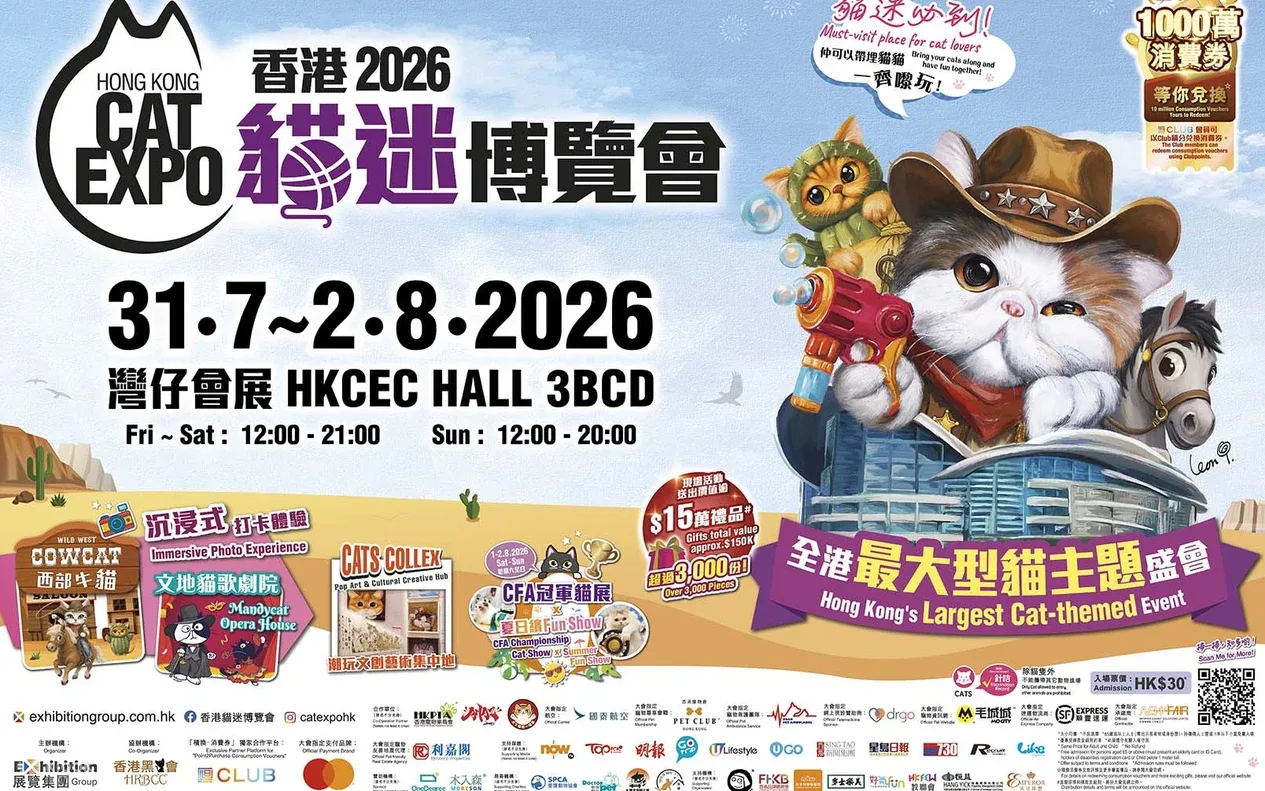
Hong Kong Cat Expo 2026 returns to the Hong Kong Convention and Exhibition Centre (Hall 3BCD) from July 31 to Aug. 2, 2026, turning the venue into a feline-filled spectacle inspired by this year's playful "CowCat" theme. Beyond shopping for cat food, pet supplies, collectibles, and creative merchandise, visitors can explore eye-catching installations, artist showcases, themed attractions, and hands-on activities designed for both cats and their humans.
The expo also hosts the CFA 16th Championship Cat Show x Summer Fun Show, offering a chance to see award-winning pedigree cats up close. Admission is priced at HK$30, while children under one meter tall, seniors aged 65 and above, disability card holders, and cats enjoy free entry.
Hong Kong Cat Expo 2026 Hong Kong Convention and Exhibition Centre Fri, July 31 12:00 PM
- 9:00 PM
Celebrate all things feline at Hong Kong Cat Expo 2026 from July 31 to Aug. 2, 2026, at HKCEC, featuring cat shows, collectibles, shopping, and fun.
Live Entertainment Technology Expo: Musik Manila 2026 (Manila)
Photo from Website/Musik Manila
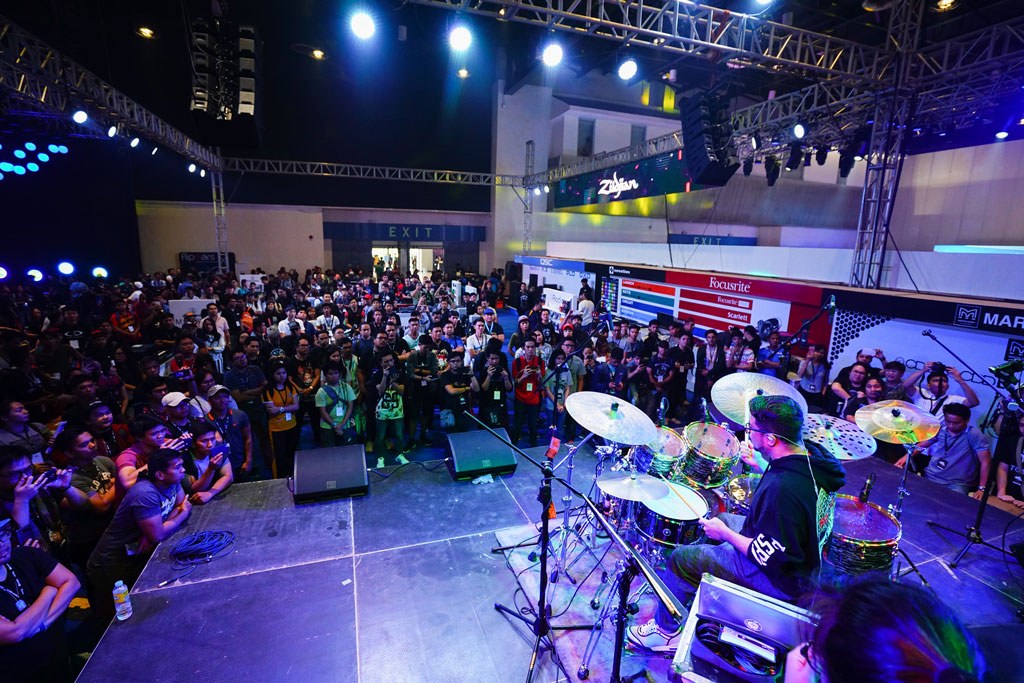
Live Entertainment Technology Expo: Musik Manila 2026 takes place from Aug. 13 to 15, 2026, from 10 AM to 7 PM, at the World Trade Center Manila, serving as a key gathering point for professionals shaping the future of live events and entertainment. More than a trade show, the expo offers a front-row look at the latest innovations in professional audio, lighting, LED displays, staging, broadcasting, and special effects.
Attendees can watch outdoor speaker demonstrations, test emerging technologies, join technical workshops, attend industry talks, and connect with suppliers, venue operators, production specialists, and event organizers looking for the next big breakthrough in live entertainment technology. Admission is through pre-registration via the event's official website.
Live Entertainment Technology Expo: Musik Manila 2026 World Trade Center Manila Thu, August 13 10:00 AM
- 7:00 PM
Discover the latest in live event technology at Musik Manila 2026 from Aug. 13-15, 2026, at World Trade Center Manila.
HKTDC Beauty & Wellness Expo 2026 (Hong Kong)
Photo from Website/HKTDC
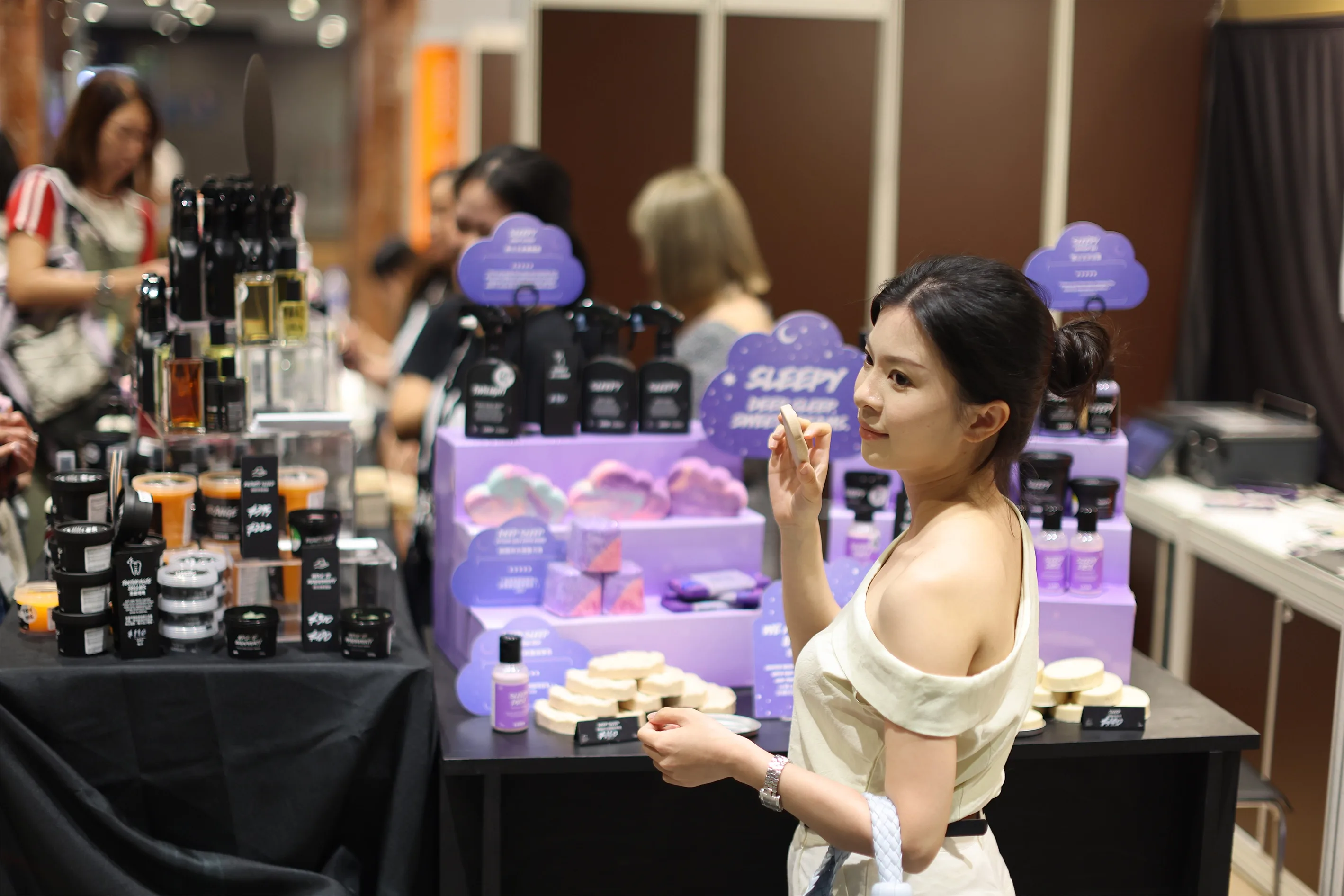
HKTDC Beauty & Wellness Expo 2026 takes place from Aug. 13 to 17, 2026, at the Hong Kong Convention and Exhibition Centre (HKCEC), offering a one-stop destination for anyone interested in beauty, fitness, nutrition, and healthy living. Whether you're searching for the latest skincare innovations, wellness products, beauty devices, or fitness essentials, the expo brings together leading brands and emerging trends under one roof.
Beyond shopping, visitors can catch product demonstrations, expert talks, and industry sharing sessions while discovering dedicated zones such as Fitness Fanatic, Beauty Chic, and Wellness Warrior. Its co-location with the HKTDC Food Expo, Home Delights Expo, and Hong Kong International Tea Fair also makes it an ideal event for exploring a wide range of lifestyle trends in a single visit.
HKTDC Beauty & Wellness Expo 2026 Hong Kong Convention and Exhibition Centre Thu, August 13 10:00 AM
- 10:00 PM
Discover the latest in beauty, wellness, fitness, and self-care at the HKTDC Beauty & Wellness Expo 2026 from Aug. 13-17, 2026, at HKCEC.
HKTDC Food Expo PRO 2026 (Hong Kong)
Photo from Website/HKTDC
HKTDC Food Expo PRO 2026 takes place from Aug. 13 to 15, 2026, from 10 AM onwards at the Hong Kong Convention and Exhibition Centre (HKCEC), offering food and beverage professionals a focused environment to discover what's next in the industry. This is where buyers, suppliers, distributors, and innovators gather to discuss emerging trends, build partnerships, and uncover new business opportunities.
From alternative proteins and future food solutions in the Food Science and Technology Zone to halal-certified products, specialty coffee offerings, and insights from the Food Tech Symposium, the expo delivers valuable perspectives on the evolving global F&B landscape. Entry is free with pre-registration, with the event open exclusively to trade buyers on Aug. 13 to 14 and the public on Aug. 15. Register now via HKTDC's website!
HKTDC Food Expo PRO 2026 Hong Kong Convention and Exhibition Centre Thu, August 13 10:00 AM
onwards
Explore the future of food at HKTDC Food Expo PRO 2026 from Aug. 13-15, 2026, featuring food innovation, halal products, coffee, and networking opportunities.
Food & Hospitality Thailand 2026 (Bangkok)
Photo by QSNCC
Food & Hospitality Thailand (FHT) 2026 brings the region's food, hospitality, and tourism sectors to the Queen Sirikit National Convention Centre from Aug. 19 to 22, 2026, creating a hub for industry leaders, suppliers, buyers, and innovators to connect and do business. More than a product showcase, the event serves as a valuable meeting ground for those looking to exchange ideas, discover emerging technologies, and explore new market opportunities.
Visitors can also catch some of the industry's top competitions, including Thailand's 30th International Culinary Cup, the Thailand Hotel Bartenders' Championship 2026, the Thailand Chocorista Championship 2026, and the 2027 World Fashion Drinks Competition – Thailand Division. Entry is available through pre-registration.
Food & Hospitality Thailand (FHT) 2026 Queen Sirikit National Convention Centre Wed, August 19 10:00 AM
- 6:00 PM
Connect with the region’s F&B leaders at Food & Hospitality Thailand 2026 from Aug. 19-22, 2026, at QSNCC Bangkok, showcasing food, hospitality, and culinary innovation.
APAC Food & Beverage Expo 2026 (Singapore)
Photo from Website/Singapore EXPO
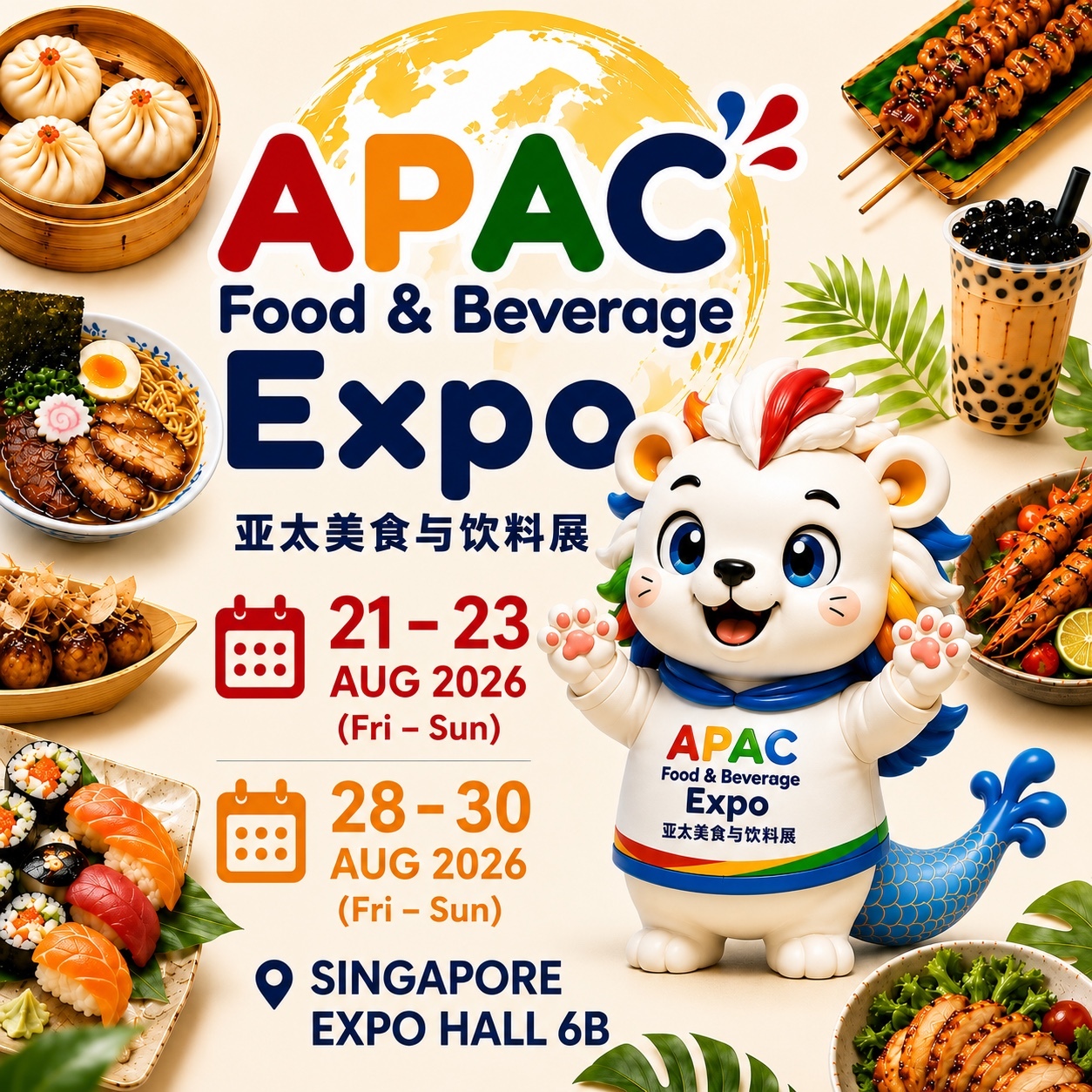
APAC Food & Beverage Expo 2026 welcomes food enthusiasts to Singapore EXPO Hall 6B from Aug. 21 to 23, 2026, from 11 AM to 9 PM, for a celebration of Asia's diverse culinary traditions and emerging food trends.
Spend the day sampling regional specialties, discovering artisanal treats, browsing premium beverages, and meeting the brands behind some of the region's most exciting products. The expo also offers live cooking demonstrations, tasting sessions, and interactive stage activities that bring the food experience to life. Admission is free!
APAC Food & Beverage Expo 2026 Singapore EXPO Fri, August 21 11:00 AM
- 9:00 PM
Discover Asia’s culinary highlights at the APAC Food & Beverage Expo 2026 from Aug. 21-23, 2026, at Singapore EXPO Hall 6B. Free admission.
The Business Show Asia 2026 (Singapore)
Photo from Website/The Business Show Asia
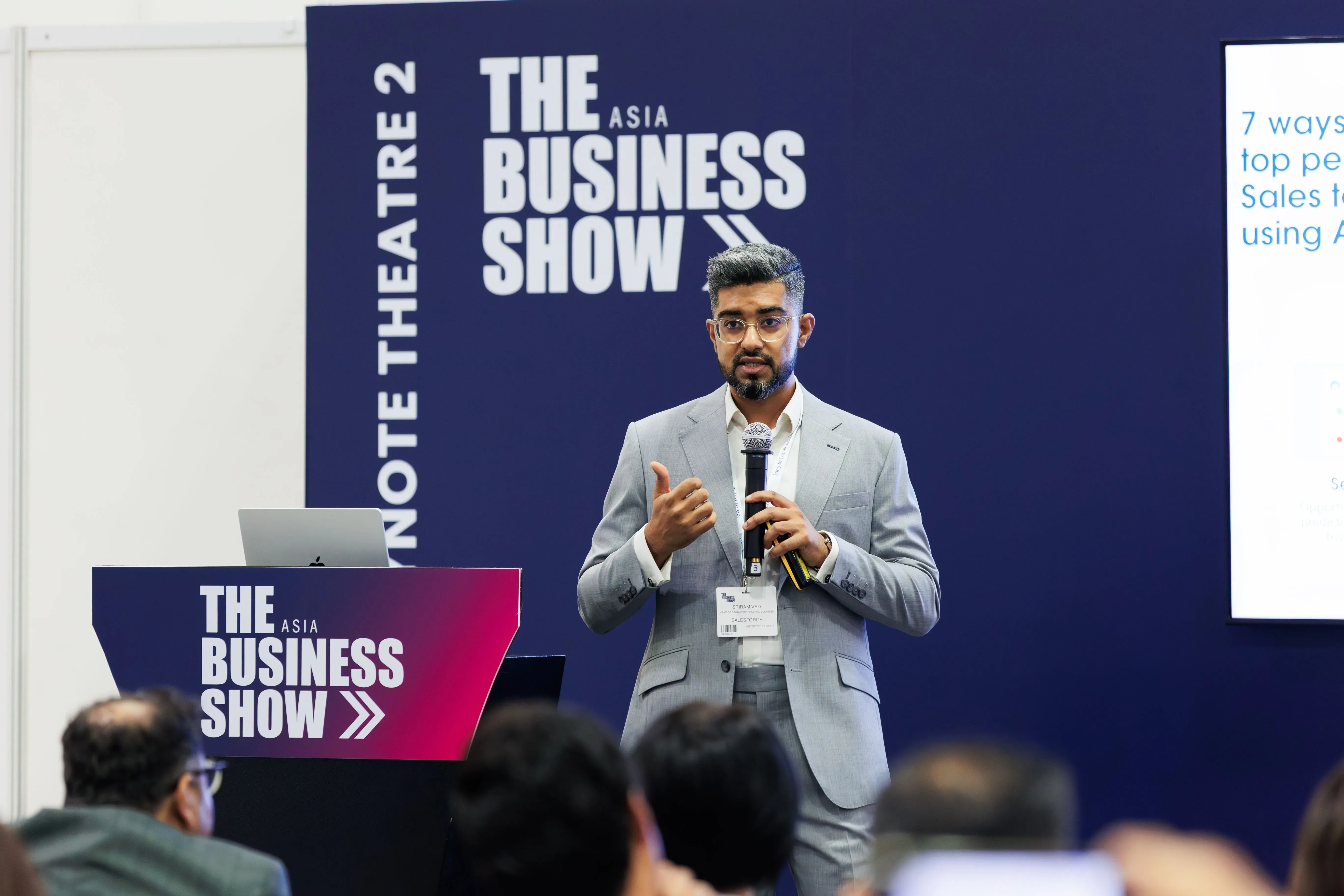
The Business Show Asia 2026 celebrates its 25th anniversary at the Sands Expo & Convention Centre, Singapore, on Aug. 26 to 27, 2026, bringing together entrepreneurs, startup founders, and SME decision-makers eager to take their businesses to the next level. With more than 8,000 attendees, 250 exhibitors, and 150 expert speakers expected, the event offers a packed agenda of keynote sessions, seminars, masterclasses, and networking opportunities.
Visitors can discover solutions spanning technology, marketing, finance, HR, e-commerce, and retail while connecting with industry leaders and potential partners. Attendees also receive access to all show content, networking sessions, exhibitor showcases, and a complimentary official show guide. Admission is free for pre-registered guests.
The Business Show Asia 2026 Marina Bay Sands Expo & Convention Wed, August 26 11:00 AM
onwards
Connect with entrepreneurs and industry leaders at The Business Show Asia 2026 on Aug. 26-27, 2026, at Sands Expo Singapore.
Techsauce Global Summit 2026 (Bangkok)
Photo from Website/QSNCC
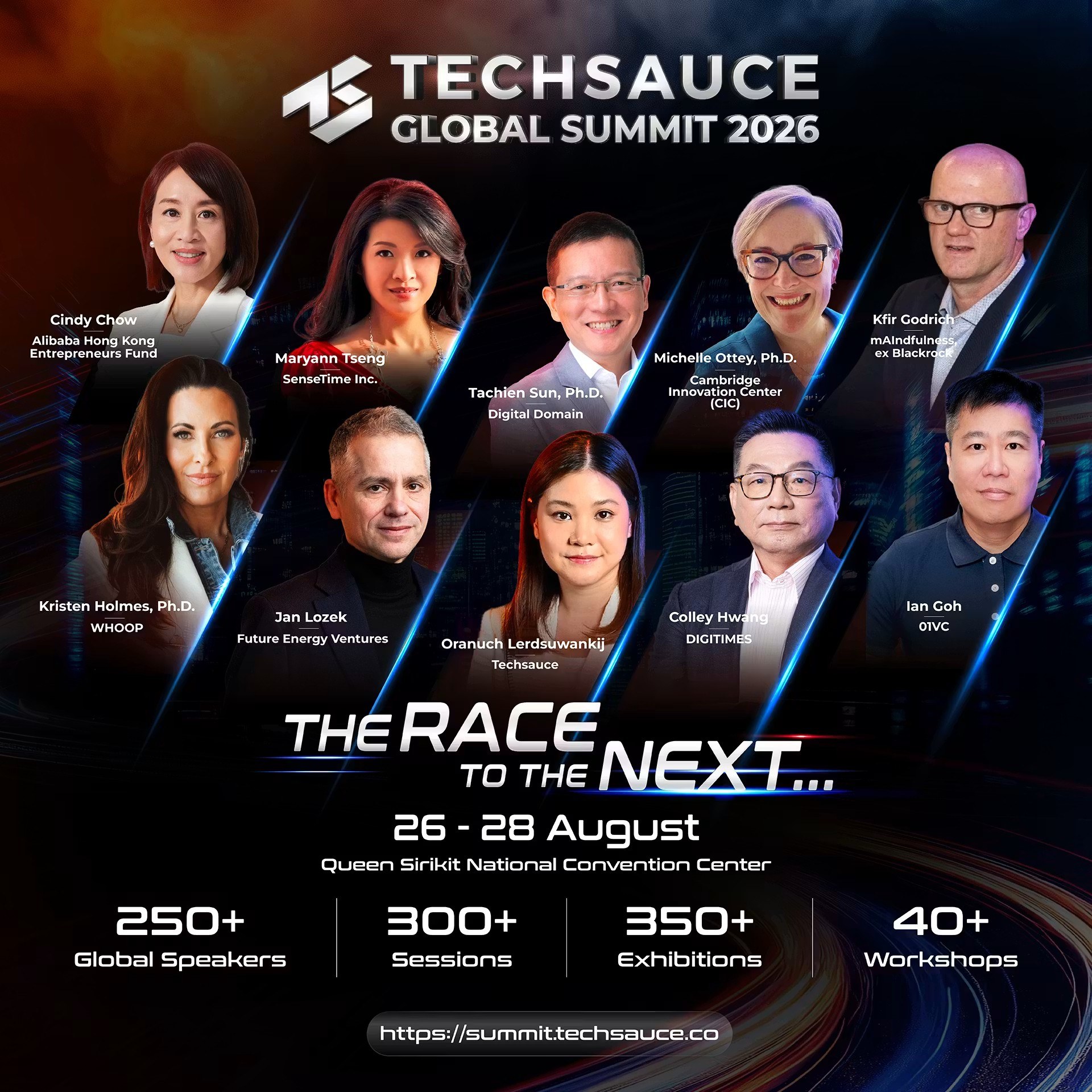
Techsauce Global Summit 2026 brings Southeast Asia's innovation community to the Queen Sirikit National Convention Center (QSNCC) from Aug. 26 to 28, 2026, for three days of conversations, collaboration, and future-focused thinking. Entrepreneurs, investors, corporate leaders, and technology professionals can explore the ideas and technologies shaping tomorrow's business landscape through sessions on AI, FinTech, digital transformation, and emerging trends.
With more than 300 speakers, 350 exhibitors, 40 hands-on workshops, and dedicated business matching opportunities, the summit offers plenty of ways to gain insights, build connections, and uncover new opportunities within the region's fast-growing tech ecosystem.
Techsauce Global Summit 2026 Queen Sirikit National Convention Center Wed, August 26 8:00 AM
- 6:00 PM
Explore the future of technology and innovation at Techsauce Global Summit 2026 from Aug. 26-28, 2026, at QSNCC Bangkok.
Hospital Management Asia 2026 (Bangkok)
Photo from Website/HMA
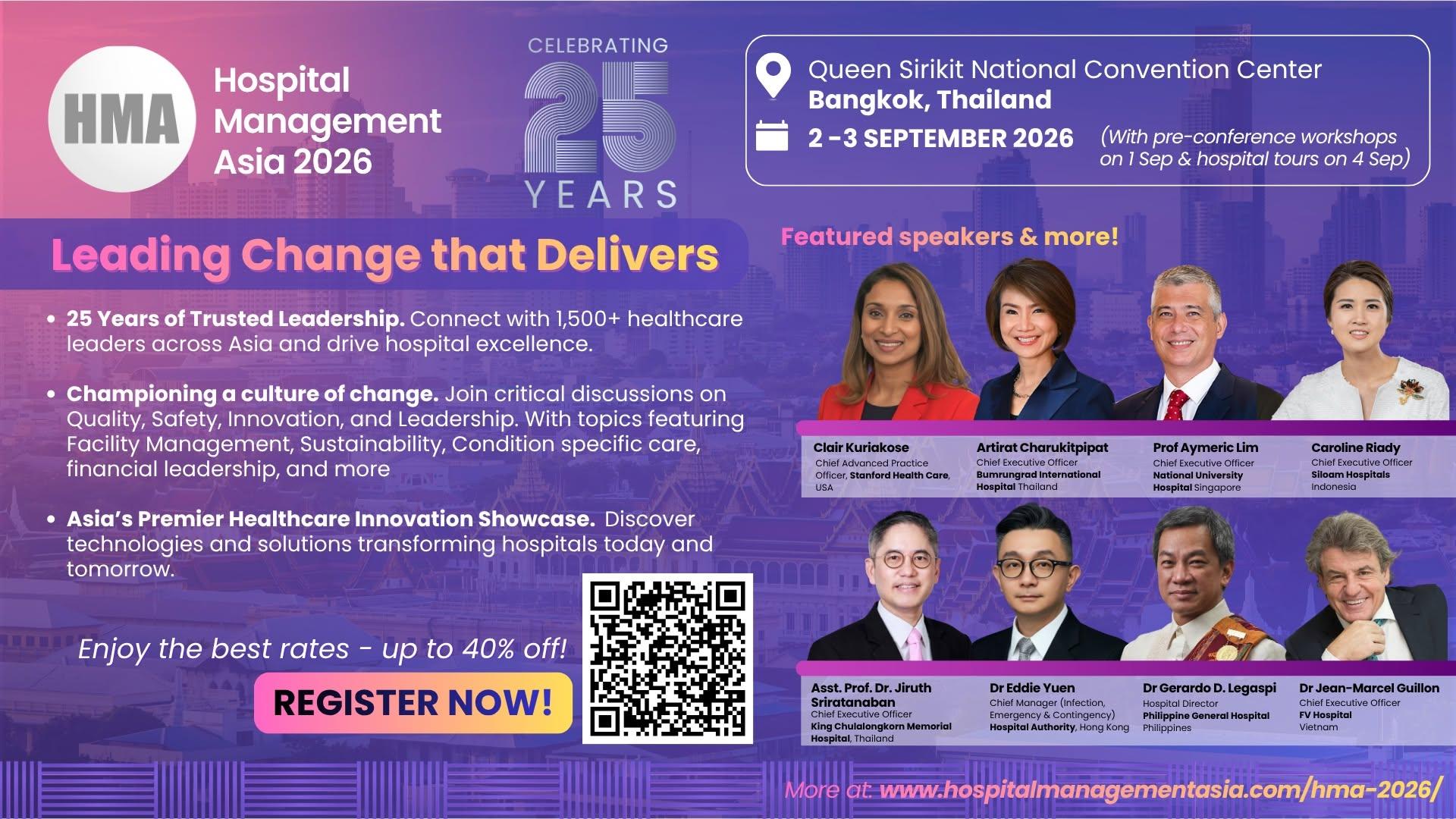
Hospital Management Asia (HMA) 2026 marks its 25th anniversary at the Queen Sirikit National Convention Center from Sept. 2 to 3, 2026, from 9 AM to 6 PM, bringing together healthcare leaders, policymakers, innovators, and hospital executives to discuss the future of healthcare in Asia. This year's program focuses on turning emerging technologies and new care models into real-world improvements in patient outcomes, operational efficiency, and healthcare quality.
Attendees can join expert-led discussions, case study presentations, and networking sessions alongside more than 1,500 industry professionals, while exploring highlights such as the HMA Awards, pre-conference workshops, and hospital tours that showcase Thailand's healthcare innovations. Guests who pre-register early can get up to 40% discount on tickets.
Hospital Management Asia 2026 Queen Sirikit National Convention Center Wed, September 2 9:00 AM
- 6:00 PM
Join Asia’s healthcare leaders at Hospital Management Asia 2026 on Sept. 2-3, 2026, in Bangkok, exploring quality care, innovation, and hospital leadership.
37th Philippine Travel Mart (Manila)
Photo from Website/Philippine Travel Mart
The 37th Philippine Travel Mart returns to the SMX Convention Center Manila from Sept. 4 to 6, 2026, from 10 AM to 7 PM, offering travelers a convenient way to discover destinations, compare deals, and plan future getaways all in one place. As the Philippines' longest-running travel exposition, the event brings together tourism operators, hotels, airlines, resorts, and travel service providers from across the country, making it easy to uncover new experiences and exclusive promotions.
Whether you're dreaming of a beach escape, cultural adventure, or family holiday, you'll find plenty of inspiration through destination showcases, travel packages, and interactive exhibits. Early Bird tickets start at P100 for a 1-Day Pass and P288 for a 3-Day Pass, while regular 1-Day Passes are priced at P120.
37th Philippine Travel Mart SMX Convention Center Manila Fri, September 4 10:00 AM
- 7:00 PM
Discover the best of Philippine travel at the 37th Philippine Travel Mart from Sept. 4-6, 2026, at SMX Convention Center Manila.
APACMed MedTech Forum Asia 2026 (Singapore)
Photo from Website/MTF Asia
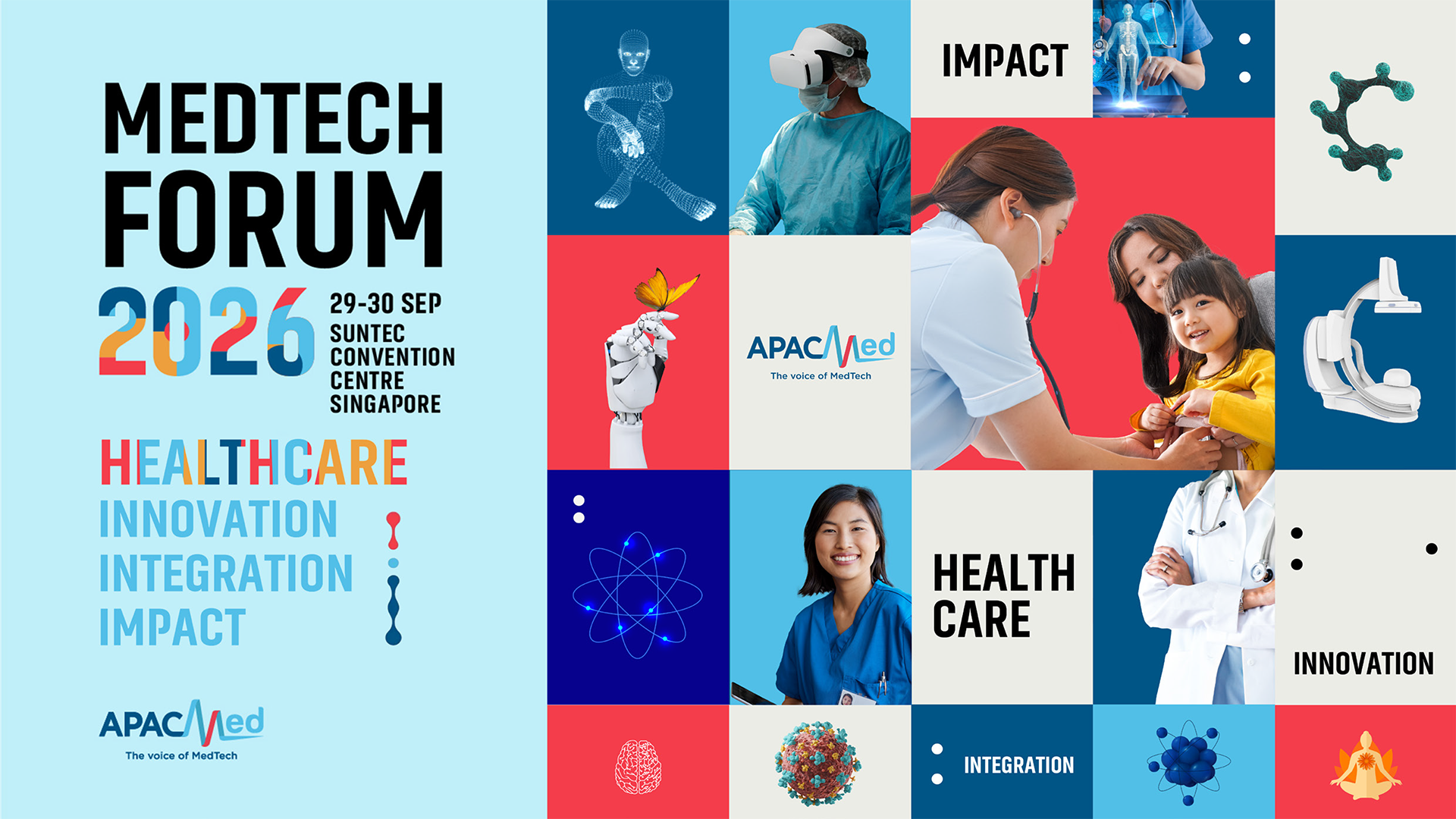
APACMed MedTech Forum Asia 2026 brings healthcare decision-makers to the Suntec Singapore Convention & Exhibition Centre on Sept. 29 to 30, 2026, for an in-depth look at how innovation can deliver measurable improvements in patient care across Asia Pacific. Rather than focusing solely on emerging technologies, the forum examines how AI, digital health solutions, and new care models can be effectively implemented within real-world healthcare systems.
Attendees will have the opportunity to hear from senior policymakers, regulators, healthcare providers, and industry leaders while exploring the trends, regulations, and collaborations shaping the future of MedTech. The event also provides a valuable platform for high-level networking and discussions on improving healthcare access, outcomes, and innovation across the region.
APACMed MedTech Forum Asia 2026 Suntec Singapore Convention & Exhibition Centre Tue, September 29 10:00 AM
onwards
Connect with healthcare innovators at APACMed MedTech Forum Asia 2026 on Sept. 29-30, 2026, at Suntec Singapore, exploring AI, digital health, and MedTech transformation.
Past Events
The Smart City Convention Philippines 2026 (Manila)
Photo by The Smart City Convention Philippines 2026 by E-vents
“The Smart City Convention Philippines 2026” is scheduled for June 1 to 2, 2026, at the SMX Convention Center Aura. The convention is designed as a collaborative platform where decision-makers and industry participants come together to examine solutions that address modern urban challenges.
A key component of the program is its focus on real-world applications of smart city technologies, covering areas such as transportation systems, energy efficiency, urban planning, and public safety. The sessions aim to provide insights into how data and digital tools are shaping contemporary city management and infrastructure development. Register now!
The Smart City Convention Philippines 2026 SMX Convention Center Aura Mon, June 1 8:00 AM
- 5:00 PM
“The Smart City Convention Philippines 2026” runs June 1–2, 2026, at the SMX Convention Center Aura, focusing on smart city solutions, urban innovation, and sustainability.
NRF 2026: Retail’s Big Show Asia Pacific (Singapore)
Photo by NRF 2026: Retail's Big Show Asia Pacific
“NRF 2026: Retail’s Big Show Asia Pacific” is happening from June 2 to 4, 2026, at Marina Bay Sands, Singapore, positioning itself as a key gathering for the regional retail industry under the theme “The Next Now.”
The program features sessions focused on future-forward retail strategies, alongside an extended expo floor across two levels showcasing technologies and solutions shaping the industry. The event also includes the NRF APAC Innovators Showcase, highlighting companies introducing new approaches to retail, including developments in data, artificial intelligence, and customer experience. Attendance is expected to reach more than 11,000 delegates, with participants from major retail brands, solution providers, and global organizations.
NRF 2026: Retail’s Big Show Asia Pacific Marina Bay Sands Singapore Tue, June 2 10:00 AM
onwards
“NRF 2026: Retail’s Big Show Asia Pacific” runs June 2–4, 2026, at Marina Bay Sands, Singapore, bringing together retail leaders through conferences, exhibitions, and networking opportunities.
2nd Asia Sourcing Show 2026 (Textiles & Apparel) (Bangkok)
Photo by IMPACT
The “2nd Asia Sourcing Show 2026 (Textiles & Apparel)” is set from June 3 to 5, 2026, at Hall 5–6 of the IMPACT Exhibition & Convention Center in Bangkok. The event gathers textile and apparel producers from across Asia with international buyers seeking diversified supply chain solutions. Jointly organized by CEMS-Global USA and AFTEX, the exhibition highlights the region’s manufacturing capabilities and encourages direct engagement between stakeholders in the industry.
The show provides access to a wide spectrum of products, including yarns, fabrics, finished apparel, accessories, and supporting trade services. It also creates opportunities for industry exchange, enabling participants to discuss trends and developments shaping the sector.
2nd Asia Sourcing Show 2026 (Textiles & Apparel) IMPACT Exhibition Center Wed, June 3 10:00 AM
- 6:00 PM
The “2nd Asia Sourcing Show 2026 (Textiles & Apparel)” runs June 3–5, 2026, at IMPACT Exhibition Center in Bangkok, connecting global buyers with textile and apparel manufacturers across Asia.
TRENCHLESS ASIA 2026 (Bangkok)
Photo by QSNCC
“Trenchless Asia 2026” takes place June 10 to 11, 2026, at Exhibition Hall 8, Level LG, Queen Sirikit National Convention Center in Bangkok. The event brings together professionals involved in underground infrastructure, including contractors, utilities, engineers, and suppliers, creating a platform for collaboration and knowledge exchange across the region.
The program also includes technical presentations and case studies that provide insight into current practices and developments in the industry. These sessions offer opportunities to learn from real-world applications and stay informed on market trends and infrastructure priorities. The exhibition underscores the continued evolution of trenchless technologies and their role in modern infrastructure.
TRENCHLESS ASIA 2026 Queen Sirikit National Convention Centre Wed, June 10 10:00 AM
- 7:00 PM
“Trenchless Asia 2026” runs June 10–11, 2026, at Exhibition Hall 8, Queen Sirikit National Convention Center, bringing together experts shaping underground infrastructure in the region.
ITE Hong Kong 2026 (Hong Kong)
Photo by ITE Hong Kong
“ITE Hong Kong” returns this June 11 to14, 2026, at Hall 1 of the Hong Kong Convention and Exhibition Centre, marking the event’s 40th edition and continuing its role as a major international travel expo.
The event combines two key segments: ITE-Leisure and ITE-MICE, creating a platform for both leisure travel and meetings, incentives, conferences, and exhibitions. The event provides a space for sourcing travel products, forming business connections, and exploring emerging travel trends across global markets. Programs include business matching sessions, seminars, presentations, cultural performances, and networking activities.
ITE Hong Kong 2026 Hong Kong Convention and Exhibition Centre Thu, June 11 10:00 AM
- 6:00 PM
“ITE Hong Kong 2026” runs June 11–14, 2026, at the Hong Kong Convention and Exhibition Centre, featuring global travel exhibitors, trade networking, and public travel showcases.
“Philippine Blockchain Week 2026” unfolds from June 19 to 21, 2026, at the SMX Convention Center Manila, continuing its role as a major event for blockchain and digital innovation in the Philippines.
The 2026 edition introduces the theme “Decoded: Deployed,” highlighting the growing adoption of blockchain technology in practical, real-world systems. The event reflects the country’s evolving digital landscape, where blockchain is increasingly integrated into sectors such as finance, gaming, infrastructure, and digital identity. Additional elements such as hackathons, competitions, and creator-focused activities contribute to a multi-layered experience that extends beyond traditional conference formats.
Philippine Blockchain Week (PBW) 2026 - DECODED: DEPLOYED SMX Convention Center Manila Fri, June 19 10:00 AM
onwards
“Philippine Blockchain Week 2026” runs June 19–21, 2026, at the SMX Convention Center Manila, showcasing real-world blockchain applications across industries such as finance, gaming, and digital identity.
Learning & Teaching Expo 2026 (Hong Kong)
Photo by Learning & Teaching Expo
“Learning & Teaching Expo 2026” is slated from June 25 to 27, 2026, at Hall 3B‑E of the Hong Kong Convention and Exhibition Centre. Centered on the theme “Reimagining Education: Human-Centric, Future-Ready,” the expo explores how education systems can adapt to future demands while keeping learners at the core of development.
The event connects professionals across education, technology, and policy sectors to exchange ideas and examine emerging trends in teaching and learning. Key programming segments include the Principals’ Conference, Kids’ AI Summit, Language Learning Hub, Mathematics Learning Hub, and STEAM Zone, alongside a Parents’ Summit focused on community engagement.
Learning & Teaching Expo 2026 Hong Kong Convention and Exhibition Centre Thu, June 25 10:00 AM
- 6:00 PM
“Learning & Teaching Expo 2026” runs June 25–27, 2026, at the Hong Kong Convention and Exhibition Centre, connecting educators and innovators through exhibitions, talks, and learning-focused programs.
Build4Asia 2026 (Hong Kong)
Photo by Build4Asia
Build4Asia 2026 is set from May 6 to 8, 2026 at the Hong Kong Convention and Exhibition Centre, delivering a consolidated marketplace for the construction and built‑environment industries. The event focuses on how emerging technologies are reshaping buildings, property operations, and modern workplaces.
A major highlight is the introduction of Asian PropTech and Asian OfficeTech, expanding Build4Asia into a comprehensive platform covering the full building lifecycle. These sectors spotlight solutions responding to evolving demands in space efficiency, digital property management, and workplace optimization.
Build4Asia 2026 Hong Kong Convention and Exhibition Centre Wed, May 6 10:00 AM
onwards
Build4Asia 2026 runs May 6–8 at Hong Kong Convention and Exhibition Centre.
Affordable Art Fair Hong Kong 2026 (Hong Kong)
Photo by Affordable Art Fair
The Affordable Art Fair Hong Kong is back for its 13th edition from May 14 to 17, 2026, at the Hong Kong Convention and Exhibition Centre, continuing its focus on creating an inclusive and commercially active contemporary art environment.
Featuring 105 galleries from Hong Kong and global art centers, the fair highlights original contemporary works spanning painting, sculpture, installation, and photography. Pricing remains intentionally accessible, supporting buyer entry while enabling collectors to expand portfolios with confidence. Experiences such as the Creative Hub, artist‑led workshops, and live art demonstrations foster deeper dialogue around artistic practice and collecting.
Solar & Storage Live Philippines gathers energy professionals for large‑scale exhibitions, expert-led conferences, and free installer workshops focused on solar and energy storage solutions on May 19 and 20, 2026, at SMX Convention Center Manila.
The exhibition floor hosts 350-plus companies, presenting products and solutions across solar generation, batteries, smart energy management, and related technologies. Alongside the exhibition, a conference program featuring more than 150 speakers addresses market developments, regulatory frameworks, and technical innovation over two days. Professional education is supported through the Solar Installer University, which offers free workshop sessions led by industry specialists.
Solar & Storage Live Philippines 2026 SMX Convention Center Manila Tue, May 19 8:30 AM
- 5:30 PM
Solar & Storage Live Philippines 2026 takes place May 19–20 at SMX Convention Center Manila, bringing together thousands of clean energy professionals for exhibitions, conferences, and hands‑on workshops focused on solar and energy storage.
Asia Tech x Singapore 2026 (Singapore)
Photo by Asia Tech x Singapore
Asia Tech x Singapore 2026 (ATxSG) is slated from May 20 to 22, 2026, at Singapore EXPO, uniting technology leaders, innovators, and policymakers for a region‑wide exchange on the future of Asia’s digital economy.
The event is anchored on three integrated pillars, with ATxSummit convening government and industry leaders for policy‑driven discussions on emerging technologies, digital governance, and societal impact, ATxEnterprise serving as the event’s commercial hub that connects companies for solution sourcing and partnership building, and ATxInspire operating as a year‑round program with expert talks and knowledge‑sharing initiatives.
Asia Tech x Singapore 2026 Asia Tech x Singapore Wed, May 20 10:00 AM
onwards
Asia Tech x Singapore 2026 runs May 20–22 at Singapore EXPO, convening global technology leaders, policymakers, and enterprises to shape conversations on digital transformation and Asia’s tech economy.
Outdoor Fest 2026 (Bangkok)
Photo by Traveler & Outdoor Expo
Outdoor Fest returns to QSNCC Bangkok from May 21 to 24, 2026. The exhibition presents a wide range of offerings related to camping equipment, trekking essentials, cycling gear, rock climbing, and other outdoor activities. Visitors can also explore travel services, including accommodation providers, travel agents, and tourist attractions, reflecting the full spectrum of outdoor lifestyle tourism.
By being staged alongside Thailand Dive Expo and Thailand Golf Expo, the event welcomes outdoor enthusiasts, travelers, and industry stakeholders looking to explore products, services, and destinations related to active lifestyles and tourism experiences.
Outdoor Fest 2026 Queen Sirikit National Convention Centre Thu, May 21 11:00 AM
- 8:00 PM
Outdoor Fest 2026 runs May 21–24 at Exhibition Hall 5–6, QSNCC Bangkok, spotlighting outdoor, adventure, and lifestyle tourism products alongside travel services and activity gear.
18th PHILSME Business Expo (Manila)
Photo by Philippine SME Business Expo
The 18th Philippine SME Business Expo (PHILSME) is scheduled for May 22 to 23, 2026, at the SMX Convention Center Manila. PHILSME is designed for entrepreneurs, start-ups, and small and medium enterprise owners focused on business growth and scalability.
The expo brings together 180 exhibitors presenting 260 business solutions, covering tools, services, and strategies relevant to improving operations and expanding market reach. Attendees can engage with 30 keynote talks and business presentations centered on practical, actionable insights rather than theory. PHILSME also serves as a large-scale networking platform, connecting participants with over 10,000 SME owners, entrepreneurs, and start-up founders.
18th PHILSME Business Expo SMX Convention Center Manila Fri, May 22 10:00 AM
- 6:00 PM
Entrepreneurs and SME owners gather at the 18th Philippine SME Business Expo on May 22–23, 2026, at SMX Convention Center Manila, featuring exhibitors, conferences, and large-scale business networking.
THAIFEX - Anuga Asia 2026 (Bangkok)
Photo by IMPACT
THAIFEX – Anuga Asia 2026 convenes the global food and beverage industry in Bangkok from May 26 to 30, 2026, occupying IMPACT Challenger Halls 1–3, Halls 5–12, and Forum Hall 4. The exhibition operates as trade-only from May 26 to 29 and opens to both trade and the public on May 30.
Over 3,300 exhibitors from more than 60 countries and regions will present finished, export-ready food and beverage products alongside processing solutions, technology, packaging, and services covering the full supply chain. A key highlight is the F&B Idea Engine, a dedicated zone designed for trend immersion and future-ready sourcing. The platform is built for sourcing, comparison, and commercial decision-making at speed.
THAIFEX - Anuga Asia 2026 IMPACT Exhibition Center Tue, May 26 10:00 AM
- 8:00 PM
THAIFEX – Anuga Asia 2026 runs May 26–30 at IMPACT Muang Thong Thani, bringing together thousands of global exhibitors and buyers for Asia’s largest food and beverage trade exhibition.
DTI‑Bagong Pilipinas National Food Fair 2026 (Manila)
Photo by BDTP
The DTI‑Bagong Pilipinas National Food Fair 2026 runs from Apr. 8 to 12, 2026, at Megatrade Halls, SM Megamall, celebrating Filipino food, entrepreneurship, and innovation through a large‑scale showcase of food MSMEs from Luzon, Visayas, and Mindanao. Visitors can discover regional delicacies, best‑selling local products, artisanal beverages, and newly developed food innovations, alongside daily activities such as business talks focused on logistics and digital solutions.
Open to the public with free admission, the fair welcomes buyers, entrepreneurs, and food enthusiasts interested in sourcing quality local products, expanding networks, and experiencing the richness of Filipino cuisine.
InnoEX 2026 (Hong Kong)
Photo by HKTDC
InnoEX 2026 is happening from Apr. 13 to 16, 2026, themed “Innovate • Automate • Elevate,” and positioned as a premier business platform for next‑generation smart solutions and disruptive technologies across Asia.
A core event of the Business of Innovation and Technology Week, InnoEX highlights five key innovation areas — AI+, Robotics, Low‑altitude Economy, Property Technology, and Retail Technology — through exhibitions, conferences and seminars, business matching and networking sessions, technology commercialization opportunities, and pitching sessions by innovators and startup founders, supporting B2B, G2G, G2B, and B2G collaboration.
Business Travel Show Asia Pacific 2026 (Singapore)
Photo by Business Travel Show Asia Pacific
Business Travel Show Asia Pacific 2026 is slated for Apr. 14 and 15, 2026, at Marina Bay Sands, Singapore, spotlighting the transformation of corporate travel through technology, sustainability, and data‑driven solutions. A central highlight of the show is the Innovation Faceoff, where selected companies present emerging solutions designed to address real-world challenges in corporate travel and meetings.
Through presentations, live evaluations, and audience participation, the show explores themes such as responsible travel, carbon tracking, real‑time decision support, and the balance between automation and human expertise.
Money20/20 Asia 2026 (Bangkok)
Photo by QSNCC
Money20/20 Asia 2026 is scheduled from Apr. 21 to 23, 2026, at Queen Sirikit National Convention Center. The conference delivers more than 50 hours of programming and features 350 speakers and 130 sponsors spanning 19 fintech verticals. Covered sectors include banking, payments, digital assets, cybersecurity, insurtech, and venture capital.
Leading global and regional organizations in attendance include Ant International, Meta, Fiserv, Visa, Google, Tenpay Global, DBS, and GCash. Money20/20 Asia 2026 is positioned for fintech professionals, investors, and industry stakeholders seeking insights, connections, and business opportunities within fintech.
Franchise Asia Philippines 2026 (Manila)
Photo by Franchise Asia Philippines
Franchise Asia Philippines is scheduled from Apr. 21 to 26, 2026, held at SMX Convention Center and AIM Conference Center Makati, with the theme “Franchising Together: ASEAN to the World.”
Serving as a one-stop platform for the franchise industry, the event gathers local and international franchise concepts, industry leaders, investors, and entrepreneurs through a week-long program that includes the Certified Franchise Executive (CFE) Program (Apr. 21 to 22), the International Conference (Apr. 23), the International Franchise Expo (Apr. 24 to 26), and Franchise and Business Seminars (Apr. 24 to 26), offering attendees opportunities for learning, collaboration, and business growth.
Hong Kong International Licensing Show and Asian Licensing Conference 2026 (Hong Kong)
Photo by HKTDC
The HKTDC Hong Kong International Licensing Show (HKILS) and the Asian Licensing Conference (ALC) are set from Apr. 27 to 29, 2026, at the Hong Kong Convention and Exhibition Centre. As a flagship licensing event in Asia, HKILS serves as a one‑stop platform for licensors and brands to connect with licensees, licensing agents, and traders worldwide.
Conference sessions cover topics such as global licensing trends, sports licensing, museum and cultural IP development, virtual and location‑based entertainment, and emotionally driven consumer products, alongside keynote talks, panel discussions, and award presentations, including The Licensing International Asian Awards 2026 (by private invitation).
ARCHITECT '26 (Bangkok)
Photo by IMPACT
ARCHITECT’26 returns as a major exhibition for the building and construction industry, running from Apr. 28 to May 3, 2026, at IMPACT Challenger Hall 1–3. The exhibition showcases over 1,000 global brands, featuring more than 100,000 products and services covering building materials, construction systems, architecture, design, and technology.
A highlight of the event is the Thematic Pavilion, where construction materials are presented as immersive architectural installations. Additional activities include ASA forums and seminars, networking sessions, and industry gatherings aimed at supporting collaboration and business growth.
MarketingPulse & eTailingPulse 2026 (Hong Kong)
Photo by HKTDC, MarketingPulse & eTailingPulse
“MarketingPulse x eTailingPulse 2026” is scheduled on Mar. 19, 2026, at Hall 3DE, Hong Kong Convention and Exhibition Centre, uniting two of Asia’s most influential industry forums into a single, full‑day conference. Conference sessions explore areas such as phygital commerce, agentic AI, quick commerce, customer engagement, and global brand scaling, with speakers sharing real‑world case studies and market intelligence.
Industry leaders from organizations including LVMH, Olive Young, Meta, Tencent, Taobao & Tmall Group, Atour Lifestyle Holdings, Maximum Effort, CARAXY, and IN.DECIDE Limited will share insights. A Full Pass, priced at HK$2,010, includes full‑day conference access and post‑event video‑on‑demand, with bulk discounts available for group purchases.
UFI Asia-Pacific Conference 2026 (Bangkok)
Photo by Ufi Photo by UFI - The Global Association of the Exhibition Industry
UFI Asia-Pacific Conference 2026 heads to Bangkok on Mar. 5 to 6, 2026, hosted at the Queen Sirikit National Convention Center. UFI’s return to Thailand after 15 years positions this edition as both a progress check and a working forum for what’s next in the exhibitions industry
Programming includes conference sessions and panels designed for shared learning and peer exchange. Highlights listed in the program include “Resolving Conflicts Effectively,” “China 2026: 10 Key Considerations on China’s Consumer Economy,” and the session “The AI Bubble: Where is the ROI?” A keynote on Bangkok as a city for world-class exhibitions is also scheduled.
Interior & Design Manila (IDM) 2026 (Manila)
Photo by Interior & Design Manila
Interior & Design Manila (IDM) 2026 stages the 12th Philippine International Interior & Design Products, Technology & Services Exhibition & Conference, taking place from Mar. 5 to 7, 2026, at SMX Convention Center Manila. The event serves as a major industry platform for interior designers, architects, developers, retailers, and high‑volume buyers.
Alongside the exhibitions, IDM 2026 features professional seminars, design talks, and networking sessions, offering participants opportunities for industry collaboration, market insights, and business development. Visitors may pre‑register for free entry until Mar. 4. On‑site registration is available at an entrance fee of P300 per day.
THAIFEX HOREC Asia 2026 (Bangkok)
Photo by IMPACT
THAIFEX – HOREC Asia 2026 runs from Mar. 11 to 13, 2026, at IMPACT Challenger Hall 1–2. Recognized as Southeast Asia’s leading hospitality and foodservice trade show, the event gathers 600+ brands from over 25 countries and regions and welcomes more than 19,000 trade professionals from 85+ markets.
Key highlights include the ASEAN Coffee Roasting Championship and Coffee Appreciation Protocol, a Hosted Buyer Programme connecting qualified buyers with suppliers, and the THAIFEX – HOREC Academy & Workshop, featuring talks, panels, and hands‑on training led by industry practitioners. The event also showcases the THAIFEX – HOREC Innovation Awards, the Xperiential Zone, and the returning Thailand Ultimate Housekeeping Challenge.
WORLDBEX 2026 (Manila)
Photo by WORLDBEX
The Philippine World Building and Construction Expo (WORLDBEX) 2026 is set to take place from Mar. 12 to 15, 2026, at World Trade Center Metro Manila and SMX Convention Center Manila. Under the 2026 theme “Building Opportunities, Sustaining Lives,” the expo features an extensive showcase of building materials, interior finishes, paints, tiles, lighting solutions, hardware, waterproofing systems, and construction services.
Beyond the exhibition floor, WORLDBEX serves as a hub for professional exchange and collaboration, offering opportunities for networking, brand engagement, and industry dialogue. Recognized as the top‑ranking building and construction exposition in the Philippines, the event attracts a diverse audience, with architects and design professionals forming a significant portion of attendees.
Hong Kong International Film and TV Market (FILMART) (Hong Kong)
Photo by Hong Kong Trade Development Council
The Hong Kong International Film & TV Market (FILMART) marks its 30th edition from Mar. 17 to 20, 2026, reaffirming its role as Asia’s leading entertainment content marketplace. The 2026 program expands its emphasis on AI and emerging technologies through training sessions, workshops, and a dedicated AI Hub exploring how AI is reshaping content creation and workflows.
Strengthening its position as an IP marketplace, FILMART builds on the expanded IP Catalogue introduced in 2025, offering improved matchmaking for creators, buyers, investors, and distributors. Key discussions will address animation, youth‑driven fan cultures, IP ecosystems, and global market trends, underscoring Hong Kong’s strategic role as a bridge between East and West.
Digital Travel Summit APAC 2026 (Singapore)
Photo by Digital Travel APAC
Digital Travel Summit APAC 2026 convenes on Mar. 24 to 25, 2026, at Equarius Hotel, Singapore. As regional travel continues its strong rebound, the conference focuses on rising demands for personalization, seamless journeys, and purpose‑driven experiences, with key themes including AI‑powered engagement, direct booking optimization, customer data platforms, and cross‑generational marketing.
The agenda features keynotes, case studies, strategy roundtables, AI‑in‑action sessions, and peer‑to‑peer workshops, covering topics such as revenue management automation, omnichannel guest journeys, influencer marketing ROI, social commerce, and experience‑led loyalty. The summit offers a focused platform to benchmark strategies and explore how technology and human‑centered design can drive smarter, more connected travel experiences.
Art Basel Hong Kong 2026 (Hong Kong)
Photo by Art Basel
Art Basel Hong Kong presents its largest edition yet from Mar. 27 to 29, 2026, with Preview Days on Mar. 25 and 26, at the Hong Kong Convention and Exhibition Centre, featuring 240 galleries from 41 countries and territories, including 32 first‑time exhibitors. Major curatorial updates include a newly appointed Asia‑based curatorial team and a new "Sectors" section spotlighting works from the past five years through 10 curated booths by 13 galleries.
Expanding beyond the fairgrounds, the Public Program returns with free city‑wide film screenings, talks, and collaborations, including a Film Program curated by Ellen Pau and Conversations guest‑curated by Venus Lau, Director of Museum MACAN. The edition further strengthens its focus on innovation through Zero 10, supporting artists working with emerging technologies.
Augmented World Expo (AWE) Asia 2026 (Singapore)
Photo by AWE Asia
Augmented World Expo (AWE) Asia 2026 will be held in Singapore EXPO from Feb. 2 to 4, 2026, uniting enterprises, developers, investors, and policymakers in the XR and immersive technology space. The conference showcases 90+ speakers, 60 sessions, and eight content tracks on VR, AR, AI, and Web3/Metaverse applications.
The agenda brings together global tech leaders and academic experts from companies and institutions, including Snap, Meta, AWS, YouTube, NUS, and MIT. In addition, six XR startups will pitch their innovations to potential investors during the Startup Pitch program, highlighting opportunities for investment and strategic collaboration.
Cybersec Asia x Thailand International Cyber Week 2026 (Bangkok)
Photo by Cybersec Asia
Cybersec Asia x Thailand International Cyber Week 2026 (Powered by NCSA) takes place on Feb. 4 to 5, 2026, at QSNCC. Co-located with AI Asia, the program focuses on strategic insights, real-world case studies, and forward-looking discussions around cybersecurity governance, infrastructure protection, and digital resilience.
Attendees can engage in keynote sessions, panel discussions, and technical presentations, as well as networking and business-matching opportunities that support partnerships between enterprises, solution providers, and government agencies. The exhibition floor showcases technologies and services aimed at strengthening organizational preparedness against emerging cyber risks.
ASIA ENVIRONMENTAL & WASTE MANAGEMENT EXPO 2026 (Bangkok)
Photo by IMPACT
The Asia Environmental & Waste Management Expo 2026 is scheduled from Feb. 4 to 6, 2026, at IMPACT Exhibition Center, Halls 5–6. Held under the theme “Empowering Asia’s Green Future,” the event features over 150 exhibitors from Thailand and international markets, presenting solutions across waste management, wastewater treatment, recycling, renewable energy, and green innovation.
Complementing the exhibition are in-depth conferences and seminars, led by industry experts, focusing on emerging technologies, regulatory developments, and operational strategies relevant to businesses navigating environmental compliance and sustainability goals. The expo also emphasizes business networking, enabling direct engagement between solution providers and decision-makers across Asia.
33rd PTAA Travel Tour Expo 2026 (Manila)
Photo by PTAA TravelTour Expo 2026
The PTAA Travel Tour Expo 2026 marks its 33rd edition from Feb. 6 to 8, 2026, at the SMX Convention Center, serving as one of the Philippines’ largest platforms for both travel trade professionals and consumers. Organized by the Philippine Travel Agencies Association, the expo brings together airlines, hotels, tour operators, cruise lines, travel insurance providers, and destination services under one roof.
Hosting more than 800 exhibitors, the event supports business growth through face-to-face engagement, partnership building, and market exposure across destinations in Asia, Europe, and other global regions. A key component of the expo is the International Travel Trade Expo (iTTE), which focuses on industry networking, collaboration, and strengthening ties within the travel sector.
Consensus 2026 (Hong Kong)
Photo by Consensus Hong Kong
Following its successful 2025 launch, Consensus Hong Kong is back from Feb. 10 to 12, 2026, at the Hong Kong Convention and Exhibition Centre, connecting institutional investors, developers, founders, and policy leaders across the digital finance ecosystem. The conference offers insights on digital assets, blockchain adoption, regulatory frameworks, and institutional strategy.
Delegates will gain access to technical workshops, capital strategy sessions, networking forums, and startup showcases, including PitchFest and the Consensus EasyA Hackathon. The event also debuts Solana Accelerate, creating a dedicated space for builders to engage with investors, institutions, and peers.
ALT Philippines 2026 (Manila)
Photo by ALT Philippines
ALT ART 2026 returns from Feb. 12 to 15, 2026, with public days running Feb. 13 to 15, at the SMX Convention Center. Nine leading galleries — Artinformal, Blanc, The Drawing Room, Galleria Duemila, Finale Art File, MO_Space, Underground, Vinyl on Vinyl, and West Gallery — anchor the fair, presenting exhibitions that emphasize curatorial intent while enabling stronger engagement between artists, collectors, and institutions.
A key feature is PROJECT SPACES, where each gallery mounts a curated exhibition to contextualize works beyond commercial display. Complementing this is the DISCOVERIES program, which introduces emerging artists to collectors and industry stakeholders, reinforcing ALT ART’s role as a pipeline for new talent within the local art market.
APAIE 2026 (Hong Kong)
Photo by APAIE
APAIE 2026 convenes from Feb. 23 to 27, 2026, at the Hong Kong Convention and Exhibition Centre. With delegates representing universities, government bodies, and education-related organizations worldwide, APAIE functions as both a knowledge forum and a deal-making environment for long-term collaboration.
Programming spans high-level plenaries, thematic panels, research-led discussions, and an exhibition floor, offering insight into emerging policy directions, partnership models, and regional mobility trends. Dedicated networking sessions, receptions, and side meetings are included in the event to facilitate relationship-building and institutional engagement.
Malaysia Brand Day 2026 (Kuala Lumpur)
Photo by Malaysia Brand Day
Malaysia Brand Day 2026 is the first-ever national-scale platform dedicated to celebrating the excellence of Malaysian homegrown brands and SMEs, scheduled on Jan. 8 to 10, 2026 at the Kuala Lumpur Convention Centre (KLCC). Featured brands include ZUS Coffee, Ogawa, Eu Yan Sang, A Cut Above, BloomThis, Carlo Rino, Fire Fighter, Applecrumby, and EE Clinic.
There will also be leadership dialogues, industry expert panels, capability-building workshops, and investor sessions, creating direct opportunities for brands to connect with buyers, investors, and policymakers; and SMEs to scale regionally and globally. The event is open to the public.
TLM Food Expo - January 2026 (Singapore)
Photo by TLM Food Expo - Singapore
TLM Food Expo invites food lovers and industry players back to Singapore EXPO on Jan. 16 to 18 and Jan. 23 to 25, 2026 for six full days of flavor, value, and inspiration. Visitors will find a broad display of food products, from street-style treats to household staples and innovative new launches.
Exhibitors from across the region highlight innovations in the food and beverage sector, giving attendees a chance to discover unique items and enjoy expo-only promotions. The event also supports entrepreneurs seeking opportunities to learn, network, and connect with partners. Admission is free, making the expo accessible to families, hobby cooks, professionals, and curious travelers.
Thai International Travel Fair #31 (Bangkok)
Photo by Thai Travel Agents Association
Thai International Travel Fair (TITF) marks its 31st edition on Jan. 22 to 25, 2026 at Queen Sirikit National Convention Centre. Guests can explore travel experiences under the theme “Go Beyond Amazing Travel,” highlighting new ways to journey farther and smarter.
The event brings together tour operators, airlines, cruise lines, hotels, resorts, car rental firms, and tourism organizations, offering a wide spectrum of travel packages and destination knowledge. For exhibitors, it’s a strategic platform to reach active travelers, launch promotions, and build relationships. For visitors, it’s a chance to compare deals and discover emerging destinations for future holidays.
Asian Financial Forum (AFF) 2026 (Hong Kong)
Photo by Asian Financial Forum
The 19th Asian Financial Forum (AFF) takes place on Jan. 26 to 27, 2026 at the Hong Kong Convention and Exhibition Centre. AFF 2026 features the robust AFF Deal-making program, facilitating one-to-one meetings between project owners and investors. Exhibitions will spotlight green finance at the FutureGreen Showcase, cutting-edge startup ideas at the InnoVenture Salon and FintechHK Startup Salon, and international investment opportunities at the Global Investment Zone.
Attendees can join plenary and special sessions, a keynote luncheon, and focused discussions on risk management, global economic outlooks, asset and wealth strategies, digital assets, gold exchanges, and new energy.
With Intelligence Hedge Fund COO Summit | APAC (Macau)
Photo by With Intelligence
The With Intelligence Hedge Fund COO Summit | APAC is back on Jan. 27 to 28, 2026 at the Grand Hyatt Macau. This summit is purpose-built for COOs, CFOs, CCOs, General Counsels, and other C-suite executives shaping the future of hedge fund operations in the Asia Pacific. Expect deep dives into SMAs and customisation, operational alpha, vendor risk, and launch considerations, all informed by extensive industry research and real-world operational challenges.
Building on last year’s record-breaking edition — which hosted 290+ senior executives and 45 expert speakers — the 2026 Summit promises even richer insights and higher-level networking.
Smart Retail Expo 2026 (Bangkok)
Photo by Smart Retail Expo
Smart Retail Expo 2026 brings retail technology showcases to BITEC EH 100 from Jan. 28 to 30, 2026. Visitors can look forward to demonstrations of smart retail technologies, including AI-powered POS systems, automated product suggestions, facial recognition tools, smart shelves, and self-checkout machines. The exhibition also covers service robots that assist with customer flow, as well as analytics platforms that help retailers make faster, data-driven decisions.
The program includes expert-led seminars on 2026 retail trends and emerging digital practices. The networking zones and business matching activities will also support collaboration between retailers, developers, distributors, and investors.
Hong Kong Holiday & Travel Expo 2026 (Hong Kong)
Photo by 香港旅遊博覽會 Hong Kong Holiday and Travel Expo
The Hong Kong Holiday & Travel Expo 2026 returns from Jan. 29 to Feb. 1, 2026 at the Hong Kong Convention and Exhibition Centre. Organized by the Exhibition Group and co-organized by the Hong Kong Travel Industry Council, this year’s expo is designed to serve every type of traveler, featuring airfare and hotel deals, exclusive tour packages, cruise holiday discounts, luggage and travel gear, recommendations on global attractions and food destinations, and over 50 travel-themed seminars.
Tickets are HK$30, with free admission for children under one meter, seniors aged 65 and above, and holders of disability certificates.
Don’t let your event or deal go unnoticed! Seize the opportunity to be featured in our The List, Top Deals, and Delish Insider newsletters, the go-to source for the city's most captivating events and can’t-miss deals. Click here to get started!
The hustle never stops, and neither should your professional growth! If you're looking to boost your career and expand your network, you're in luck. We've handpicked a selection of top-notch business events happening this December 2025 that promise to deliver unparalleled insights, practical knowledge, and valuable connections.
From thought-provoking panels and discussions led by industry experts to international trade shows that delve into the latest trends and strategies, these events offer a wealth of opportunities to equip you with the knowledge and connections to thrive. Check them out!
Business of Design Week (BODW) 2025 (Hong Kong)
Photo by bodw
Business of Design Week (BODW), Asia’s premier annual event on design, innovation, and brands, is back from Dec. 1–6, presented by the Hong Kong Design Centre in collaboration with Italy as the partner country. The "BODW Summit" will run from Dec. 3–5 at the Hong Kong Convention and Exhibition Centre (HKCEC).
Esteemed speakers such as Dr. Carlo Ratti, Patricia Viel, Stefania Ricci, Ole Scheeren, and Paola Antonelli will explore how design thinking drives sustainability, craftsmanship, and digital transformation. For designers and entrepreneurs, BODW 2025 offers unmatched insights, global connections, and inspiration to shape the future of design in Asia and beyond.
Business of Design Week (BODW) 2025 Multiple venues Mon, December 1 10:00 AM
onwards
Business of Design Week (BODW), Asia’s premier annual event on design, innovation, and brands, returns to Hong Kong from Dec. 1–6, 2025.
2025 PhilEd Conference (Manila)
Photo by Private Education Assistance Committee
The 2025 Philippine Education Conference (PhilEd) will take place from Dec. 2-4 at the SMX Convention Center Manila, gathering educators, policymakers, and advocates to discuss the future of learning in the Philippines. This year’s theme, “Changing the Narrative of Philippine Education by Making Reforms Work,” underscores the importance of turning policy into measurable impact. Among the confirmed speakers are DepEd Secretary Sonny Angara, TESDA Director-General Kiko Benitez, and CHED Chairperson Shirley Agrupis, joined by academic leaders and international experts.
2025 PhilEd Conference SMX Convention Center Manila Tue, December 2 12:00 PM
onwards
Join education leaders, policymakers, and innovators at the 2025 Philippine Education Conference, happening Dec. 2-4, 2025, at SMX Convention Center Manila.
DesignInspire 2025 (Hong Kong)
Photo by DesignInspire HKTDC
DesignInspire 2025 is slated from Dec. 3-6 at at the HKCEC. A highlight of the event is the Fusion Vista, a collaboration between design master Alan Chan and multidisciplinary artist Chilai Howard, celebrating the synergy between Hong Kong and Italian design philosophies.
Visitors can also explore the Maison&Objet Intérieurs Hong Kong showcase, a special edition of the acclaimed Paris design exhibition. Designed to connect enthusiasts, businesses, and creators, DesignInspire celebrates how creativity drives progress and cultural dialogue.
DesignInspire 2025 Hong Kong Convention and Exhibition Centre Wed, December 3 10:00 AM
onwards
Experience global creativity at DesignInspire 2025, happening from Dec. 3-6 at the Hong Kong Convention and Exhibition Centre.
Techbayanihan 2025: Data at AI Para Sa Bayan (Manila)
Photo by Techbayanihan (Techherohan Organization Incorporated)
Techbayanihan 2025 is scheduled for Dec. 3-4 at Microsoft Philippines, One Ayala Makati. As the country’s largest Microsoft-powered community tech event, Techbayanihan aims to harness the power of data and AI for national transformation. There will be hands-on skills labs, community networking sessions, AI showcases, and real-world solutions powered by Microsoft Cloud and partner ecosystems such as Databricks, Snowflake, Tableau, SAP, OpenAI, and Power BI.
Techbayanihan 2025: Data at AI Para Sa Bayan Microsoft Philippines, Inc. Wed, December 3 8:00 AM
- 5:00 PM
Experience Techbayanihan 2025, the Philippines’ largest Microsoft-powered tech community event, happening Dec. 3-4, 2025, at Microsoft Philippines, Inc.
Affiliate World Asia 2025 (Bangkok)
Photo by Affiliate World Conferences
Affiliate World Asia 2025 returns to Centara Grand and Bangkok Convention Center this Dec. 3-4 for another groundbreaking edition of the industry’s most influential conference for performance marketers and e-commerce professionals.
The event features expert-level sessions with live keynotes, panels, and Q&As covering topics such as AI, social media ads, search ads, and e-commerce marketing. With exclusive mixers and after-hours networking, attendees will have countless opportunities to connect, collaborate, and close deals.
Affiliate World Asia 2025 - Bangkok Centara Grand & Bangkok Convention Centre at centralwOrld Wed, December 3 10:00 AM
onwards
Affiliate World Asia 2025 returns to Bangkok from Dec. 3-4, 2025, bringing together over 5,500 top affiliate marketers and e-commerce entrepreneurs.
SMESummit 2025 (Singapore)
Photo by SME Summit
Mark your calendars for SMESummit 2025, happening on Dec. 3 at Level 3, Sands Expo and Convention Centre, Marina Bay Sands. Built to empower Singapore’s SME community, the summit will feature conference sessions, 1-1 business matching opportunities, and panel discussions on digitalization, cybersecurity, ESG, and internationalization. Attendees can engage in networking and business matching sessions, explore brand-building strategies, and gain access to insightful dialogues on technology, regulation, and sustainability.
SMESummit 2025 Sands Expo & Convention Centre Wed, December 3 9:30 AM
- 10:30 PM
Join over 500 business leaders and innovators at the Singapore SMESummit 2025 on Dec. 3 at the Sands Expo and Convention Centre.
Thailand Friendly Design Expo 2025 (Bangkok)
Photo by Thailand Friendly Design Expo
Discover the future of inclusive innovation at Thailand Friendly Design Expo 2025, happening Dec. 11-14 at EH 101, BITEC Bangna. As Southeast Asia’s leading event on universal design, wellness, healthcare, and inclusive tourism, this 9th edition unites experts and exhibitors dedicated to making everyday living more accessible for all. Explore state-of-the-art technologies, products, and services for enhance mobility, independence, and well-being — from smart home innovations and rehabilitation equipment to sustainable travel solutions.
Thailand Friendly Design Expo 2025 Bangkok International Trade & Exhibition Centre: BITEC Thu, December 11 10:00 AM
- 7:00 PM
Discover the future of inclusive innovation at Thailand Friendly Design Expo 2025, happening Dec. 11-14, 2025, at EH 101, BITEC Bangna.
Don’t let your event or deal go unnoticed! Seize the opportunity to be featured in our The List, Top Deals, and Delish Insider newsletters, the go-to source for the city's most captivating events and can’t-miss deals. Click here to get started!
The hustle never stops, and neither should your professional growth! If you're looking to boost your career and expand your network, you're in luck. We've handpicked a selection of top-notch business events happening this November 2025 that promise to deliver unparalleled insights, practical knowledge, and valuable connections.
From thought-provoking panels and discussions led by industry experts to international trade shows that delve into the latest trends and strategies, these events offer a wealth of opportunities to equip you with the knowledge and connections to thrive. Check them out!
Hong Kong FinTech Week x StartmeupHK Festival 2025 (Hong Kong)
Photo by Hong Kong FinTech Week
Hong Kong FinTech Week x StartmeupHK Festival 2025 is a 10th-anniversary collaboration between two of Asia’s most influential finance events, running from Nov. 3 to 7, 2025 across the Hong Kong Convention & Exhibition Centre and various venues citywide.
The event will delve into AI, Web3, blockchain, wealthtech, and digital payments, while offering unparalleled opportunities for startups, investors, and corporate leaders to connect, collaborate, and scale their ventures globally. Featured speakers include Geoffrey Hinton, Bill Winters, Georges Elhedery, Richard Teng, and other global leaders.
Hong Kong FinTech Week x StartmeupHK Festival 2025 Multiple venues Mon, November 3 9:00 AM
onwards
Celebrate a decade of innovation at Hong Kong FinTech Week x StartmeupHK Festival 2025, happening Nov. 3–7, 2025, across HKCEC and multiple venues.
COSMEX 2025 (Bangkok)
Photo by Cosmex
COSMEX returns to Bangkok from Nov. 4 to 6, 2025 at BITEC, bringing together ASEAN’s most comprehensive showcase of OEM services and manufacturing technologies for cosmetics, personal care, dietary supplements, and beauty devices.
Attendees can explore the latest trends shaping the beauty and wellness market, discover premium suppliers, and gain valuable insights from expert-led seminars and workshops. COSMEX will be held alongside in-cosmetics Asia, providing visitors access to a broader network of personal care professionals and opportunities to expand across regional markets.
COSMEX 2025 Bangkok International Trade & Exhibition Centre: BITEC Tue, November 4 10:00 AM
- 6:00 PM
Explore the future of beauty at COSMEX 2025, happening Nov. 4-6, 2025, at BITEC Bangkok, featuring 250 brands from 20 countries and inspiring seminars.
Cosmoprof Asia Hong Kong 2025 (Hong Kong)
Photo by Cosmoprof Asia
Cosmoprof Asia 2025 is the premier international B2B beauty trade fair connecting global brands and professionals across the Asia-Pacific. Returning for its 28th edition, the event will be held in two categories and venues: Cosmopack Asia at AsiaWorld-Expo from Nov. 11 to 13, 2025 and Cosmoprof Asia at the Hong Kong Convention and Exhibition Centre from Nov. 12 to 14, 2025.
Cosmopack Asia will spotlight the best in ingredients, raw materials, machinery, equipment, and packaging. Meanwhile, Cosmoprof Asia will showcase finished beauty products across Perfumery and Cosmetics, Beauty Salon and Spa, Nail and Accessories, Hair Salon, and Natural and Organic.
Cosmoprof Asia Hong Kong 2025 Multiple venues Tue, November 11 10:00 AM
onwards
Explore the latest in global beauty at Cosmoprof Asia 2025, happening from Nov. 11-14, across AsiaWorld-Expo and Hong Kong Convention and Exhibition Centre.
Singapore FinTech Festival 2025 (Singapore)
Photo by SG FinTech Festival
Don't miss the 10th anniversary of the Singapore FinTech Festival (SFF), the world’s largest fintech gathering, taking place from Nov. 12 to 14, 2025 at the Singapore EXPO. Organized by the Monetary Authority of Singapore (MAS), the Global Finance & Technology Network (GFTN), and Constellar in collaboration with the Association of Banks in Singapore (ABS), this milestone edition explores how AI, tokenization, and quantum computing will drive the next wave of digital finance.
Attendees can join programs such as the Founders Peak, Capital Meets Policy Dialogue, and the Innovation Lab Crawl, as well as the 10th Global FinTech Hackcelerator.
Singapore FinTech Festival 2025 Singapore EXPO Wed, November 12 7:00 AM
- 6:00 PM
Singapore FinTech Festival 2025 is happening on Nov. 12–14 at Singapore EXPO, spotlighting AI, tokenization, and quantum computing in shaping global finance.
YGG Play Summit 2025 (Manila)
Photo by YGG Play Summit
The YGG Play Summit is back and bigger than ever, taking over SMX Aura, Bonifacio Global City, from Nov. 18 to 22, 2025. This year’s theme, "City of Play," reimagines Manila as a neon-lit hub of Web3 innovation, gaming, and digital culture.
The event spans four themed districts — Player, Degen, Skill, and The Arena — that bridge the worlds of play, learning, and technology. Expect live game show matches, esports championships, career workshops, and interactive exhibits featuring the biggest names in blockchain gaming. VIPs can also look forward to the exclusive POB Crawl, pickleball games, and networking brunches.
YGG Play Summit 2025 SMX Convention Center Aura Wed, November 19 3:00 PM
onwards
The YGG Play Summit returns from Nov. 19-22 at SMX Aura, transforming the venue into the "City of Play," the ultimate Web3 gaming and digital work festival.
DigiTech ASEAN Thailand & AI Connect 2025 (Bangkok)
Photo by DigiTech ASEAN Thailand
Discover Southeast Asia’s most dynamic digital ecosystem at DigiTech ASEAN Thailand & AI Connect 2025, scheduled on Nov. 19 to 21, 2025 at IMPACT Exhibition Center. Hosted by Thailand’s Ministry of Digital Economy & Society, this free-to-attend exhibition is themed “Digital Solutions for Business” and unites global technology innovators under one roof.
Meet 350+ exhibitors and 8,000+ professionals as they showcase the latest advancements in cybersecurity, e-commerce, digital marketing, AI, IoT, and cloud technologies. Learn from experts and gain certifications in digital skills and emerging tech.
DigiTech ASEAN Thailand & AI Connect 2025 IMPACT Exhibition Center Wed, November 19 10:00 AM
- 6:00 PM
Explore the latest in digital innovation at DigiTech ASEAN Thailand & AI Connect 2025, happening Nov. 19-21 at IMPACT Exhibition Center, Bangkok.
17th PHILSME Business Expo — Entrepreneur and Franchise Edition (Manila)
Photo by Philippine SME Business Expo
Get ready to connect, collaborate, and jumpstart your business at the 17th Philippine SME Business Expo – Entrepreneur and Franchise Edition, set on Nov. 28 to 29, 2025 at the World Trade Center Metro Manila.
Now in its 17th year, PhilSME remains a reliable platform for small and medium enterprises, startups, and innovators to access fresh opportunities and practical solutions for business growth. Attendees can participate in conferences and networking sessions led by top industry experts, providing valuable insights on digital transformation, funding, and market expansion.
17th PHILSME Business Expo: Entrepreneur and Franchise Edition World Trade Center Metro Manila Fri, November 28 10:00 AM
- 6:00 PM
Empower your business at the 17th Philippine SME Business Expo, happening Nov. 28-29, 2025, at the World Trade Center Metro Manila.
Don’t let your event or deal go unnoticed! Seize the opportunity to be featured in our The List, Top Deals, and Delish Insider newsletters, the go-to source for the city's most captivating events and can’t-miss deals. Click here to get started!
Chinese financial services corporation, UnionPay International (UPI), has recently expanded acceptance across Europe, making its services available in over 90% of European countries and regions.
UnionPay has steadily expanded its presence across Europe, with its cards now accepted at over 80% of merchants equipped with POS terminals. More than six million merchants also support UnionPay QuickPass contactless payments, making it easy to pay for everyday experiences like dining out, staying at hotels, shopping at supermarkets, exploring tourist attractions, or even hopping on public transport. Since its launch in 2005, QuickPass transactions have more than doubled in several European markets, reflecting the growing number of users and merchants embracing the service. This expansion is creating a truly seamless payment environment across the continent, offering both local residents and international travelers a secure and effortless way to pay wherever they go.
Several major retail and hospitality companies in the region have also integrated UnionPay into their services, including European airport duty-free stores, France’s Galeries Lafayette, the UK’s Harrods, Spain’s El Corte Inglés, and nine Value Retail premium outlets. You can also pay with your UnionPay cards or via mobile wallet at several dining experiences, from fine dining restaurants to fast-food chains and coffee shops. Looking for a luxurious stay? You can make bookings for rooms and other experiences with UnionPay at several major hotel group properties, including Four Seasons, Shangri-La, and Park Hyatt. UnionPay cardholders can also make payments at over 110,000 UK merchants through a partnership with Dojo.
Photo from Facebook/UnionPay International
UnionPay makes exploring Europe smoother than ever. Its services are seamlessly integrated into urban and intercity transport networks, as well as car rental services in travel hotspots like Germany, Spain, and Italy, perfect for those spontaneous road trips. Travelers can also use UnionPay to book tickets to some of Europe’s most iconic attractions, including the London Eye, Disneyland Paris, and Barcelona’s breathtaking Sagrada Família. Even everyday moments are covered, with around 40,000 Selecta vending machines across the continent now accepting UnionPay, making it easy to grab a quick drink or snack on the go.
UnionPay has also issued over one million cards across 13 countries, including Serbia, Italy, and Spain. Residents in Spain, France, Germany, and other European Economic Area (EEA) markets can apply for PecunPay UnionPay cards via the “Yi An” app, which can be used across UnionPay's European network and 183 countries and regions worldwide. It’s also compatible with Weixin Pay, a.k.a. WeChat Pay, and Alipay for QR code transactions, providing convenient payments for European travelers to China.
With visa-free agreements and more direct flights, China is fast becoming a top destination for European travelers. UPI is making the journey even smoother through its “Project Excellence,” which enhances payment convenience for inbound visitors. From seamless card acceptance across China to instant tax refunds on UnionPay cards in gateway cities like Beijing, Guangzhou, Chengdu, and Nanjing, travelers can enjoy a hassle-free experience from arrival to departure.
This strong payment network also benefits European merchants, attracting a growing number of global UnionPay cardholders, including Chinese tourists, with exclusive offers and partnerships. Beyond Europe, hundreds of millions of UnionPay cards are now issued in 83 countries and regions, powering cross-border travel and commerce worldwide, making transactions easier and more convenient all around.
Get the latest curated content with The Beat Asia's newsletters. Sign up now for a weekly dose of the best stories, events, and deals delivered straight to your inbox. Don't miss out! Click here to subscribe.
The hustle never stops, and neither should your professional growth! If you're looking to boost your career and expand your network, you're in luck. We've handpicked a selection of top-notch business events happening this month that promise to deliver unparalleled insights, practical knowledge, and valuable connections.
From thought-provoking panels and discussions led by industry experts to international trade shows that delve into the latest trends and strategies, these events offer a wealth of opportunities to equip you with the knowledge and connections to thrive. Check them out!
Fine Art Asia 2025 (Hong Kong)
Photo by Fine Art Asia
"Fine Art Asia 2025" marks a milestone year as it celebrates its 20th anniversary at the Hong Kong Convention and Exhibition Centre from Oct. 7 to 10, 2025.
The event brings together an exceptional range of museum-quality artworks from rare Chinese bronzes and Himalayan art to Japanese crafts, fine minerals, photography, and contemporary ink art. Coinciding with Hong Kong’s peak art season and major auctions, the fair offers a chance for collectors, curators, and art lovers to engage with globally renowned galleries and discover extraordinary pieces.
Fine Art Asia 2025 Hong Kong Convention and Exhibition Centre Sat, October 4 11:00 AM
- 7:00 PM
Fine Art Asia returns to the Hong Kong Convention and Exhibition Centre from Oct. 4-7, showcasing cultural treasures from world-class galleries.
Tech Week Singapore 2025 (Singapore)
Photo by Tech Week Singapore
Join "Tech Week Singapore 2025" on Oct. 8 to 9, 2025 at Sands Expo & Convention Centre for Asia’s foremost technology gathering. This year’s theme, “Connected Futures, Boundless Impact,” highlights the transformative role of AI, cloud, cybersecurity, data centres, and eCommerce innovation across industries.
The event features six co-located shows, including the DMEXCO Asia debut. Singapore’s Senior Minister of State for Digital Development and Information Mr. Tan Kiat How will attend as Guest of Honour.
Tech Week Singapore 2025 Sands Expo & Convention Centre Wed, October 8 10:00 AM
onwards
Tech Week Singapore 2025 returns on Oct. 8–9 at Sands Expo & Convention Centre, featuring 600+ speakers, DMEXCO Asia debut, and Data Centre World Asia.
Thailand Amusement & Attraction Parks Expo (TAAPE) 2025 (Bangkok)
Photo by IMPACT
"Thailand Amusement & Attraction Parks Expo (TAAPE) 2025" is scheduled for Oct. 15 to 17, 2025 at IMPACT Exhibition Center Hall 6. TAAPE is Southeast Asia’s leading trade exhibition for the amusement, attractions, and water park industry.
Attendees can explore the latest innovations, equipment, and services for theme parks, water parks, indoor playgrounds, arcade centers, and integrated entertainment venues. The expo is the ideal place for sourcing cutting-edge solutions, building partnerships, and discovering business opportunities in SEA's amusement industry.
Thailand Amusement & Attraction Parks Expo (TAAPE) 2025 IMPACT Exhibition Center Wed, October 15 10:00 AM
- 5:00 PM
Southeast Asia’s premier B2B amusement industry expo, TAAPE, takes place Oct. 15–17 at IMPACT Exhibition Center Hall 6.
Manila FAME 2025: Objects of Nature (Manila)
Photo by Manila FAME
"Manila FAME 2025" runs from Oct. 16 to 18, 2025 at World Trade Center Metro Manila. More than 350 exhibitors will showcase thousands of products, from furniture and decorative pieces to fashion wearables and holiday items.
Visitors can explore dedicated zones such as the "Design Commune," where renowned curators present innovative new designs; "Artisans Village," spotlighting regional traditions and live craft demonstrations; and "Nostalgia," a retrospective honoring four decades of Philippine design heritage.
Manila FAME 2025: Objects of Nature World Trade Center Metro Manila Thu, October 16 10:00 AM
- 7:00 PM
Manila FAME returns Oct. 16–18 at World Trade Center Metro Manila, showcasing the Philippines’ finest home, fashion, and lifestyle products.
Business of Luxury Summit – Asia Edition (Hong Kong)
Photo by Financial Times Live
The "Business of Luxury Summit – Asia Edition," co-organized by Nikkei and the Financial Times, is slated for Oct. 20 to 21, 2025 at the Four Seasons Hotel Hong Kong.
The summit will convene CEOs, investors, entrepreneurs, and industry leaders to examine pressing themes such as digital innovation, experiential retail, M&A, Asia’s financial outlook, and the influence of Gen Z consumers.
Featured speakers include CEO of Ferrari Benedetto Vigna, Chairman of The Lane Crawford Joyce Group Jennifer Woo, and Global Head of Onitsuka Tiger Ryoji Shoda, among others.
Business of Luxury Summit – Asia Edition Four Seasons Hotel Hong Kong Mon, October 20 10:00 AM
onwards
The Business of Luxury Summit – Asia Edition takes place on Oct. 20–21, 2025, at the Four Seasons Hotel Hong Kong, gathering leaders, investors, and innovators.
51st Philippine Business Conference and Expo (Manila)
Photo by Philippine Business Conference and Expo
The "51st Philippine Business Conference & Expo (PBC&E)" takes place on Oct. 20 to 21, 2025 at SMX Convention Center Manila. This year’s conference highlights the technologies and strategies shaping the country’s economic future.
For the first time, the event will feature a Tech Expo, an interactive showcase of innovations in artificial intelligence, cloud computing, cybersecurity, IoT, robotics, and more. Admission is free, making this a must-attend for business owners, professionals, and students eager to engage with the future of Philippine enterprise.
51st Philippine Business Conference and Expo SMX Convention Center Manila Mon, October 20 8:00 AM
onwards
Explore the future of digital transformation at the 51st Philippine Business Conference and Expo, set on Oct. 20–21 at SMX Convention Center Manila.
HOUSE AND CONDO #48 (Bangkok)
Photo by Houseandcondoshow - มหกรรมบ้านและคอนโด
"HOUSE AND CONDO #48," Thailand’s leading real estate exhibition, opens Oct. 30 through Nov. 2, 2025 at Queen Sirikit National Convention Centre. This event gathers the country’s top property developers under one roof and is the ultimate destination for buyers across budgets.
Visitors can explore over 1,000 residential projects nationwide, from urban condos to suburban houses, all offering exclusive discounts. Whether you are a first-time buyer, an investor, or simply browsing options, "HOUSE AND CONDO #48" provides unmatched promotions.
HOUSE AND CONDO #48 Queen Sirikit National Convention Centre Thu, October 30 10:00 AM
- 8:00 PM
Thailand’s largest real estate exhibition, HOUSE AND CONDO #48, runs Oct. 30–Nov. 2 at Exhibition Hall 5, offering over 1,000 property projects.
Don’t let your event or deal go unnoticed! Seize the opportunity to be featured in our The List, Top Deals, and Delish Insider newsletters, the go-to source for the city's most captivating events and can’t-miss deals. Click here to get started!
Get the latest curated content with The Beat Asia's newsletters. Sign up now for a weekly dose of the best stories, events, and deals delivered straight to your inbox. Don't miss out! Click here to subscribe.