Meet RG Enriquez-Diez, the Brains Behind 'Astig Vegan'
Manila/ Terra/ Sustainability

'Astig Vegan': Meet the Filipina Who's Veganizing Our Fave Filipino Dishes

Get to Know the Filipina Behind Astig Vegan Veganizing Filipino Dishes

Inspired by compassion and a deep commitment to ethical eating, veganism started as a revolutionary movement that transcends mere food choices into a lifestyle driven by an unwavering dedication to ethical, environmental, and health considerations, resonating with millions across the globe.

At its core, veganism is a conscious choice to abstain from consuming animal products, but it extends well beyond the dinner plate, encompassing everything from fashion to personal care products. It represents a journey towards aligning our actions with our deeply held values.

Whether you're a seasoned vegan, a curious omnivore, or simply intrigued by the idea of a kinder and greener world, let’s delve into the world of Richgail “RG” Enriquez-Diez, who has embraced veganism for the past 15 years (and counting!).

Switching to a Vegan Diet

RG Enriquez-Diez Astig Vegan
Photo by Instagram/astigvegan

RG’s leap to a vegan diet started when she took a nutrition class in college, which significantly expanded her awareness of the importance of mindful food choices. As a result of this newfound knowledge, she initially transitioned to a diet comprising healthier options such as turkey, white meat, and various types of fish. This shift marked the start of her journey towards embracing a vegan lifestyle.

“[B]ecause I was practicing more mindful eating, it became all of the above reasons na: naging for [the] environment, [and] for the animals. I feel like I connected to those kasi I was eating slowly and thinking about what I’m eating. [Ako ay] two years vegetarian, I believe, and prior to that may mga araw na on and off lang na may fish. After 15 years of being a vegan, I never want to go back. Sabi ko, 'This is it!' kasi enjoy ko naman tapos the benefits outweigh the rest. Then [nag-focus ako sa] Filipino [dishes] kasi nakaka-homesick ‘pag du’n ka tumira sa ibang bansa. [Naisip ko] kung vegan ka how can you practice [veganism] and remain like a proud Pinoy [kung] hindi ka naman kumakain ng Pinoy food? So naisip ko gumawa ng vegan versions, and then I ended up sharing with everybody ‘yung recipes.”

([B]ecause I was practicing more mindful eating, it became all the above reasons: it became for the environment, [and] for the animals. I feel like I connected to those because I was eating slowly and thinking about what I'm eating. I was vegetarian for two years, I believe, and prior to that, there were days when I only had fish on and off. After 15 years of being a vegan, I never want to go back. I said, "This is it!" because I enjoyed it, and the benefits outweighed the rest. Then [I focused on] Filipino [dishes] because you’ll feel homesick when you live in another country. If you're vegan, [I thought] how can you practice [veganism] and remain like a proud Pinoy [if] you don't eat Pinoy food? So, I thought, I will make vegan versions of it and then I ended up sharing the recipes with everybody.)

When asked about her transitioning period to becoming a vegan, RG humorously reflects on her past, describing herself as "the least likely candidate to embrace veganism.” She playfully recalls her childhood aversion to vegetables, sharing that her mom had resorted to clever tricks to coax her into eating them.

“Mahilig ako sa taba ng baboy [noon]. Kukutsarahin ko pa ‘yung mantika ng tocino, yung taba ng steak, mga ganun, so it’s really the opposite of vegan.”

(I loved pork fat before. I'll even spoon in the tocino oil, the steak fat, and things like that, so it's really the opposite of vegan.)

Originally from Bacoor, Cavite, RG currently resides in Quezon City after her return from the United States, where she lived with her husband. Their decision to return to the Philippines was driven by RG's unwavering passion project, “Astig Vegan,” dedicated to raising awareness and educating a broader Filipino audience about veganism.

“My husband, who’s the other part of ‘Astig Vegan,’ he’s doing the business side and came up with the realization na it’s easier for us to have [a] Filipino vegan business in the U.S. kasi mas maraming vegans [doon] and alam nila ano ibig sabihin ng vegan. But as far as the advocacy itself, mas kailangan kami dito sa Pilipinas… to get the respect and appreciation of Filipinos in the Philippines [for] vegan food is such a great stamp of approval.”

(My husband, who's the other part of "Astig Vegan," he's doing the business side and came up with the realization that it's easier for us to have [a] Filipino vegan business in the U.S. because there are more vegans [there], and they know what vegan means. But as far as the advocacy itself, we are needed more here in the Philippines... to get the respect and appreciation of Filipinos in the Philippines [for] vegan food is such a great stamp of approval.)

The Journey of ‘Astig Vegan’

RG Enriquez-Diez Astig Vegan
Photo by Instagram/astigvegan

Astig Vegan started as the name of a blog where RG and her friend TJ Basa (also known as Chinay Vegan) collaborated to share their collection of vegan-friendly recipes. The genesis of the name "Astig Vegan" draws inspiration from a renowned vegan cooking show called "Post Punk Kitchen," which resonated with them due to its rock star vibe.

In their pursuit of a name that truly embodied their ethos, RG decided that her alias should have a Tagalog world that would reflect her Filipino heritage while also adding an element of fun and cultural introduction. Hence, "astig," a Tagalog slang term signifying something cool or awesome, was a perfect fit, as it represented their commitment to showcasing veganism in a fun and culturally meaningful way.

“[Pero yung iba sinasabi na] dapat sa’yo, [yung alias mo] sweet vegan kasi girl ka, ganon. [Bakit] astig? ‘Di ka naman maton or siga sa kalye, but I didn’t really think of it that way. Sabi ko, I think it still makes sense kasi astig is like showing na astig ang pagiging Filipino vegan kasi you’re going against the grain; it’s kind of unconventional, parang you’re one of a kind.”

(But others say that I should've used sweet vegan [as my alias] because I’m a girl. They ask, [why] gutsy? It’s not like you’re some tough or macho guy roaming around the street, but I didn't really think of it that way. I think it still makes sense because "astig" is like showing that being a Filipino vegan is cool because you're going against the grain; it's kind of unconventional, like you're one of a kind.)

Over time, RG has expanded her horizons beyond the realm of blogs and ventured onto dynamic platforms such as YouTube, TikTok, Instagram, and Facebook. Recognizing that cooking is a highly visual experience, RG shifted her focus towards creating videos, as they offer a captivating and comprehensive way to present her recipes. This transition allowed her to engage with her audiences more effectively and bring her culinary creations to life in a more immersive manner.

@astigvegan Kulang nalang kanin! #vegan#veganfinds#kaivegan#filipinovegan#astigvegan♬ original sound - RG Enriquez-Diez

Driven by her desire to share more about her inventive recipes, RG authored a book titled “Filipino Vegan” in collaboration with Anvil Publishing, which was officially published in September 2022. Surprisingly, the book became incredibly popular and completely sold out by December of the same year.

“The inspiration is [that] we really wanted to pay homage to being Filipino [from] a vegan point of view. You don’t have to choose between [being a] Filipino or vegan, you can be both. You don’t have to sacrifice flavor or traditional essence [just because you’re a vegan].”

Her book is a compilation of accessible Filipino traditional recipes and a guide to finding affordable vegan-friendly alternatives. She assures her readers that her recipes are not just original but also meticulously tested for taste and flavor.

In between these recipes, readers will discover RG's engaging essays and narratives, offering valuable insights on navigating situations when dining out with your non-omnivore friends and family. Additionally, she dispels the misconception that being a vegan is prohibitively expensive, debunking this notion with practical tips and experiences shared within the book.

During the interview, RG also shared some “must-try” recipes, which include crowd-pleasers like menudo, leche flan,and sisig.

If you’re up for a slightly challenging cooking experience, she recommends trying the vegan versions of kare-kare and palabok. Alternatively, RG suggests that ginumis and nilupak rank among the easiest recipes to prepare.

15 Years of Veganism

Throughout her 15 years of exploration, she unearthed various benefits that come with adopting a vegan lifestyle. She noticed a remarkable improvement in her mood, leading to increased positivity and reduced crankiness. People around her also noticed that her skin became more glowing. Most importantly, she developed a deeper appreciation for cooking and celebrated her heritage as a Caviteña through vegan versions of Filipino dishes.

The vegan lifestyle also opened a world of opportunities for RG, allowing her to connect with diverse people, forge new friendships, and acquire valuable life wisdom. It led RG to numerous positive avenues, such as participating in food festivals and conducting workshops. She considers these opportunities as “very fulfilling” endeavors since veganism can be a controversial topic, particularly in a culture where meat holds a special place in the hearts of many Filipinos.

RG Enriquez-Diez Astig Vegan
Photo by Instagram/astigvegan
RG Enriquez-Diez Astig Vegan
Photo by Instagram/astigvegan

“Not everyone is able to have that, [so] I feel very honored and also lucky… and to be given a chance to be in a room full of people who wanted to learn how I do it [seems like a] very surreal opportunity that they are open to it.”

As cliché as it may sound, being a vegan isn’t always a bed of roses. In a country like the Philippines, where meat-centric cuisine prevails, being at social gatherings with limited vegan options could be a challenge. RG admitted that this was one of her struggles, and she empathizes with those who face similar challenges.

For fellow vegans, RG’s piece of advice when it comes to these situations is to do thorough research. By taking the time to research ahead of time, you can ensure that you're well-prepared in case vegan-friendly options are limited or non-existent. This proactive approach helps you avoid feeling deprived when it comes to meal choices.

“You can also have snacks that you can bring, [but] there will be comments like 'kawawa ka naman, ang hirap pala' pero I mean, kung busog ka naman, it’s okay. Minsan baka iniisip nila demanding or maarte [lang], but you just really have to ask [properly] or even how you handle yourself with your relatives. You just pick your battles din. Be okay with people who are saying na ayaw maging vegan tulad mo.”

(You can also have snacks that you can bring with you, [but] there will be comments like "I pity you, it's hard to be a vegan," but I mean, if you're full, it's okay. Sometimes, they might think [that you’re] demanding or picky, but you just really have to ask [properly] or even how you handle yourself with your relatives. You just pick your battles, too. Be okay with people who are saying they don't want to be vegan like you.)

Moreover, she recommends diving into the "tips on how to be vegan and stay vegan" section of her book, where she has compiled a wealth of essential insights.

Whether you're in the early stages of considering veganism or have recently embarked on your vegan journey, RG's advice is to discover your own unique style. Are you passionate about cooking, love dining out with friends, or have a favorite dish that brings you joy? By understanding your preferences and aligning them with your vegan lifestyle, you can navigate this path with greater success.

“Kung ‘di ka nag-e-enjoy, talagang hindi ka magtatagal kasi you’re in a sacrifice mode. And willpower, okay yan pero hindi yan tatagal talaga. Kailangan you do things out of joy kasi nga gusto mo, hindi lang dahil kailangan mo. Even for those vegans na for animals, kaya ang dali sa kanila kasi ayaw nila kumain ng hayop, parang ganun. Explore that! Not just reflect, but also get to know like-minded people that you can get support from and follow influencers that you can relate to para masaya di’ba at maging inspiration mo siya.”

(If you're not enjoying it, you really won't last long because you're in sacrifice mode. And willpower, that's okay, but that won't last long. You really need to do things out of joy because you want to, not just because you must. Even for those vegans who are for animals, that's why it's easy for them because they don't want to eat animals. Explore that! Not just reflect, but also get to know like-minded people that you can get support from and follow influencers that you can relate to so that you can be happy and make them your inspiration.)

This interview has been edited for length and clarity. To know more about RG Enriquez-Diez, follow Astig Vegan on Facebook, Instagram, and TikTok. You can also meet her at the upcoming VegFest Pilipinas 2023 on Nov. 18-19 at The Spine, Blue Bay Walk, Pasay City.

Get the latest curated content with The Beat Asia's newsletters. Sign up now for a weekly dose of the best stories, events, and deals delivered straight to your inbox. Don't miss out! Click here to subscribe. 

This Week's Event In Manila View more

This Week's Event In Manila

Manila/ Terra/ Sustainability

Philippines Plans to Turn Trash into Power with 2026 Green Energy Auction

11

Let’s talk trash — but not the kind you scroll past on social media. In the Philippines, garbage is about to get a serious glow-up. The Department of Energy (DOE) has announced a groundbreaking initiative: a special Green Energy Auction (GEA) focused entirely on waste-to-energy (WTE) projects, set to launch in early 2026. And while it may sound like a policy deep-dive, this move could reshape how Filipinos live, consume, and power their homes.

The auction is part of the DOE’s broader push to diversify the country’s energy mix while tackling its mounting solid waste problem. With over 61,000 tons of waste generated daily, the Philippines faces a dual challenge: managing urban waste and meeting growing energy demands. The WTE auction aims to solve both by inviting developers to bid on projects that convert municipal waste into electricity.

The move could reshape how Filipinos live, consume, and power their homes. 

This is the infrastructure for cleaner cities, fewer landfills, and homes powered by yesterday’s leftovers.

WTE technology can reduce landfill volume by up to 90%, while producing consistent, renewable energy. For urban dwellers in Metro Manila, Cebu, and Davao, this could mean less pollution and more reliable power — especially during peak demand seasons.

The DOE is currently finalizing the auction guidelines, which will include eligibility criteria, capacity limits, and environmental safeguards. All participating projects must comply with the Ecological Solid Waste Management Act and other national regulations, ensuring that sustainability isn’t compromised in the name of innovation.

This initiative also aligns with the Philippines’ commitment to the National Renewable Energy Program, which aims to increase the share of renewables in the energy mix to 35% by 2030 and 50% by 2040. Waste-to-energy is poised to play a key role in reaching those targets, offering a scalable solution that blends environmental responsibility with economic opportunity.

Stay informed and support sustainable living — follow updates at DOE’s official website and follow their Instagram and Facebook.

Get the latest curated content with The Beat Asia's newsletters. Sign up now for a weekly dose of the best stories, events, and deals delivered straight to your inbox. Don't miss out! Click here to subscribe.
Manila/ The List/ What's On

Two Decades Proud: Yabang Pinoy’s Legacy Sparks a Filipino Renaissance

IMG ebaa8320864e134980f17eb1c7abfce5 VPhoto by Yabang Pinoy

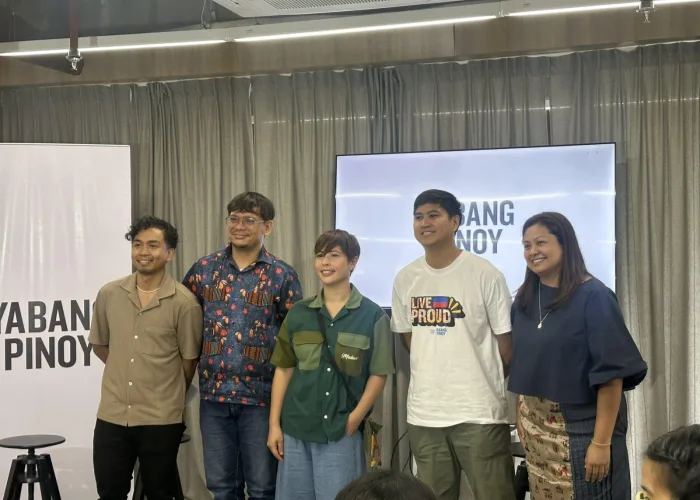
It started with a simple idea: that national pride isn’t just a slogan but also a lifestyle. Now, 20 years later, Yabang Pinoy is proving that living proudly Filipino is a movement and a revolution.

Founded in 2005 by a group of passionate young advocates, Yabang Pinoy has spent the last two decades championing Filipino identity through entrepreneurship, creativity, and community. From its iconic Global Pinoy Bazaar to youth leadership camps and cinema sessions, the organization has built platforms that celebrate Filipino excellence in every form.

Yabang Pinoy turns 20
Courtesy of Yabang Pinoy

This year, the movement marks its milestone anniversary with a dynamic lineup of events and collaborations. The “Filipino Brands in Focus” panel spotlights trailblazers like Ann Poco of Gouache and Ali Sangalang of Linya-Linya, two creatives who turned passion into purpose. Gouache’s artisan-crafted bags and Linya-Linya’s witty, culturally-rooted apparel are statements of pride.

In a powerful gesture of sustainability, Gouache and Yabang Pinoy are launching a special bag collection, with proceeds supporting the planting of 100,000 Bitaog trees along La Union’s Bacnotan Riverway. These native hardwoods protect against flooding and erosion, proving that Filipino pride can also be planet-friendly.

Meanwhile, Ali Sangalang’s journey from presidential speechwriter to creative entrepreneur continues to inspire. His brand Linya-Linya joins the celebration with its “Live Proud” shorts, the wearable reminders that pride in one’s roots can be both stylish and subversive.

Yabang Pinoy turns 20
Courtesy of Yabang Pinoy

The final quarter of 2025 is packed with events, including the 27th to 29th Global Pinoy Bazaars in Makati and Mandaluyong, and the 6th PH Cinema Sessions in Quezon City. Each gathering is a chance to shop local, support artists, and rediscover the richness of Filipino culture.

Join the movement, support homegrown talent, and make every purchase a celebration of Filipino identity. Visit Yabang Pinoy’s Instagram and Facebook to learn about their events this season, and be part of the pride, while you. Meanwhile, check out Gouache’s Instagram and Linya-Linya’s Instagram.

Yabang Pinoy Activities
Courtesy of Yabang Pinoy

Get the latest curated content with The Beat Asia's newsletters. Sign up now for a weekly dose of the best stories, events, and deals delivered straight to your inbox. Don't miss out! Click here to subscribe.
Manila/ Nomads/ Stay

The Peninsula Manila Partners with MPower to Power Up Sustainability

11Photo by The Peninsula Manila/Website

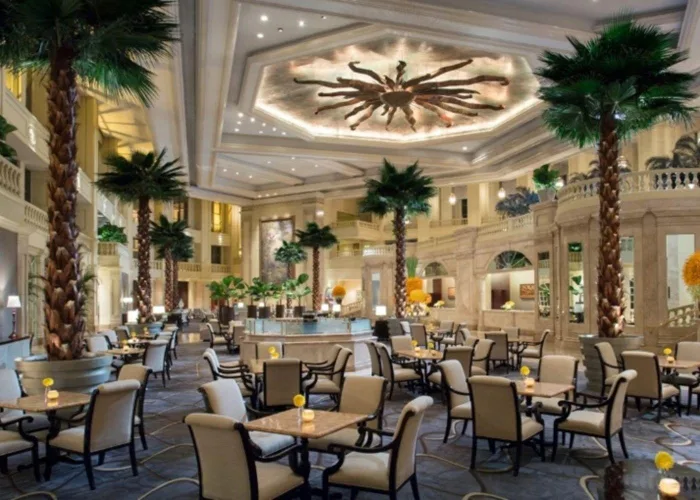
If you think luxury and sustainability don’t mix, The Peninsula Manila is here to prove you wrong. Nestled in the vibrant business district of Makati, this iconic five-star hotel has just made a bold move that’s turning heads in both the hospitality and environmental circles: it’s now fully powered by renewable energy.

The Peninsula Manila
Photo from Instagram/The Peninsula Manila

In a 12-year partnership with MPower, the retail electricity arm of Meralco, The Peninsula Manila has committed to sourcing 100% of its electricity from clean, renewable sources. This makes it the fourth property globally, and only the second in Southeast Asia, within The Peninsula Hotels group to go fully green. The initiative is part of the hotel’s ambitious “Sustainable Luxury Vision 2030,” a roadmap launched in 2021 to reduce environmental impact while elevating guest experiences.

“This collaboration reflects our shared commitment to innovation and environmental stewardship,” said Kevin Tsang, Hotel Director of The Peninsula Manila. “Our partnership serves as a benchmark for responsible business practices and inspires others to pursue a greener world for our future generations.”

The Peninsula Manila Partners with MPower to Power Up Sustainability
Courtesy of MPower

MPower, which holds over 25% of the market share in the Philippines’ competitive retail electricity sector, has been a long-time partner of the hotel. Now, that relationship has evolved into a full-fledged sustainability alliance, one that sets a precedent for other high-end establishments in the region.

The Peninsula Manila’s green shift aligns with a growing global trend: travelers are increasingly choosing eco-conscious accommodations that don’t compromise on comfort or quality. From energy-efficient systems to waste reduction and community engagement, the hotel is weaving sustainability into every corner of its operations.

So whether you’re planning a business trip, a romantic getaway, or a well-deserved staycation, The Peninsula Manila offers a guilt-free indulgence that’s as good for the planet as it is for your soul.

Book your stay via The Peninsula Manila’s official website and be part of the green revolution in hospitality. Follow them on Instagram and Facebook for more information.

Get the latest curated content with The Beat Asia's newsletters. Sign up now for a weekly dose of the best stories, events, and deals delivered straight to your inbox. Don't miss out! Click here to subscribe.

Manila/ Terra/ Sustainability

UP Student Wins James Dyson Award with Self-Farming Solution

James Dyson AwardeePhoto by The James Dyson Award

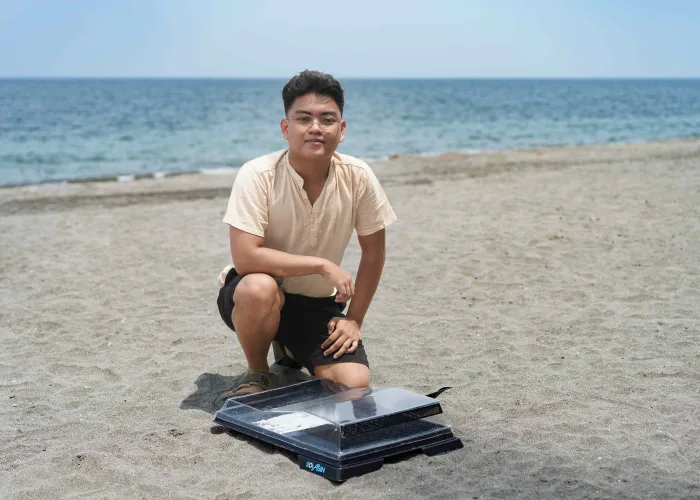
The James Dyson Award has just announced the longlist of national winners and runners-up, with John Carlo Luna Reyes from the University of the Philippines (UP) Diliman taking the Philippines’ top prize for his self-farming solution for coastal communities.

The renowned international design competition celebrates the next generation of design engineers by giving them a platform to showcase their ideas and make a name for themselves. Launched in 2005, it rewards winners with a significant cash prize that could generate media exposure that could kickstart their careers or help launch their own businesses. The competition has since supported over 400 inventions and provided over one million pounds in prize money across 28 participating countries.

The Philippines has showcased a promising lineup of inventors in the past years, including the 2023 National Winner and Top 20 Finalist, Jeremy De Leon, who invented a portable keychain microscope, Make-roscope, and the 2021 National Winner and Top 20 Finalist, Mark Kennedy Bantugon, who created the Pili Seal, a sustainable aircraft sealant.

This year’s brief instructed participants to design something that solves a problem. Last Sept. 2, 2025, The Beat Asia got to meet the national winner and runners-up, who each presented their fascinating inventions tackling various issues in their own communities.

The Dyson Award National Finalists
Photo by The Beat Asia

Both national runners-up hailed from Mindanao State University – Iligan Institute of Technology (MSU-IIT). The first, ChillWise, developed by Jayvimar B. Sumagang and John Joseph P. Banticil, is a passive energy-regulating cooling panel system made from agro-waste. The second, Lambooply, created by Sandrew Rogel Eya, Jo Jane Nalam, and Guendolyn Almonte, is a sustainably engineered material that combines bamboo and Lampakanay grass for versatile applications. Each student team presented their innovations, sharing the research and experiments behind them and highlighting their potential as sustainable alternatives.

ChillWise
ChillWise | Photo by The Beat Asia
Lambooply
Lambooply | Photo by The Beat Asia

The 2025 Philippine national winner of the James Dyson Award tackles the lack of sustainable and workable livelihood options in coastal communities in the Philippines. Despite the passage of the Salt Industry Development Law, the country imports 93% of its salt needs, showing how the once-thriving local salt industry has deteriorated. This decline is reported to have been driven by multiple factors, including climate change, limited technological advancements, a lack of consistent government support, urbanization, and the reclamation of bay areas, as well as the construction of coastal roads, disrupting traditional salt beds. Over time, these pressures, coupled with waning interest in salt farming among younger generations, have left coastal communities struggling to sustain what once was a vital source of livelihood.

John Carlo Luna Reyes introduced SolAsin, an accessible, solar-based method for producing high-value flaky salt using seawater and sunlight. The product was inspired by his hometown in Pangasinan, which, when translated literally, means “a place where salt is made.” The UP Diliman industrial design student wanted to create something that would revitalize the local industries and reduce dependence on imports.

Salt farming tool
SolAsin | Photo by The Beat Asia

“Growing up in Pangasinan, I saw firsthand how coastal communities struggled to access sustainable livelihood opportunities,” shared John. “As a designer and an Iskolar ng Bayan (local scholar), I have always felt a responsibility to use my skills to empower my own community.”

One of the challenges of salt production is the need for salt beds, which often demand vast amounts of land and capital. SolAsin is a standing solution for this as it is compact, sustainable, and easy to use. It only requires filtered seawater, sunlight, and occasional remixing to produce premium flaky salt, a variant with high market value in small quantities that can be sold to nearby food establishments, hotels, and even tourists, creating new livelihood opportunities.

“This recognition is more than just a personal achievement — it is a win for the communities that inspired SolAsin,” he said. “My goal has always been to design with and for the people, and this award gives me the opportunity to further develop the project so it can truly uplift local salt farmers. I hope this inspires more young Filipino designers to look to our own communities and industries for solutions that can create lasting change.”

Designer
Courtesy of The James Dyson Award
Presentation
Photo by The Beat Asia

The inventor walked us through his design process, how he approached the problem by first understanding the community’s existing livelihood assets before discovering exactly what they needed. Originally part of his college thesis, SolAsin is a readily available flaky salt farming tool made up of a High-Density Polyethylene (HDPE) absorbing tray and a Polyethylene Terephthalate Glycol (PETG) protective covering. It may seem like a simple design, but it’s actually quite clever, how the absorber is divided into two parts — one ridged and angled to speed up evaporation and raise salinity, the other flat and deep to allow slow evaporation for flake formation. He applied a compact tray-style design made using thermoforming. Not only is it easy to set up, but it’s also low-cost.

John also explained how the current iteration of the project produces around 150g per week compared to the market’s 240g. This means that for coastal communities to reach their monthly income of P10,000 to P13,000, they will need around eight SolAsin trays. The inventor expressed that he has plans to expand the product to meet the 240g per week, making it more competitive in the local salt market. He also mentioned that although HDPE plastic has been used as liners in salt farming, he plans to develop a non-plastic material that is both durable and effective as a solar absorber.

“SolAsin stood out for its simplicity, scalability, and social impact. It’s a brilliant example of how design can empower communities and revive local industries,” said Dr. Jaine Cadoc-Reyes, James Dyson Award Philippines National Judge and a Professor from the University of the Philippines Los Baños.

“This invention exemplifies Dyson’s engineering ethos — problem-solving through iterative design. SolAsin’s thoughtful integration of local resources and community feedback makes it a standout solution,” added Melvin John Dela Peña, James Dyson Award Philippines National Judge and Senior Program Manager at Dyson. 

SolAsin, along with national runners-up ChillWise and Lambooply, are set to progress to the next stage of the James Dyson Award. The international Top 20 shortlist will be announced on Oct. 15, while the global winners will be revealed on Nov. 5, chosen by James Dyson.

You can follow the James Dyson Award on FacebookX (Formerly Twitter), TikTok, and Instagram for updates.

Get the latest curated content with The Beat Asia's newsletters. Sign up now for a weekly dose of the best stories, events, and deals delivered straight to your inbox. Don't miss out! Click here to subscribe.

Manila/ Terra/ Sustainability

Manila Marks World Food Day 2025 with Community-Led Action and Awareness

11Photo by World Food Day/Website

It’s not just another date on the calendar. October 16 marks World Food Day, and this year, it carries even more weight. The Food and Agriculture Organization (FAO) of the United Nations is celebrating its 80th anniversary, a milestone that underscores decades of global effort to combat hunger and build resilient food systems.

This year’s theme, “Hand in Hand for Better Foods and a Better Future,” resonates deeply in the Philippines, where climate change, urbanization, and economic shifts continue to challenge access to nutritious food. In response, local organizers are turning awareness into action.

World Food Day 2025
Photo from Website/World Food Day
World Food Day 2025
Photo from Website/World Food Day

Following last year's impactful World Food Day event in Manila, where the Department of Agriculture and the FAO celebrated local products and honored women in agriculture, the community is buzzing with anticipation for what 2025 will bring.

While official announcements are still pending, that doesn't mean you can't be part of the movement. World Food Day is a wonderful reminder that everyone can contribute to the global goal of zero hunger, from supporting your neighborhood farmer's market to reducing food waste in your own kitchen. Whether it's a big city celebration or a small personal effort, every step toward a more food-secure future is a significant one.

World Food Day 2025
Photo from Website/World Food Day

While other food-related expos like WOFEX may dominate headlines of their kind earlier in the year, World Food Day stands apart as a public-driven movement rooted in advocacy, not commerce. There’s no product launch here, but a shared commitment to making food systems more inclusive and resilient.

Want to be part of the change? Visit the FAO’s Instagram and Facebook, and the World Food Day site to learn more.

Get the latest curated content with The Beat Asia's newsletters. Sign up now for a weekly dose of the best stories, events, and deals delivered straight to your inbox. Don't miss out! Click here to subscribe.

Manila/ Nomads/ Stay

Lagen Reimagined: New Chapter in Filipino Luxury and Cultural Storytelling

The Boat House1Photo by Lagen reimagined

If you’ve ever dreamed of escaping to a private island where nature, heritage, and design combine as one, Lagen Island in Palawan is about to make that dream even more extraordinary. This September 2025, El Nido Resorts will unveil Lagen Reimagined, a sweeping transformation of its beloved sanctuary in Bacuit Bay, now reborn as a 42-key retreat that honors Filipino craftsmanship and quiet luxury.

Water Villa
Courtesy of Lagen reimagined

Not just aesthetic, the redesign is even a cultural narrative. Each Forest Room and Water Villa is a tribute to indigenous artistry, featuring hand-carved wood, ceramic beadwork, and woven textiles created by artisans from across the archipelago. From the Batak tribe’s Giyangganan patterns to the motifs of the Tagbanua, Tausug, and Maranao peoples, every detail tells a story.

Guests arrive through a hall inspired by the paraw sailing boat, and step into spaces that blend contemporary elegance with deep cultural roots. The villas feature sunken lounges and balconies that frame limestone cliffs and turquoise waters, while interiors showcase fine woodwork and indigenous weaves curated by collaborators like NiñoFranco, Artisano Kabalan, and Create Industrial Corp.

Forest Suit's bathroom
Courtesy of Lagen reimagined

Beyond the rooms, Lagen’s transformation includes a Dive Centre, Marine & Biodiversity Conservation Center, and a two-level wellness sanctuary with a spa garden, yoga studio, and healing pool. It’s a holistic experience designed to connect guests with nature and heritage.

Creative Director Paloma Urquijo Zobel de Ayala describes the new Lagen as “rooted in authenticity,” where every surface is an opportunity to celebrate Filipino design. The project is a collaboration between WATG, Wimberly Interiors Studio, Henning Larsen, and Ayala Land Hospitality’s creative team.

Ceramic Beads
Courtesy of Lagen reimagined

Whether you’re a returning guest or discovering Lagen for the first time, this reimagined island promises a soulful escape, where every stay becomes part of your memories.

Visit El Nido Resort‘s Facebook and Instagram for more information, and book your island retreat at El Nido Resort’s website.

Get the latest curated content with The Beat Asia's newsletters. Sign up now for a weekly dose of the best stories, events, and deals delivered straight to your inbox. Don't miss out! Click here to subscribe.

Manila/ Terra/ Sustainability

Share a Smile: Book and Toy Donation Spots Around Manila

Book DropPhoto by SM Supermalls/Website

Got books and toys your little ones have outgrown? Or perhaps you’ve got stacks of pages that you’ve already read and are just collecting dust on your shelves? If you’re looking to free up space, why not pass them on as donations and brighten someone’s day while you’re at it?

Donating books and toys in Manila is a meaningful way to spread joy, support education, and give cherished items a second life. Whether that’s a favorite storybook or a fun toy that once made you smile, passing them on to someone who really needs them could mean the world.

Here’s your go-to list of trusted places where you can donate your gently-used books and toys so they can make a real impact!

SM Book Nook

Reading
Photo from Website/SM Supermalls

This open library was created with one purpose in mind: to build a community of readers and creators dedicated to literacy, creativity, and generosity. Not only is it a great place to browse through pre-loved titles and sit and read a while in their comfortable and stylish spaces, but these strategic mini-libraries are also great for dropping off your pre-loved reads.

In fact, SM Supermalls just launched a Nationwide Book Donation Drive in celebration of their 40th anniversary, which is anchored on the theme “Under the Same Sky: Share the Magic of Stories,” encouraging mallgoers, tenants, partners, and communities to donate quality books. This bookish initiative aims to collect 40,000 books that will benefit various people from all walks of life, with drop boxes not only placed at the Book Nook spaces, but also in several locations inside their malls. A portion of the proceeds will reportedly be turned over to the National Library of the Philippines and its affiliate libraries.

Do note that the books donated should be in good condition, meaning they are complete, clean, dry, and free from major damage.

For more information on drop-off locations and book hubs, follow SM Book Nook on Facebook and Instagram.

The National Library of the Philippines

Library
Photo from Website/narodnatribuna.info

Speaking of the National Library, the Philippines’ official repository of literary resources also accepts book donations, ranging from Filipiniana and foreign titles to Children’s and magazines. The library is also open to accepting non-book materials such as manuscripts, rare documents, audio-visual materials, electronic resources, e-books, and other special collection resources.

They have strict regulations on donated books and don’t accept books not in good condition or lack relevance (e.g., outdated books and used textbooks or manuals).

To donate, simply fill up this form so your donations can be evaluated. Once approved, submissions of donations can be made through walk-in, via courier, through pick up, or via email (electronic donations) at cdd@nlp.gov.ph. The library will be coordinating with you on the transfer of items.

For more information, click here. You can also follow The National Library on Facebook, X (Formerly Twitter), TikTok, and Instagram for updates.

Segunda Mana (Caritas Manila)

Segunda Mana
Photo from Website/Caritas Manila

The lead social services and development ministry of the Catholic Church of the Philippines accepts both cash and in-kind donations. Segunda Mana is the organization’s in-kind donation program that collects items from clothes and furniture to pre-loved books and toys that are sometimes converted into cash in their charity outlets to sustain their various development programs.

Simply donate at one of their many charity outlets and local parishes listed on this page or directly send them to their Manila main office located in Pandacan.

Alternatively, you can also arrange for a pick-up by filling up this form or contacting their donations in-kind officer, Ms. Cathy Reyes at donation_inkind@caritasmanila.org.ph or +63 285628598 and +63 282437171.

Location: CARITAS MANILA INC., 2002, Jesus Street, Pandacan, Manila.

Note: Please look for the In-Kind Donations Department or contact: +63 9054285001 or +63 9298343857.

For more information, follow Caritas Manila on Facebook, X (Formerly Twitter), and Instagram.

Chummy Chum Foundation

Birthday party
Photo from Facebook/Chummy Chum Foundation

Established in 2007 by the Genomal Family, this non-profit organization and family foundation focuses on supporting underprivileged children. Their mascot, Chummy Chum, is an adorable purple dinosaur that was initially designed to be the face of a children’s garments line, but ended up being the face of the foundation.

They have already implemented several programs through the years, ranging from child medical assistance to children’s parties (Smile for Me Little One) that involve storytelling and sponsored food, drinks, and toys. Under that latter is the “GIVE LOVE FROM PRE-LOVED” program, where you can donate pre-loved and slightly-used children’s items such as toys, clothes, footwear, bags, and educational materials.

To donate, simply fill up the pick-up form here. You can also contact them via email at admin@chummychum.org or call them at +63 9276808591 and +63 82559293 local 112 (landline).

For more details, follow Chummy Chum Foundation Philippines on Facebook.

The Book Stop Project

Plaza Roma
Photo from Website/Intramuros Administration

This pop-up library was conceptualized in 2015 by a team of architects to explore how libraries need to evolve in the contemporary era and promote a love for reading for the next generation.

It had several locations between the years 2016 and 2017 before finally being bought by the Intramuros Administration and gaining its first permanent installation at Plaza Roma. The interesting thing about this project is that it operates as a library, so you can exchange your pre-loved books with others to take home. A great deal for our voracious readers out there.

Alternatively, the administrators also accept pre-read and new books for donations. Aside from Plaza Roma, you can also find book stops at Ayala Triangle Gardens and their newest location in Filinvest City. They accept most types of books from academic textbooks, children’s books, self-help titles, and family-friendly literary fiction novels — reads that are suitable for a public library setting.

To donate, just head over to a stop and leave your book in one of the shelves or contact Ms. Jamaica Morales at +63 917-146-6426 or jamaica.morales@filinvest.com for bulk donations.

You can also follow The Bookstop Project on Facebook and Instagram for updates.

Sunshine Corner PH

children
Photo from Facebook/Sunshine Corner PH

This community-led project aims to promote children’s creative learning through play and reading. Although based in Cebu, the organization has brought ‘sunshine’ to several cities nationwide, sharing pre-loved books and toys with public schools and communities.

Sunshine Corner focuses on bringing ‘sunshine’ and happiness to those who receive their boxes. Most of the items they’re looking for are pre-loved books (activity/coloring books with usable pages, novels), toys (soft toys, puzzles, board games, educational toys), school supplies, including used lunchboxes, shoes, and bags.

The project also extends its help to rural communities — farmers, fishermen, and those who suffered from calamities. They welcome in-kind donations such as slightly-used clothes, towels, bedsheets, and new undergarments.

To donate, email sunshinecornerph@gmail.comor message them on Facebook and Instagram.

Get the latest curated content with The Beat Asia's newsletters. Sign up now for a weekly dose of the best stories, events, and deals delivered straight to your inbox. Don't miss out! Click here to subscribe.

Manila/ Terra/ Sustainability

Philippines Pushes for Multi-Sectoral Initiative to Protect Mangroves

Blue CarbonPhoto by UPLB FDC

The Philippines, an archipelago with over 7,641 islands, is located at the heart of the Pacific typhoon belt, where it faces some of the most extreme climate challenges in the world, including rising sea levels, storm surges, and destructive typhoons throughout the year. This poses a huge problem, considering half the country’s population lives in coastal cities and municipalities, their livelihoods relying heavily on the bounty provided by the sea.

Amid this backdrop, mangroves prove to be a saving grace as these natural coastal defenders play a critical role in shielding shorelines, preserving biodiversity, and supporting the livelihoods of millions. And recognizing their importance is the Zoological Society of London (ZSL) Philippines, which launched the National Blue Carbon Action Partnership (NBCAP) earlier this year. Led by the Department of Environment and Natural Resources (DENR), this initiative aims to strengthen the protection and restoration of blue carbon ecosystems in the Philippines, ensuring their sustainability for climate resilience, biodiversity conservation, and community development.

“The restoration of our blue carbon ecosystems is essential to the nation’s environmental and economic future. They serve as natural defenses, sources of food and livelihood, and carbon sinks where carbon can be absorbed and stored,” said Edwina Garchitorena, Country Director of ZSL Philippines.

In a step towards strengthening this movement, the Forestry Development Center (FDC) of the University of the Philippines Los Baños, in partnership with the Department of Science and Technology (DOST), spearheaded a multi-sectoral initiative to protect and rehabilitate the nation’s mangrove forests. 

The Beat Manila got to attend the Mangrove Blue Carbon Roadmap to 2030 and Beyond Forum last June 18 at the Century Park Hotel Manila where it brought together leaders, scientists, and communities in a multi-sectoral effort to shape policies, technologies, and livelihoods that will fortify the country’s natural barriers while also advancing sustainable mangrove management and coastal development.

forum
Photo by The Beat Asia

“It’s not a takeoff but a follow-through. If you remember, we just launched the NBCAP, and we want to really put substance on the roadmap,” said Dr. Dixon Gevaña, Director of UPLB FDC.2030 is just very near, and we have a lot of global targets, and we are signatories to these targets. So, it’s critical to identify the major steps — the major ingredients to achieve the 2030 goal. We are setting an ambitious goal, but it’s also very realistic. You can do a lot, but doing a lot will require the needed policies and actions.”

Central to the roadmap discussion was the push for policy and legislative priorities, including strong backing for the proposed Integrated Coastal Management (ICM) Act and the Coastal Greenbelt Bill, which both aim to institutionalize science-based and community-led approaches to managing the Philippines’ extensive coastlines. The forum also highlighted the need for coherent governance, cross-agency coordination, and inclusive mechanisms that empower local stakeholders as stewards of mangrove landscapes.

The Importance of Blue Carbon Ecosystems

The Philippines is among the countries most affected by mangrove loss in the ASEAN region, suffering a 10.5% decline between 1900 and 2010, which is second only to Myanmar’s 27.6% recorded between 2000 and 2014. According to Dr. Yasmin Tirol, Dean, College of Fisheries and Marine Science, Aklan State University, this loss goes beyond ecosystems; it directly threatens food security, livelihoods, and even cultural identity in coastal communities that depend on gleaned mangrove resources for daily sustenance. Without mangroves, many families lose access to what she described as “food you don’t have to buy if you have something to glean,” highlighting the urgent need to conserve and restore these forests.

Dr. Yasmin also showcased some of the livelihood opportunities mangrove forests provide that go beyond coastal protection. It is home to many species of fish and clams, and is a valuable resource in creating traditional drinks such as the Tungog, and cosmetic and medicinal products that improve health and overall well-being.

With over 60% of Filipinos living in low-lying areas that are vulnerable to climate risks, the Mangrove Blue Carbon Roadmap to 2030 forum emphasized the urgency of prioritizing mangroves in national adaptation and mitigation strategies, particularly by integrating blue carbon into the Philippines’ Nationally Determined Contributions (NDCs) under the Paris Agreement. Dr. Severino Salmo, Professor and University Scientist at UP Diliman, talked about how achieving these targets required a balanced approach — conserving mangroves for carbon permanence while restoring them for measurable additionality. This must be supported by standardized, site-specific data to strengthen carbon accounting and attract investment in blue carbon initiatives.

Rooadmap
Photo by The Beat Asia
speakers
Photo by The Beat Asia

During the press conference, Roberto “Ka Dodoy” Ballon, Chairman of KGMC in Kabasalan, Zamboanga Sibugay, emphasized mangroves’ vitality in the country and captured what the roadmap ultimately seeks to protect.

Kung aalisin mo kami sa aming kabuhayan, malayo kami sa dagat, sa ilog, sa mga mangrove — wala na kaming buhay. Ang panawagan namin: huwag kaming ilayo. Palakasin ang proteksyon — lalo na ang mangroves — dahil nandiyan ang aming kabuhayan, ang aming pamilya, at ang aming kinabukasan (If you were to take us away from the seas or rivers, we won’t have any livelihood. Our call: don’t take us away from it. Strengthen our protection — our mangroves — because it protects our livelihoods, our families, and our futures).”

In talks on the factors that contribute to the decline of mangroves, it was mentioned that urbanization aquaculture — meaning mangrove forests being converted into fishponds — are the top reasons. In fact, half of the Philippine mangroves have already been lost to it, which made us question: can the mangrove restoration initiative affect people’s livelihoods negatively? This was clarified by Dr. Severino Salmo II, Professor and University Scientist, UP Diliman, when he explained that they are advocating for the restoration of abandoned fish ponds, not the active ones.

Fishponds are privately owned while mangroves are communal resources, which means it’s owned by the state. Once the mangroves are converted into ponds, it takes a lot of time to operate and over time — maximum of 25 years, some even as little as 10 years, its natural productivity decreases. If that’s the case, the fishponds are abandoned,” he explained.

We are advocating for that restoration because that belongs to the state, so it belongs to the people. The people will have to benefit from the restoration. If we keep on delaying restoring the abandoned fish ponds, you're leaving the community vulnerable to typhoons, and you’re losing those biodiversity benefits. That’s an injustice.”

Press conference
Photo by The Beat Asia

Another highlight of the forum is discovering financial and investment opportunities of Blue Carbon in the Philippines and Southeast Asia, which was facilitated by Dr. Gopalasamy Reuben Clements, Sustainable Finance Specialist from the Zoological Society of London, and Ma. Josella Pangilinan, Program Coordinator of Wetlands International.

Josella’s talk explored the different ways to fund Blue Carbon projects in the Philippines, as well as investment opportunities that can help fund and protect Blue Carbon restoration and conservation initiatives.

“The numbers are very clear. We are losing around two to five percent of our Philippine coastal ecosystem annually. That translates to US$1.2 billion annual economic losses from degraded mangroves. This affects about 40% of the Filipinos who depend on coastal resources for their livelihoods.”

Josella then stated key financing options to help fund conservation and restoration initiatives, which included Blue bonds and Blue loans, Blue Carbon credits, and the International Climate Fund. On the other hand, Dr. Gopalasamy explored blue finance opportunities in Southeast Asia, such as Impact bonds, Carbon credits, and Biodiversity credits.

The Takeaway

2030 is not far, and it’s important to know how much mangroves contribute to our country’s and people’s protection and livelihoods. Listening to the speakers has equipped us with the knowledge on how mangroves fit into the bigger picture and why they need our urgent attention.

The event culminated with commitments to refine the national blue carbon roadmap, align sectoral efforts, and build momentum for the passage of enabling legislation. Stakeholders also pledged to support the development of a long-term monitoring and financing mechanism for mangrove conservation, which will be supported by science and local participation.

Commitment Board
Photo by The Beat Asia

As climate threats increase, mangrove protection is a national priority that requires cross-sector collaboration, community empowerment, and inclusive support to integrate blue carbon into policy and protect lives, livelihoods, and long-term resilience.

To learn more about these initiatives, click here or follow UP Los Baños’ Forestry Development Center on Facebook.

Get the latest curated content with The Beat Asia's newsletters. Sign up now for a weekly dose of the best stories, events, and deals delivered straight to your inbox. Don't miss out! Click here to subscribe.

Manila/ Terra/ Sustainability

IHG Hotels & Resorts PH Plans to Make 30% of All Menu Offerings Plant-Based

Holiday Inn Makati 1Photo by IHG Hotels & Resorts

Sustainable dining is the way forward as IHG Hotels & Resorts (Intercontinental Hotels Group) properties in the Philippines pledge to make 30% of all menu offerings plant-based by 2027.

IHG hotels across the country namely Crowne Plaza Manila Galleria, Holiday Inn & Suites Manila Galleria, Holiday Inn Cebu City, Holiday Inn & Suites Batangas Lima Park, and Holiday Inn & Suites Makati pledged to this policy, which represents one of the most comprehensive plant-based dining initiative undertaken by a major international hotel group in the Philippines. The initiative spans multiple dining venues at the properties, including restaurants, room service menus, and banquet offerings.

“Our commitment to increasing plant-based options to 30% across our menus at Crowne Plaza and Holiday Inn & Suites Manila Galleria by 2025 reflects our dedication to sustainable hospitality and responsible dining," said Patria Puyat, Cluster General Manager at Crowne Plaza Manila Galleria and Holiday Inn & Suites Manila Galleria. “This initiative aligns with our global 'Journey to Tomorrow' sustainability program and reflects our determination to reduce our environmental footprint while meeting the evolving preferences of today's conscious travelers.”

Holiday Inn Manila
Holiday Inn Express Manila Newport City | Photo from IHG Hotels & Resorts

"We've always believed that great hospitality is about making people feel cared for, not just through comfort, but through the choices we offer,” added Andy Belmonte, General Manager of Holiday Inn & Suites Makati. “Expanding our menus to include 30% plant-based dishes by the end of 2027 is one way to support our guests' well-being while caring for the planet. It's a meaningful step for us as part of the Makati community, where modern living and conscious choices go hand in hand."

Research shows that plant-based proteins generate up to 90% lower greenhouse gas emissions and require up to 90% less land and water use than animal proteins. Additionally, the United Nations Food and Agriculture Organization (FAO) found that plant-based foods also generate approximately 50% less food waste than meat and dairy products. This undertaking from IHG showcases meaningful progress toward conscious dining and provides a more thoughtful and forward-looking guest experience.

“This commitment demonstrates how the industry can evolve with purpose, integrating care for people and the planet with the quality and comfort guests expect,” said Marielle Lagulay, Sustainability Program Manager at Lever Foundation — a global NGO that assists leading companies to upgrade their food sourcing to a more sustainable supply chain.

“We hope IHG Philippines’ great initiative inspires other hospitality groups to pursue similar commitments, understanding that thoughtful changes in food service can generate substantial positive impact.”

Dining
Holiday Inn Makati | Photo from IHG Hotels & Resorts

For more information on bookings and reservations, follow IHG Hotels & Resorts on FacebookX (Formerly Twitter)TikTok, and Instagram.

Get the latest curated content with The Beat Asia's newsletters. Sign up now for a weekly dose of the best stories, events, and deals delivered straight to your inbox. Don't miss out! Click here to subscribe.

Manila/ Terra/ Sustainability

Grab Philippines Introduces the Philippines’ First Full Electric Taxi Fleet

20250609 Grab Taxi ElectricPhoto by Grab Philippines/Website

Grab Philippines makes a major leap forward towards sustainable urban transport in the Philippines with their newest ride option, GrabTaxi Electric.

This will be the Philippines’ first fully electric, on-demand taxi fleet that is officially recognized by the Land Transportation Franchising and Regulatory Board (LTFRB). Launched in partnership with local operator EV Taxi Corp, Grab Philippines began operations in key Metro Manila hubs including Makati, Taguig, Pasig, MandaluyongParañaque, and Pasay.

The rollout marks a significant regulatory and operational milestone for the country, where traditional combustion engine vehicles still dominate the mobility landscape.

This launch is based on Grab’s June 2024 pilot study with BYD Philippines, which demonstrated the operational and financial viability of electric vehicles for both fleet operators and driver-partners. The findings confirmed an important insight: electrification is not only an environmental imperative, but also a cost-effective and scalable model for urban mobility.

GrabTaxi Electric is currently in beta, operating in six cities in Metro Manila
Photo from Website/Grab Philippines

“This is not just about offering another ride option,” said Grab Philippines Country Head Ronald Roda. “It’s about fundamentally changing the DNA of urban transport in the Philippines — one that aligns with our sustainability commitments, empowers Filipino commuters, and creates meaningful green livelihoods. Sustainability cannot be a distant ideal; it must be something you can book, ride, and feel today.”

GrabTaxi Electric is part of Grab’s broader eco-mobility strategy, including the expansion of EV adoption across its GrabCar fleet in regional cities like Davao and Cagayan De Oro within the year.

This phased rollout will be supported by in-app sustainability features such as voluntary contributions for environmental conservation efforts for every Grab transaction, and deeper collaboration with government and private sector partners to accelerate EV ecosystem readiness nationwide.

“As a local operator, we’re proud to be at the forefront of this transformation,” said EV Taxi Corp President Frankie Ang. “Our partnership with Grab proves that when multinational platforms and local innovators work together, we can fast-track a cleaner, more inclusive future for transport — one that delivers value for both passengers and drivers alike.”

Commuter advocates have also welcomed this launch, with Ira Panginiban of the Coalition of Filipino Commuters saying, “Zero-emission transport is no longer a luxury it’s a necessity. GrabTaxi Electric shows us that sustainability can be embedded in everyday systems. We hope this sparks a cascading positive effect across the entire industry.”

GrabTaxi Electric is currently in beta mode, allowing passengers to seamlessly book electric taxis within the Transport tab of the Grab app, alongside Grab’s traditional mobility services. Feedback from passengers and drivers during the beta phase will be used to shape the future design, expansion, and service model of the ride option.

As cities in the Philippines confront the challenges of climate change and urban congestion, Grab’s electric fleet initiative beacons a bold vision to future-proof transportation by making clean mobility mainstream.

Follow Grab Philippines on Facebook, X (Formerly Twitter), and Instagram to learn more about their fully electric, on-demand taxi fleet and for more services.

Get the latest curated content with The Beat Asia's newsletters. Sign up now for a weekly dose of the best stories, events, and deals delivered straight to your inbox. Don't miss out! Click here to subscribe.