Get the latest curated content with The Beat Asia's newsletters. Sign up now for a weekly dose of the best stories, events, and deals delivered straight to your inbox. Don't miss out! Click here to subscribe.
Tea lovers know that good tea is more than just a beverage but an experience. Drinking tea provides people with a moment of solitude and contemplation. It’s quite literally warmth — and we mean that in every sense of the word — in a cup.
When it comes to fine tea, no one does it better than TWG Tea. Also known as Tea WG in Hong Kong, TWG calls itself the “finest luxury tea brand in the world” known for its delicate flavors and fragrant brews, as well as for its exquisite tea salons and boutiques. Its yellow packaging and elegant tea rooms make you feel as if you’re having tea at the palace and its impressive Tea Collection boasts over a thousand different single-estate, fine harvests, and exclusive tea blends, making it the brand with the largest list of whole leaf teas in the world. Let’s not forget their iconic offerings such as the sentimental, inaugural blend, Silver Moon Tea, and their hand-stitched cotton teabags, which are the first of their kind in the world.
A subsidiary of the global luxury gourmet lifestyle group, V3 Gourmet, TWG Tea was established under The Wellness Group in Singapore in 2008, from which the acronym “TWG” was derived. With the leadership of CEO and President Taha Bouqdib, who “believed strongly in an elevated status and positioning for tea to be enjoyed and appreciated by all,” TWG has become a tea empire with over 70 locations worldwide.
And it seems that the brand is continuously elevating the tea-drinking experience with the release of another first: the TWG Tea Teddies®, which reimagines tea into a sweet treat. The launch of this product underscores the brand’s continued efforts to craft, innovate, and make tea special for everyone who’s poured a cuppa.
The Beat Asia sat down with Maranda Barnes, Chief Commercial Officer of V3 Gourmet and Co-Founder of TWG Tea, to learn more about this whimsical new offering. With over two decades of experience in the luxury lifestyle industry, Maranda is widely recognized as a game-changer and thought leader who has authored multiple books on coffee and tea. She was also part of the founding team that revived the 110-year-old Bacha Coffee brand from Marrakech in 2019.
In our latest exclusive, she tells us a bit about her journey in co-founding this luxury tea empire; the idea behind the adorably delightful TWG Tea Teddies®, and how the brand intends to elevate consumer experiences with it. Oh, and if you’re not a regular tea drinker, perhaps her personal favorites from the TWG Collection might spark your interest and encourage you to try a cup or two!
Hi Maranda! Can you tell us about how you got started as an entrepreneur?
I was born in Chicago and educated in France before working in the luxury industry. My mother taught me at home since I was a concert violinist from a very young age, and since my parents had their own business, it was only natural for me to grow up wanting to be an entrepreneur and to work with my husband! They truly gave me the strength to embrace my passions and lead an exceptional life.
I started working in the fragrance industry before moving to tea and then coffee, and met Taha, my husband (President & CEO of TWG Tea), along the way. I’ve always felt that fragrance and packaging still play an essential role in the creation of fine tea and coffee blends, and I have Taha to thank for introducing me to the fabulous world of tea.
How did you end up launching the TWG Tea brand?
I have been very fortunate to draw real-life experience from living and working on three continents which has given me a deep appreciation and understanding of international tastes and predilections.
From the start, we recognized there was an opportunity to revolutionize the tea industry and emerge as a category leader as Asia’s first international luxury tea brand, offering the largest selection of the most exceptional tea harvests in the world.
I was involved in almost every aspect of setting up the business, from the creation of the tea names, the creative and corporate identity of the brand, product conception, sourcing, design and development, digital innovation, writing the TWG Tea Book, and of course corporate communications. As the Chief Commercial Officer of V3 Gourmet today, I continue to creatively engage in developing unique and evolving strategies for business development through learning & development, digital strategy, corporate communications, PR (Public Relations), and marketing departments, and lend my unique writing style across TWG Tea touchpoints.
Courtesy of TWG Tea
Have you always been fond of tea?
My love affair with tea was something that came naturally to me – my family were foodies and passionate about the quality of whatever we ate and drank – including tea! Then, when I moved to France at 17, I developed this appreciation with a wider discovery of single-estate teas and blends.
Throughout my cultural exploration of tea, I have also had the honor to experience the rich tea cultures of different countries, and these experiences have deepened my appreciation for the diversity and tradition of tea. Tea has become an innate passion of mine simply because it is so much more than a simple beverage; enjoying a cup of tea is an experience in and of itself, a moment of contemplation and quiet pleasure everyone can relate to.
What are the TWG Tea Teddies®? What’s the story behind its creation and ideation?
Reimaging an innovative way of enjoying and making tea, Tea WG Tea Teddies® are exquisite tea-infusedfruit gums crafted with rare white tea that whisk the palate away on a whimsical journey. Available in eight different varieties, Tea Teddies can be enjoyed as a snack just as they are or infused in hot water for a charming cup of tea.
Courtesy of TWG Tea
All Tea Teddies are composed on a base note of white tea, one of the most precious and coveted varieties of tea in the world. Since white tea is entirely unprocessed, it is also the most natural of all varieties, making it the perfect tea to blend with natural berries, citrus fruits, and spices to offer a contemporary interpretation of a nostalgic childhood sweet.
Sounds delightful! But why shape them into teddy bears?
To showcase the brand’s playful side and evoke a sense of whimsical fun. Tea Teddies® are little luxuries that cleverly integrate a charming pop culture icon into a nostalgic candy.
And how does this new product intend to elevate the tea experience?
Imaginative, interactive, and inviting, Tea Teddies® are an unexpected treat for the youthful and the young at heart. We hope that customers can enjoy tea as a sweet treat or transform these little luxuries into a captivating cup of tea.
Courtesy of TWG Tea
Why launch them in Hong Kong? What is it about the market that made the brand decide to offer it there first?
Building a bridge between the traditions of the past and the objects of desire of the future, Tea Teddies® epitomize our savoir-faire and celebrate the finest tea as an everyday luxury. Launching in Hong Kong (and globally) is a natural choice, as the city’s consumers increasingly appreciate exquisite yet trendsetting teas.
We see a strong alignment between Hong Kong's evolving tea culture and Tea WG’s vision, where timeless tradition meets modernity. The ever-changing tastes of tea lovers also mean that we need to constantly update and innovate our product offerings, designs, and interiors, to bring a touch of sensuality and originality to modern tea drinkers.
What would you say makes TWG Tea stand out from other luxury tea brands?
Tea WG’s commitment to excellence centers on offering the finest teas of the world directly from source gardens. Our strong and exclusive relationships with renowned tea growers worldwide allow us to create exceptional harvests, ensuring unparalleled access to some of the world’s most celebrated tea estates. This dedication has enabled us to curate the world’s largest tea list, offering over 1,000 varieties of single estate, finest harvests, and exclusive tea blends from every tea-producing region of the world.
Our signature aesthetic enhances the tea experience, presenting customers with a unique blend of taste and sophistication. Through modern tea accessories crafted in a myriad of colors, materials, and precious metals, we update traditional designs to reflect both elegance and innovation.
Courtesy of TWG Tea
Do you have a personal favorite blend from the Tea Collection? What brews would you recommend?
I enjoy exploring the variety of teas we offer, so I rarely drink the same tea twice in a row. My choice always depends on my mood and the time of day.
In the morning, I love starting the day with 1837 Black Tea, a unique blend with notes of fruits and flowers, ripe berries, [star] anise, and caramel that awakens the senses. To cleanse the palate after a meal, I would indulge in a cup of Moroccan Mint Tea blended with strong and suave Sahara mint for that invigorating touch.
For something refreshing, Iced Eternal Summer Tea is my go-to. This South African red tea embellished with notes of rose blossoms accented with raw berries is wonderfully refreshing and can be enjoyed hot or iced, making it ideal for any age or occasion.
Courtesy of TWG Tea
Are there any upcoming festive campaigns that we should look forward to?
This year, our Festive Collection takes center stage with the Twelfth Night Advent Calendar, a masterpiece adorned with festive illustrations and intricate details, blending timeless elegance with a playful charm.
This modern reimagining of the classic advent calendar invites you to unveil festive tea blends behind each exquisitely crafted door. Each thoughtfully crafted to bring moments of merriment and cheer, tea lovers can discover a dozen Christmas teas, each more delightful than the last.
Follow TWG Tea on Facebook and Instagram to learn more about their gourmet offerings and unique blends.
Get the latest curated content with The Beat Asia's newsletters. Sign up now for a weekly dose of the best stories, events, and deals delivered straight to your inbox. Don't miss out! Click here to subscribe.
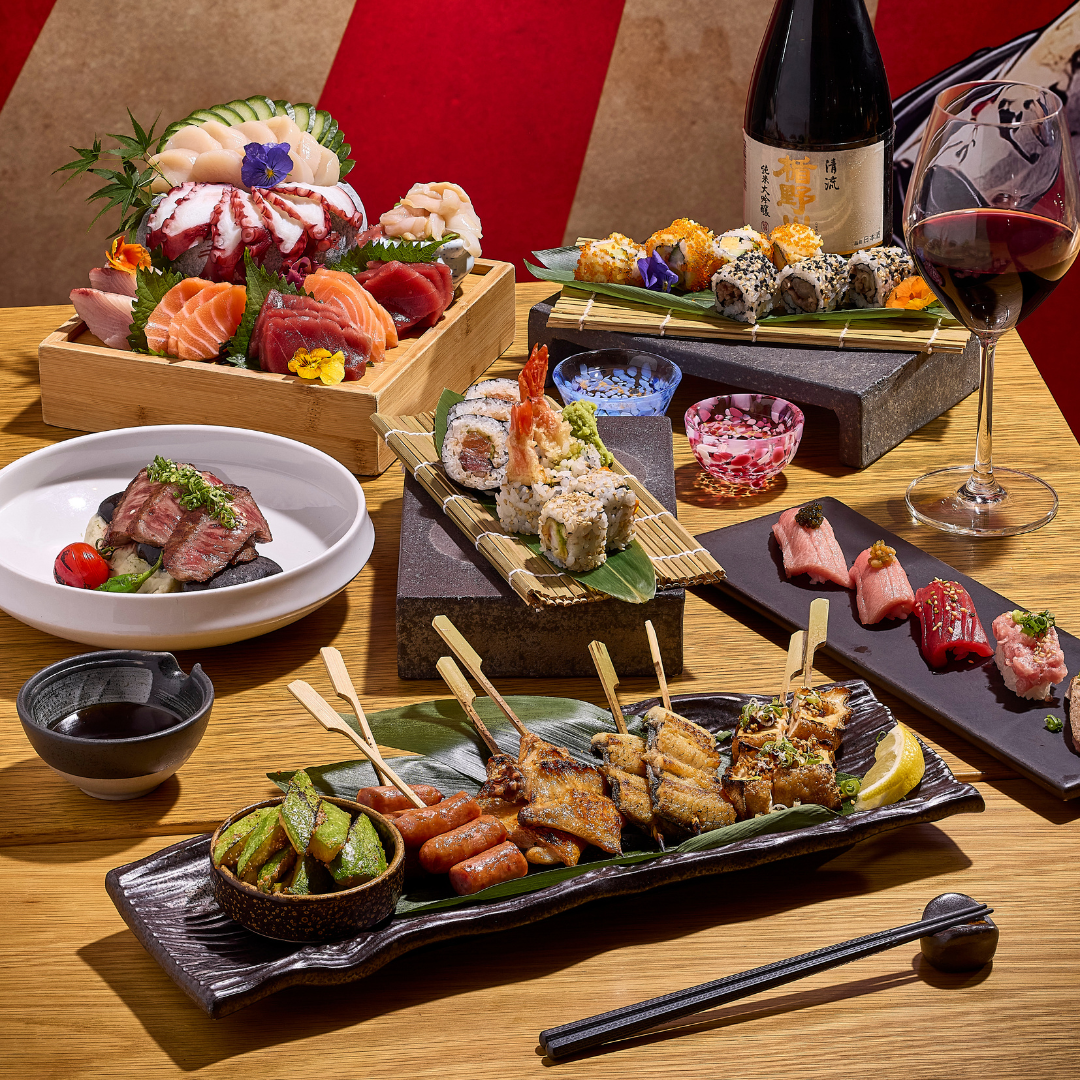
In a city rapidly catching up to its Southeast Asian neighbors in culinary innovation, two names are helping push Manila’s dining scene into sharper focus: Alexis (Alex) Offe and Michael Needham.
Offe, a French-born, Hong Kong-raised hospitality lifer who trained at the prestigious École Hôtelière de Lausanne (now EHL Hospitality Business School), cut his teeth with major hotel groups and F&B players before launching Meraki Hospitality Group with his sister, Laura in 2017
Meraki became known for culturally rich concepts like Uma Nota in Hong Kong and Paris, and Bedu, a modern Middle Eastern spot. Eventually, Alexis brought the Meraki name to Manila — teaming up with Michael to open Uma Nota’s first Philippine outpost at Shangri-La the Fort.
Needham, for his part, may be newer to the F&B industry, but he brings sharp business instincts honed by his background in finance. Half-British and half-Filipino, he experienced living in Jakarta, Hong Kong, and the UK, before planting his entrepreneurial roots in Manila. His portfolio has ranged from co-founding KOOP Studio, a salon brand with locations in London and Manila, to investing in ventures like La Pícara. But it was a chance meeting with Alexis — and a shared vision to elevate Manila’s F&B scene — that led to their first joint venture with Uma Nota, and later, their first concept built entirely from scratch: Sabai, a Thai restaurant that combines comfort, spice, and substance.
While Meraki has officially closed its restaurants in Hong Kong earlier this 2025 and shifted its focus towards Manila, the duo isn’t slowing down. Together, Offe and Needham are now setting their sights on making Manila a dining destination on par with Bangkok, Singapore, and their former base in Hong Kong. With one successful concept imported and another homegrown, they’re doubling down on thoughtful design, authentic cuisine, and creating vibrant spaces that don’t just serve food but offer an unforgettable experience.
(From left) Alexis Offe, Laura Offe, and Michael Needham | Photo from Website/ Uma Nota Manila
The Beat Asia sat down with the two as they talk about lessons from Hong Kong, challenges of building a restaurant post-COVID, and why they believe the Philippines is just getting started.
First, let’s talk about your latest concept Sabai. I heard you two did a lot of travelling and research in Bangkok?
Michael: A lot of research!
Alex: I think it’s necessary. First, that’s how we found our chef, Chef Tob. If you’re putting up a restaurant, it ultimately starts from the kitchen. And it was very important for us to get the details right, whether in service or the flavors. Also, understanding why a dish wouldn’t make it on the menu because we’re not happy with the local ingredients. It’s having a deep understanding of both the culture and cuisine in order to not adapt so much to Manila but rather bring out the most authentic version of Thai cuisine [in our] concept.
When I opened Uma Nota, I did the same and travelled to Brazil [a lot]. It’s a good excuse for us to travel; some will say that we choose the concept to be able to travel. (laughs) But no, [that effort] is super crucial. I think you can’t really cut corners in that sense. Otherwise, [it’ll be easy for others to say], ‘What are you talking about?’
Michael: It is necessary. We [visited] Bangkok maybe six times before opening [Sabai], so that we really got a feel for what is authentic. And we both grew up loving Thai food, living in the region, and visiting Thailand. But it’s different when you’re there with local chefs. Aside from Chef Tob, we found five other chefs from Thailand who moved here [to Manila]. And Kitti, our Guest Relations Manager, who is also from Thailand. From the front [of house] all the way to the back, we wanted to keep things as authentically Thai as possible.
(Left photo) Alexis Offe and Michael Needham with Chef Tob | Photo from Instagram/ Alexis Offe
What was the key to making authenticity as approachable as possible while still maintaining high culinary quality?
Michael: It actually started with the ingredients. We ran through a master list of all the different ingredients we would need, particularly the herbs. Rather than swapping in Filipino ingredients, we actually figured out the solution with Chef Tob and the other chefs to fly in the seeds of those missing herbs from Thailand, and we partnered with a supplier who grows those plants for us. So, before we even got to the concept with the design and all, it was important to have the right foundation and let Chef Tob and his team build on that.
We sort of joked, we want [people] to walk in and think they’re somewhere in Bangkok. We’ll get there eventually with the design. But certainly with the food, we strayed away from doing typical Thai dishes you kind of see around the world. It’s equivalent to going to a Chinese restaurant in China and asking for Orange Chicken, so we let Chef Tob create a menu that may not be conventional Thai but rather celebrates all the different regions within the country. Like with the Philippines, when you go to Bicol or Tawi-Tawi, you have a completely different cuisine.
That’s how we went about keeping it authentic, not just repeating the tried-and-tested way of doing Thai food. It was a lot of fun taking Chef Tob’s [cache of] recipes of 100 dishes and narrowing them down to 40, where it would be a mix of ‘familiar enough for people’ but also [new ones that] encourage people to explore.
Photo from Instagram/ Eat Sabai
Going back to your backgrounds, what drew you, Michael, to the F&B industry?
Michael: My overall thesis with Manila is where it is and where it could be, and that there are gaps in the market that need to be addressed. Honestly, before I decided on Uma Nota and partnering with Alex, I was already the customer. This is also what we’re seeing more now with well-traveled Filipinos — seeing all these different [F&B] concepts around the world and wondering, ‘Where are we [in Manila]? Why can’t we be up there too?’ So that’s where it came from, and then I started talking with Amir [Borsok], our other Co-founder, and we both realized there was demand because we were part of that demand. I’m a foodie — not to the extent that Alex is — but I enjoy travelling, even just to experience certain restaurants.
So, it grew from a sort of amateur level of love [for F&B] into a business with the right partner, of course. [Just wondering], ‘Can we really pull something off?’
(Left Photo) Nadine Lustre and Sarah Lahbati at Uma Nota (Right Photo) Uma Nota Manila interior | Photo from Instagram/ Uma Nota Manila
Your background, Alex, is very much in hospitality. How did that background help you when you launched Meraki Hospitality with your sister?
Alex: I think when you’re younger, you have to be a sponge. You take a lot of notes of what's good, what's bad, what you want to keep, and just take a lot of knowledge and experience, mistakes, and learn. But also, sometimes, it’s very important that you bring in your own way of doing [things], and I think that that’s what was very important for my sister and me in Hong Kong then, and now here.
For example, the way we want to manage our people is different. We don’t really look at experience all the time; we look at personality. We encourage making mistakes. While it sounds counterintuitive, we want to build that company culture where you can do something, take action, and be proactive because that’s the only way you can grow. If you make that decision and it doesn’t work, so be it; we move on. But that’s the only way you can learn. If you don’t make mistakes, you don’t learn from it. We’ve got long-term plans, and we want to start building our managers of tomorrow.
Another is this misconception that “Asia” is like one country where everybody thinks or functions the same, and that’s why big brands sometimes fail because they approach each country in the exact same way. But it’s a super diverse continent, so it’s very important to adapt and not come in with a big ego and try to say, ‘Hey, we’re going to impose what we have in Paris in Hong Kong, and you’re going to do it how we say.’ It doesn’t work that way. You need to be humble enough to adapt and listen to the customer. It’s not sustainable if you aren’t able to question yourself in that way. But to a degree, it’s also important to bring in your own take, cause as Michael said, people don’t always realize that they’re missing it [until you give it to them].
Can you tell us more about Meraki's story?
Alex: It started in 2017, with Uma Nota being the first concept in Hong Kong. We grew up in Hong Kong, and I moved [back] in 2000, then studied abroad, then came back. It was kind of a no-brainer for me to start there with one concept, [then] two, and then a third, but COVID [happened] which changed a lot. Obviously, Paris, which is still open, as well. But we actually closed all of our restaurants in Hong Kong in June of this year. Coming into Manila and seeing that there is more than just Hong Kong [changed things]. Sometimes, Hong Kong is a kind of free capital, but lately though, the market has not been the same.
So that’s the thing about business, you’ve got to be able to pivot, and I’m very grateful and lucky in a way to have crossed paths with Michael and clicked very quickly because while we wanted to expand, it’s one thing to want and another to actually do it.
Uma Nota Hong Kong | Photo from Instagram/ Meraki Hospitality
How did the pandemic affect your operations and how you moved forward with your different new concepts?
Alex: COVID is one of those things where, hopefully, it doesn’t happen again, but if it does, you need to strip down everything to what ultimately counts, what doesn’t, what’s extra, and what’s absolutely necessary. In the F&B industry, the lifespan is so short, especially now. You never know what’s coming up, and I think that’s what COVID taught us- finding out what’s absolutely necessary and then, even when we’re going well, [we] still continue pushing.
That’s also what Hong Kong taught me because it’s such a relentless city, such a competitive market. You need to wake up every single day and fight to bring in customers. I’m very lucky to have grown up in that market.
And it’s only going to get more competitive with the MICHELIN Guide now in the Philippines, congratulations as well on Uma Nota's Exceptional Cocktails Award and MICHELIN Selection!
Alex: Absolutely, which is amazing. We need to see it as an opportunity, how do we profit off that because [the MICHELIN Guide] is going to bring in even more travelers here [to the Philippines]. With them coming in, there are going to be a lot more elevated establishments coming in. I mean, even our street food is great, and they can be a Bib Gourmand.
(Left Photo) Chef Andres Rendon and Uma Nota Team (Right Photo, from left) Amir Borsok, Alexis Offe, and Michael Needham | Photo from Instagram/ Michael J Needham
We mentioned Meraki's Hong Kong exit and the city's competitive environment. What led you to this decision?
Alex: There are a lot of different reasons why. I grew up in Hong Kong, but even before we [made that] decision, I kind of wanted to go somewhere else. In a way, I think COVID scarred me way too much. I was thinking, ‘Okay, you’ve worked your butt off for so long, and this is what you [get].’ It was frustrating, and that’s why I’m very grateful to have met Michael. Oftentimes, you’re in this cycle of making sure the company survives and you forget that sometimes the grass is greener elsewhere. And that’s ultimately what I found out the first time I came here to Manila, when we were starting to discuss the possibility [of expanding here].
It opened my eyes: ‘Why am I trying so hard in Hong Kong for very little reward?’ And sometimes, it’s not even financial. I’m very fulfilled with the fact that we’re able to put on these big shows and high-quality collaborations, four hands, and more [in Hong Kong]. It costs a lot of money, but [the problem is] there are a lot of limitations. I just kind of asked myself, ‘Do I want to keep working within these limitations? Or do I want to explore?’
The sky is the limit in Manila; I really believe that. That’s why we’re so bullish on expanding, but at the right pace, because we obviously want to do it right. But coming here really opened my eyes, and I was like, ‘Wait a minute. I think I'd better get on a plane and stay there [in Manila].’
Photo from Instagram/ Meraki Hospitality
How about you, Michael, what are your thoughts on Hong Kong’s F&B industry?
Michael: It’s definitely a lot more cutthroat. Does that mean the cream rises to the top? Probably, but not always, I think. It ultimately forces the monetization and commercialization of what would otherwise be really nice food concepts because they’re no longer allowed to just think about the food or the service. You now have to incessantly think about the numbers and finances all the time. Your rent is really high, and labor is a big issue. There’s nothing to stop an exact clone opening 30 meters down the road. I think it’s too ruthless, to the point where you can hardly foster or promote independent, maybe chef-driven concepts.
This is just as an observer. For me, it means only the bigger [F&B] groups and those backed by private equity firms, or international brands, are the ones that succeed because they can absorb the losses and then build some market share after the first few years. It doesn’t really give a chance to good chefs or restaurateurs who can build an amazing menu, but they don’t have the backing or resources. I think it’s good that it forces only the strong to survive, but bad in that it will eliminate the potential of many, excellent concepts. It’s not fostering a platform for people to really create and innovate because the inherent risk of innovating is too costly.
Bedu Hong Kong | Photo from Instagram/ Meraki Hospitality
Michael, you were with La Picara before and now you’re with Meraki. Does it feel more like a passion project for you now that you’re more involved from the ground up with the Meraki concepts?
Michael: You’re definitely more invested when you see it start from zero. I wasn’t involved so much in the day-to-day for La Picara. I was almost kind of a silent investor. I did learn a few nuances of the industry here and there, but I think it’s a different animal to an extent.
[With Meraki,] I’ve seen these locations [at Shangri-la The Fort] before, and it still baffles me sometimes to see them now with life, and we’ve obviously worked to breathe soul into both spaces. It’s such a big, well-oiled machine now, and we seem to be getting a lot of things right, but there are always obviously things we can do better. It’s definitely more emotional when you see it from the ground up. But there’s also peace of mind cause Alex is the best operator in the country, dare I say, in the region.
"Meraki" means to do something with creativity and love. How does that translate into your concepts?
Alex: Its literal meaning is to put a piece of your soul into whatever you do. Anything we do, we’ve got to do it 100%, if not more. It just dictates our willingness for people to remember us and not cut corners. We don’t want to put something out just for the sake of a new promotion or whatever; it translates to how we treat our people and develop them. Some people in Hong Kong were with us for eight years when we shut down, so I think it’s a big testament.
Our ambition here is the same-some people have been with us for over two years before we started on the pre-opening of Uma Nota, and our Restaurant Manager here, Sam, started as our Assistant Manager. That’s the legacy that we want to have: people who believe in us, and we give that back in development and opportunities that they deserve.
Do you think your deep investment in your people impacts the customer experience as well?
Alex: We hope so! We keep telling the team that our goal is to bring international hospitality to Manila. Not in an arrogant way, just in a way that we know Manila deserves it. Are we there yet? Probably not. But every single day, we’re striving for it. That’s why we’re also not hesitant to hire amazing talent from abroad or talents that worked abroad. Quality talents are also going to pass their experience to the local talents and organically push each other.
Photo from Instagram/ Uma Nota Hong Kong
How do you feel now that Sabai is open after all of that effort and hard work?
Michael: It feels really good. But there’s always this point with any business. It’s never really at the opening where it hits me that the place is open, and it’s great. [Rather,] it’s the first time I see it’s full — and it’s full of people I don’t know. It’s one thing to make a place busy by inviting all your friends, and I think a lot of businesses do that here naturally. But with Sabai, it’s really a business where anyone off the street can walk in and eat delicious Thai food. When you see a family with a toddler trying Thai food for the first time, serious business meetings, a huge corporate celebration, and all these different aspects of life coming in — that’s when it really hits you. Hopefully, it will continue to exist and make people happy for many years.
On the other end, there’s our team, our staff. Everyone seems really happy with what we’ve offered them here. The chefs we brought in from Thailand are all loving life. I was checking in on them, and I asked what they were eating here, especially coming from Thailand with such a rich cuisine. Arthur, one of our junior chefs, said Mang Inasal. I asked, ‘The chicken place?’ He said, ‘Every day. Extra chicken oil. 2-piece pecho with rice.’ (laughs) And so they’re obviously enjoying the opportunity too. As much as I’m happy for the customers and them trying out our food, I also love the fact that our staff are happy, growing, and for a lot of them, getting this new experience of living abroad for the first time. So, on both ends, it feels very rewarding.
Alex: The opening is always [chaotic]. You run on very little sleep because there are so many moving parts and nothing ever goes to plan. Because I’m more of an operations guy, I’m kind of never satisfied, and it’s very frustrating at times. But we’re definitely happy with the opening. Of course, there are still so many more things to look forward to: our private rooms, delivery, and new tasting menus. Still, there’s always room to improve, whether it’s about the team, quality, or consistency. I [still] think it was very successful, and it was probably the smoothest opening we’ve had in terms of operations.
Chef Tob and Sabai Chefs | Photo from Website/ Sabai and Photo from Instagram/Eat Sabai
Plenty of people romanticize starting an F&B business. But what are the misconceptions that you’d like to debunk?
Alex: I think a lot of people start [an F&B business], whether it’s a bar, café, or restaurant, because it’s cool. That only works for so long. Because, ultimately, you need to get into the hospitality industry with the deep understanding that there will be absolutely no work-life balance when you start. [Sabai] is the 10th restaurant I’ve opened, our second here in Manila. It’s a lot of systems, and when it’s your first one, and you don’t have all the resources yet, you have absolutely no work-life balance, and I think a lot of people don’t necessarily understand that.
It's entrepreneurship, in general. You’ve got to be willing to sacrifice a lot of personal time, holidays, etc. A lot of people give up very easily for many different reasons, but [apart from time], you need to build a very tough skin in how you perceive criticism and feedback. I remember having plenty of sleepless nights when I first opened Uma Nota, going through people’s feedback. But you develop a thicker skin and understand what not to keep and just keep going. The consistency of waking up every single day with the same energy is absolutely crucial, and the big misconception is romanticizing that and not the 90% of the ugliness of the business, especially at the beginning.
Are you willing to put that work in, and even when it’s not working, keep waking and showing up? That’s the biggest learning, especially when COVID happened. Even when you don’t really know where you’re going, you just have to keep going. That’s business, in general. A lot of people think entrepreneurs are rockstars, but it’s actually the 1% that you see, and the rest of it is a lot of problems and failures.
A lot of people [would ask], ‘Would you recommend it?’ I absolutely would not recommend it, unless you’re absolutely passionate about what you do. Because passion is what’s going to keep you from giving up. Like, you’re so insanely convinced that it’s going to work, and it’s that insanity that keeps you going.
Michael: Yeah, I also wouldn’t recommend getting into F&B. (laughs) It’s interesting because it does then create this appreciation for other restaurateurs and a sense of gratitude for those that came before you — once you see the madness and chaos that goes behind it, just to get one dish on the table. But regardless of how daunting and tricky the industry can be, I think there are a lot of factors that [make Manila] conducive to newly opened concepts.
There’s still enough “blue ocean” that there’s a lot to explore and try and maybe fail, maybe succeed. The whole point is that it’s a good time [now] to take things to the next level, to be in Manila, to be in F&B, and we get so excited whenever we hear about these new concepts coming in.
Photo from Instagram/ Uma Nota Manila
What would you say is more important: passion, knowing your market, financial backing, or everything all together?
Alex: Everything. If you have financial backing, great, but that’s not always the solution. Sometimes when you don’t have financial backing, that’s also a good thing, because you have no room for failure. So, you’re stripping down the business to its core, what matters, and putting every single ounce of your energy into it.
It’s also having a deep, sound understanding of the market. At the same time, that passion, wanting to get better every single day and deliver something amazing — hopefully consistently. Showing up every day and demanding the same quality from every person in the company is also absolutely crucial. It ultimately comes down to whoever’s leading the company, the tone you’re setting for the teams, and the standard you’re setting. Motivating the team, pushing everyone even when there are doubts, and the money’s not always coming in.
Sabai Interior | Courtesy of Sabai
What’s next for Meraki Hospitality?
Michael: We’ve been thinking a lot about it, and we’ve got two or three concepts lined up, ones that are different from Uma Nota and Sabai. It’s just a matter of the right time and location — where you’re putting it is a big factor. Timing-wise, I think it’d be silly not to open more concepts now in the coming years because we anticipate it’s going to get more competitive.
It seems there’s also a demand for Sabai outside of BGC, such as in Makati, Ortigas, and even in [Quezon City]. We didn’t realize how much Filipinos love Thai food; that was a pleasant discovery, especially since [what we serve] isn’t a sweet, watered-down version. This is real stuff, although we did have to take the spice level down a little bit because if you eat in Bangkok, it’s a whole other level.
So as for the next few years, expect a few more concepts from the group. One or two more branches of Sabai. We’re eventually plotting towards launching a hospitality school. Education, certification, and licensing for certain aspects of hospitality. Between Alex, Laura, and their father, their experiences are up there with the very, very best, and whilst we love bringing OFWs [Overseas Filipino Workers] back and celebrating Filipinos who have made the sacrifice to go abroad and hone their skills, we also want to shift the narrative. ‘Why can’t we produce the best talent here? Why do our best talents have to go abroad?’
We think it really starts with education and formalizing it, bringing it up to a world-class level, and then it could also feed into our future concepts, where they could do training, vocational work, apprenticeships, or internships. It’ll be a full pipeline from A to Z; if there’s another Filipino Alex Offe, or the next Margarita Fores — God rest her soul — they don’t have to travel abroad, they could stay here, close to their family, and get the best education and training. We’ve already had a few very preliminary discussions with some schools here. But that’s our end target and goal. It’s also giving back to the community, which we think is very important.
Get the latest curated content with The Beat Asia's newsletters. Sign up now for a weekly dose of the best stories, events, and deals delivered straight to your inbox. Don't miss out! Click here to subscribe.
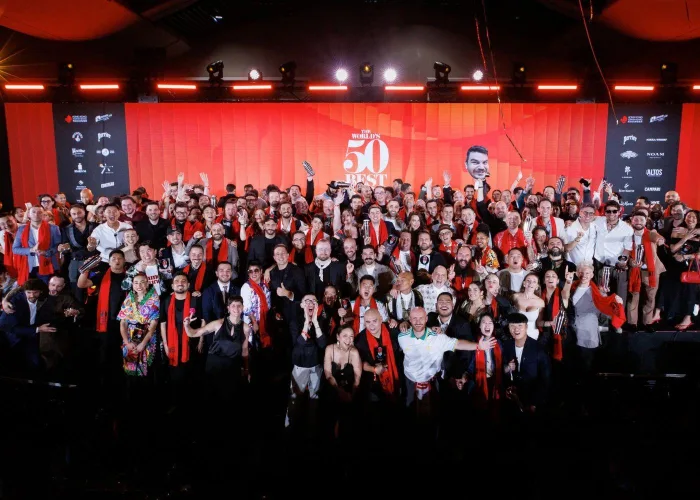
Nothing beats a city that’s hosting The World’s 50 Best Bars ceremony and announcing the winner being one of the city’s own.
On Oct. 8, 2025, Hong Kong hosted The World’s 50 Best Bars awards at the Kai Tak Cruise Terminal, the bar industry’s most prestigious event. For only the second time in history, the ceremony was held in Asia, and in a poetic twist, the host city’s own Bar Leone takes the #1 spot, earning the award as The World’s Best Bar 2025.
It’s a celebratory moment for the entire region, not just Hong Kong, as 11 Asian bars earn spots on this year’s list.
Bar Leone Team | Photo by The Beat Asia
The Rise of Bar Leone
Bar Leone cocktail | Courtesy of The World's 50 Best Bars
Founded in 2023 by Lorenzo Antinori, Bar Leone is a tribute to Roman cocktail popolari, with simple yet soulful drinks served with warmth. Its iconic, monthly rotating Google Docs menu reflects Antinori’s mission to make mixology accessible to all. The bar’s rapid rise, from debuting at #2 globally in 2024 to claiming #1 this year, marks a proud milestone for Asia’s cocktail scene.
On the secret behind the bar’s success, Antinori credited the team’s dedication: “It's about, every day, working hard, working on quality, and trying to improve. On a daily basis, the secret, I would say, is that we have some amazing people working with us and as a team.”
“I think we are living in times where consumers are seeking comfort. And we happened to open a bar that is very simple. But I believe that what truly made us stand out is this idea of being very approachable. We are a part of where you can come multiple times through the rest of the week,” added Antinori.
Global Rankings: Top 5 Bars of 2025
Handshake Speakeasy | Courtesy of The World's 50 Best Bars
The top five bars reflect a global blend of innovation and heritage:
- Bar Leone, Hong Kong (#1)
- Handshake Speakeasy, Mexico City (#2)
- Sips, Barcelona (#3)
- Paradiso, Barcelona (#4)
- Tayēr + Elementary, London (#5)
From Mexico City’s precision-driven speakeasies to Barcelona’s design-forward cocktail labs, the global top reflects a shift toward storytelling and immersive hospitality.
Asia’s Rising Stars
Bar Us Team | Courtesy of The World's 50 Best BarsJigger & Pony | Courtesy of The World's 50 Best Bars
Asia claimed 11 spots on the list, with standout entries from:
- Tokyo: Bar Benfiddich (#18), Virtù (#45), The Bellwood (#48)
- Penang: Backdoor Bodega, winner of the Siete Misterios Best Cocktail Menu Award
Zest in Seoul also earned the Campari One To Watch Award, while Uno Jang of Jigger & Pony was named Altos Bartenders’ Bartender, further cementing Asia’s influence on the global stage.
Individual Accolades & Design Excellence
Courtesy of The World's 50 Best Bars
The awards celebrated not just bars, but the people and philosophies behind them:
- Simone Caporale (Sips, Barcelona) received the Roku Industry Icon Award
- Lady Bee (Lima) won the Michter’s Art of Hospitality Award
- Mirror Bar (Bratislava) took home the Disaronno Highest New Entry Award
- Moebius Milano rose 31 spots to #7, earning the Nikka Highest Climber Award
- Sip & Guzzle (New York) was named Three Cents Best New Opening
Design also took center stage, with Tigra + Disco Pantera in Sydney winning the Best Bar Design Award for its dual-concept space inspired by Barcelona’s laneways and 1970s New York glamour.
Best Bars by Region
Champions by regions are as follows:
- Africa: Hero Bar, Nairobi
- Asia: Bar Leone, Hong Kong
- Australasia: Caretaker’s Cottage, Melbourne
- Europe: Sips, Barcelona
- Middle East: Mimi Kakushi, Dubai
- North America: Handshake Speakeasy, Mexico City
- South America: Tres Monos, Buenos Aires
With 29 cities represented and eight new entries, including first-time appearances from Tirana, Bratislava, and Guangzhou, the 2025 list reflects a truly global shift in cocktail culture.
Explore the full list and awards via the awards’ official website and follow their Instagram for more information. Meanwhile, make sure you explore the best bar of 2025 on their website and Instagram before planning a visit!
Get the latest curated content with The Beat Asia's newsletters. Sign up now for a weekly dose of the best stories, events, and deals delivered straight to your inbox. Don't miss out! Click here to subscribe.

The countdown to The World’s 50 Best Bars 2025 has officially begun, and Asia has delivered. On Sept. 24, 2025, the organization revealed its extended 51–100 ranking, offering a first look at the bars shaping the future of global cocktail culture.
Presented by Perrier, the awards on Oct. 8, 2025 mark the 17th edition of the awards and only the second time the ceremony is held in Asia, following Singapore’s debut in 2023. The move to Hong Kong is symbolic, recognizing the city’s bar scene and its innovation as a place where storytelling and sensory design collide in every glass.
Courtesy of The World's 50 Best Bars 2025
While Angelita Madrid takes the #51 spot with its acclaimed garden-to-glass philosophy, Asia’s footprint in the World’s 50 Best Bars 2025 extended ranking is both impressive and wide-reaching, with 12 bars featured across eight countries.
Hong Kong, the host city for this year’s awards, leads the region with three entries: Argo (#56), Gokan (#70), and The Savory Project (#86). From luxury hotel lounges to inventive newcomers, these bars reflect the city’s dynamic cocktail identity and set the stage for the upcoming ceremony.
South Korea is represented by Bar Cham in Seoul (#53), a standout for its refined technique and local storytelling. Japan follows with two Tokyo-based entries: The SG Club (#65), a returning favorite known for its multi-concept layout, and Bar Trench (#94), a re-entry celebrated for its intimate, vintage-inspired charm.
Thailand makes a strong debut with two new entries from Bangkok: Dry Wave Cocktail Studio (#88) and Opium (#92), both bringing fresh energy to the city’s evolving bar scene. In Sri Lanka, Smoke & Bitters (#67) rises 19 places from last year, continuing to spotlight coastal creativity and tropical terroir.
Taiwan enters the ranking for the first time with Vender in Taichung (#74), marking a milestone for the city’s cocktail culture. Singapore’s Native (#84) returns with its signature ingredients, while Lair in New Delhi (#96) joins the list as India’s sole representative, offering bold experimentation rooted in local flavors.
Courtesy of The World's 50 Best Bars 2025Courtesy of The World's 50 Best Bars 2025
Together, these bars showcase Asia’s growing influence on the global cocktail map; each one is a testament to the region’s innovation, diversity, and rising prominence in the world of mixology.
With the extended list now public, all eyes turn to Hong Kong, where the top 50 bars will be revealed live at the Kai Tak Cruise Terminal. The ceremony will bring together the world’s leading bartenders, bar owners, and industry tastemakers for an evening of celebration, collaboration, and cocktails.
Get the latest curated content with The Beat Asia's newsletters. Sign up now for a weekly dose of the best stories, events, and deals delivered straight to your inbox. Don't miss out! Click here to subscribe.
Getting your favorite organic and natural groceries just got easier!
Whole Foods Market, the world’s leading natural and organic foods retailer and the first certified organic national grocer in the US, is making its Asia debut in Singapore! You can find over 300 of its private-label products across many categories on Amazon.sg, Amazon Fresh, and at select Little Farms outlets across the city!
With Whole Foods Market joining Amazon Fresh, Singapore shoppers can now have an even wider selection of everyday essentials. To celebrate the launch, customers can benefit from special deals and promotions until Oct. 13, 2025:
Buy any 3 and save 20% off on all Whole Foods Market private brand products at Amazon Fresh on Amazon.sg
Buy any 3 and save 20% off on all 365 by Whole Foods Market private-branded products at Little Farms on Amazon.sg
Additionally, Prime members can get a free two-hour scheduled delivery on eligible orders of S$60 and above.
“We’re excited to introduce a selection of Whole Foods Market’s products to our customers in Singapore for the first time,” said Mizue Arakawa, Country leader for Amazon Fresh Singapore. “This launch gives customers greater choice and access to high-quality groceries they can trust. With Whole Foods Market joining Amazon Fresh, customers now have an even wider selection of everyday essentials and organic options available at their fingertips.”
“Whole Foods Market has passionate fans around the world, and we’re excited to introduce our private-label products to Asia for the first time,” added Sonya Gafsi Oblisk, Chief Merchandising and Marketing Officer at Whole Foods Market. “Together with Amazon and Little Farms, we’re expanding access to high-quality and sustainable grocery options and making it easier than ever for customers in Singapore to shop Whole Foods Market favorites through the convenience of Amazon Fresh.”
Photo from Website/Little Farms
Little Farms, Singapore’s most trusted neighborhood market and café, is also joining in on the fun as the brand’s exclusive physical store distributor in Singapore. Established in 2016, the market specializes in top-quality, all-natural, organic produce, meats, and seafood, with over 4,000 unique and nutrient-dense products. Each item undergoes rigorous checks against Little Farms’ banned ingredient list, which excludes more than 200 harmful chemicals, artificial additives, and preservatives.
Whole Foods’ private label items will be available in-store at eight outlets citywide, their official online store, and Little Farms’ online store on Amazon.sg.
Additionally, Little Farms is hosting a series of tasting and sampling events featuring the 365 by Whole Foods Market products. You can discover more about their offerings at Little Farms Market in Tanglin Mall on Sept. 27, 2025 (10:30 AM to 4 PM) and at their Sentosa branch on Oct. 11, 2025 (9 AM to 12 PM).
“Whole Foods Market has set the benchmark globally for organic groceries, and at Little Farms we share that same commitment to quality ingredients, transparency, and responsible sourcing,” said Joe Stevens, CEO of Little Farms. “As the exclusive physical retailer for the Whole Foods Market private brands in Singapore, we’re excited to make these products available on our shelves, helping Singaporeans access better food every day.”
Get the latest curated content with The Beat Asia's newsletters. Sign up now for a weekly dose of the best stories, events, and deals delivered straight to your inbox. Don't miss out! Click here to subscribe.
Asia boasts a number of delicacies and savory delights. But this region is not one to back down from its dessert game. A beloved treat across Asia, shaved ice desserts have long been a crowd favorite, whether a treat during the summer or just a special, refreshing indulgence.
In this article, we explore some of the most popular frozen treats in Asia, from South Korea’s ever-popular Bingsu and the Philippines’ iconic Halo-Halo to Taiwan’s creamy Bao Bing and beyond. Get ready to dig in with these mouth-watering desserts, all rich in flavor and culture — packed with flavorful toppings, refreshing textures, and everything in between.
Bingsu (South Korea)
Photo from Instagram/Hobing Korean Dessert Cafe
Bingsu is a milk-based Korean dessert made from ultra-fine shaved ice, with every spoonful offering a melt-in-your-mouth sensation. And it just so happens that each serving is an Instagram-worthy confection, topped with a satisfying sweet delight.
Toppings may vary (from fruits, tea powders, cheesecakes, fresh mango, and often a layer of sweetened condensed milk), though the most popular variety of Bingsu is Patbingsu, a version topped with red bean paste. Of course, it all depends on one’s personal taste. Luckily, Bingsu offers just enough variety to please every palate. Over the years, the South Korean dessert has spawned several new flavors, including yogurt Bingsu, milk tea Bingsu, and even Bingsu topped with ice cream.
Kakigōri (Japan)
Japan is home to various sweet treats, including the likes of Taiyaki, Manju, and Dorayaki. This also includes Kakigōri, a traditional Japanese dessert that features finely shaved ice topped with sweet syrups and seasonal ingredients. Much like Bingsu, Kakigōri is also often flavored with condensed milk.
The ice is intended to be finely shaved to give it a snow-like consistency, complete with a variety of flavored syrups, depending on your liking. What sets it apart is its smooth, almost velvety texture.
Bao Bing (Taiwan)
Photo from Instagram/Caution Hot!
Bao Bing is a popular summer dessert in Taiwan that you can customize with toppings of your choice. Similar to Kakigōri and Bingsu, this frosty treat features finely shaved ice and is topped with a variety of ingredients, from sweet to savory.
The most popular version of Bao Bing is the mango Bao Bing, drizzled with condensed milk. Common ingredients include taro balls, watermelon, strawberries, sweetened red beans, tapioca pearls, grass jelly, and other sweet treats. Some also serve Bao Bing with an added scoop of ice cream for an extra touch of sweetness.
Halo-Halo (Philippines)
Photo from Instagram/MilkyWay Café
The Philippines also offers some of the most beloved shaved ice desserts like Mais Con Yelo, Saba Con Yelo, and Ice Scramble. But the most famous of them all is Halo-Halo. While the others may include ingredients like banana, sweetened red beans, and jelly, Halo-Halo said, “yes.” And it combined them all.
Halo-Halo is a mishmash of ingredients, which perfectly explains its name; halo-halo means “mix-mix” in Tagalog. It’s a vibrant blend of various ingredients, often including jackfruit, banana, leche flan, red beans, ube (purple yam), coconut strips, pinipig, sago, taro, and more. Some versions also include a scoop of ice cream on top. A sweet mess, if you will.
Nam Kaeng Sai (Thailand)
Photo from Instagram/KALAYA
Thailand’s very own shaved ice dessert is called Nam Kaeng Sai, a refreshing treat consisting of a combination of ingredients like tropical fruits, sweet syrup, condensed milk, and various jellies. While it’s considered simpler than its counterparts, this dessert offers a satisfying coolness during the summer.
Some toppings include crushed peanuts, sweet corn, tapioca pearls, jackfruit, and mung beans. Over the years, this famous Thai dessert has also inspired different versions. It’s often served with a drizzle of coconut milk to give it a more refreshing flavor.
Es Campur (Indonesia)
Photo from Instagram/Bale Udang Ubud
A beloved shaved ice dessert in Indonesia, Es Campur (which means “mixed ice”) is a cooling treat for the country’s tropical weather. It features shaved ice combined with sweet syrups, condensed milk, tropical fruits, avocado, grass jellies, sweet corn, melon, tapioca pearls, coconut, and more.
Its splash of coconut milk and/or condensed milk gives it a creamy finish, making every bite delightful. A perfect way to cool down on a hot day, Es Campur offers a refreshing burst of flavors.
Chè Ba Màu (Vietnam)
Photo from Website/Bún Bò Gánh
A traditional shaved ice dessert in Vietnam, Chè Ba Màu — meaning “three-colored dessert” — consists of three distinct layers, typically featuring pandan jelly, mung beans, and red beans. These colorful layers are then generously topped with creamy coconut milk.
The layers add a balanced harmony that manages to be both refreshing and comforting. It’s often served in a tall glass, allowing consumers to admire the vibrant colors and savor the flavors one by one.
Cendol (Malaysia)
A refreshing escape from the tropical heat, Cendol is a traditional dessert in Malaysia, served with shaved ice and green, worm-like pandan jelly noodles. It is topped with pandan leaf extract, giving it that satisfying fragrance. But make no mistake, this one is also known for its vibrant flavor.
It is generously drizzled with coconut milk and gula melaka (palm sugar), balancing both sweet and earthy flavors. A staple in Malaysian street food culture, Cendol embodies the perfect harmony of tradition and refreshment.
Get the latest curated content with The Beat Asia's newsletters. Sign up now for a weekly dose of the best stories, events, and deals delivered straight to your inbox. Don't miss out! Click here to subscribe.
Who will be the world’s best young chef? The S.Pellegrino Young Chef Academy Grand Finale is happening this October!
Launched in 2015, the global competition celebrates the extraordinary creativity, vision, and skill of young chefs, underscoring their potential to drive positive change and create a better world through food. The 2024-25 edition’s grand finals will be held in Milan on Oct. 28 and 29, with 15 finalists vying for the prestigious title. These promising chefs under 30 came from all over the world, with over 165 chefs having competed in the Regional Finals.
The regional champions will be presenting their signature dishes at the finals to an international jury of acclaimed culinary masters, which includes Christophe Bacquié, Jeremy Chan, Antonia Klugmann, Mitsuharu "Micha" Tsumura, Niki Nakayama, Elena Reygadas,and Julien Royer. Dishes will be evaluated based on technical expertise, creative flair, and the potential to drive positive change through gastronomy.
Apart from the coveted main title of S. Pellegrino Young Chef Academy Award, this competition will also be presenting additional recognitions such as the S.Pellegrino Social Responsibility Award, the Acqua Panna Connection in Gastronomy Award, and the Fine Dining Lovers Food for Thought Award.
Among this year’s 15 regional finalists is Young Chef Ardy Ferguson of BELON restaurant in Hong Kong, who will be representing the Asia region. Mentored by Chef Vicky Lau, of TATE Dining Room, Ardy won the Regional Finals last year with his dish “Archipelago Celebration,” which pays homage to Indonesian and Hong Kong cuisines. This impressive dish was inspired by the young chef’s multicultural upbringing and featured a base of nasi tumpeng, a ceremonial Javanese rice dish, paired with Cantonese-inspired duck lacquered in red wine vinegar and smoked with sugar cane.
Vicky Lau and Ardy Ferguson | Courtesy of Companion Communications
“As the Grand Finale approaches, I’ve been busy preparing with plenty of practice runs. Getting up at 6 AM, doing the full 5-hour competition, and then breaking it down with my mentor, Chef Vicky Lau, to see where we can improve and streamline ourselves for Milan,” shared Asia Grand Finalist Chef Ardy Ferguson. “It's been an amazing experience so far, and I’m very grateful to S.Pellegrino for the opportunities the Young Chef competition has afforded me. I’m looking forward to meeting the other young, talented chefs from around the world and learning a thing or two from them.”
“The S.Pellegrino Young Chef Academy is an incredible platform for young chefs like Ardy, offering invaluable learning and global exposure,” added Chef Vicky Lau of TATE Dining Room Hong Kong. “Mentoring him has been a fantastic experience. Ardy’s dedication is inspiring, and I have every confidence he will make us proud as the Asia Grand Finalist in Milan.”
Last year, Chef Nelson Freitas emerged as the competition’s winner under the guidance of Virgilio Martínez of Central, which was named the World’s Best Restaurant in 2023. Following his victory, he joined the Central team, with his journey captured in “Afuera Hay Más – A Young Chef’s Journey.” This documentary highlighted how the Academy not only nurtures rising talent but also helps shape the future of gastronomy.
You can check out the full list of finalists here.
For more information and updates, follow S.Pellegrino Young Chef Academy Grand Finale on Facebook and Instagram.
Get the latest curated content with The Beat Asia's newsletters. Sign up now for a weekly dose of the best stories, events, and deals delivered straight to your inbox. Don't miss out! Click here to subscribe.
From Thailand’s lush jungles to Malaysia’s rolling landscapes, Asia’s dining scene in 2025 is rewriting the rules of travel.
No longer confined to white tablecloths and city rooftops, the region’s most unforgettable meals now unfold in treetop towers, aboard luxury trains, and under starlit mangrove canopies.
The following destinations from across Southeast Asia are where every bite tells a story and every setting deepens the sense of place.
JAMPA
Courtesy of Jampa
In Phuket, JAMPA leads the charge with its Michelin Green Star distinction. Chef Rick Dingen’s open-fire kitchen is nestled in lush greenery at Tri Vananda, Thalang.
Guests begin with a tour of the adjoining organic farm before settling into a 10-course tasting menu. Every dish is crafted from hyper-local, seasonal ingredients and cooked over live flames, embodying a zero-waste, farm-to-table philosophy.
Check out their website and follow their Instagram and Facebook for booking or more information.
Location: Tri Vananda, Thep Krasatti, Thalang, Phuket, Thailand
Eastern & Oriental Express
Courtesy of Eastern & Oriental Express
For those who prefer their meals in motion, the Eastern & Oriental Express by Belmond offers a rolling feast through Southeast Asia. Michelin-starred Chef André Chiang curates menus that blend Malay, Peranakan, and European flavors, joined by guest chefs like Vicky Cheng and Jungsik Yim for exclusive four-hands dinners.
From continental breakfasts in private cabins to elaborate dinners in restored colonial dining cars, the journey is as much about taste as it is about time and place. Enjoy your breakfast served in-cabin and lunch and dinner in dedicated restaurant cars.
Location: Departs from Singapore, travels through Malaysia
TA’AKTANA
Courtesy of TA’AKTANA
In Indonesia, TA’AKTANA in Labuan Bajo invites guests to sip coffee where it’s born. The resort’s in-house Coffee Roastery sources beans directly from Flores farmers, roasting them on-site to preserve freshness and character. With a zero-waste ethos and deep community ties, each cup tells a story of origin and craft.
Location: Pantai Wae Rana, Labuan Bajo, East Nusa Tenggara, Indonesia
Soneva Fushi
Courtesy of Soneva Fushi
At Soneva Fushi in the Maldives, dining becomes an aerial adventure. Guests zipline through forest platforms to reach Flying Sauces, a dining tower 12 meters above ground. Michelin-starred chefs like Tim Raue and Julien Royer transform seasonal menus into sensory experiences.
Location: Kunfunadhoo Island, Eydhafushi, Maldives
Zipline duration: ~1hr 15min, dining 1–3 hours depending on meal
The Residence Bintan
Courtesy of The Residence Bintan
And in Bintan, Indonesia, The Residence offers Dining by the Mangroves, a private BBQ under the stars where fireflies dance and each meal supports mangrove reforestation. With a personal chef, curated wine, and a chance to plant saplings, indulgence meets impact.
Location: Bintan Island, Riau Archipelago, Indonesia
Across Asia, dining is no longer just about what’s served. It’s about where, how, and why. These experiences invite travelers to slow down, savor, and connect with the land, the people, and the stories behind each bite. Whether you’re gliding through jungles or sipping coffee by the sea, every meal becomes a journey worth remembering.
Get the latest curated content with The Beat Asia's newsletters. Sign up now for a weekly dose of the best stories, events, and deals delivered straight to your inbox. Don't miss out! Click here to subscribe.
Step aside, late-night clubbing, Asia’s new social trend is now all about swapping shots of tequila for espresso.
Coffee raves are a growing culture across cities in Asia, offering the same thumping DJ sets and dance floor energy but in broad daylight and fueled by specialty brews instead of booze.
A nod to the global sober-curious and wellness movement, Coffee raves are redefining the youth’s social scene, proving that you don’t need to stay out too late or drink alcohol to have a good time. Also known as “soft clubbing” or “café clubbing,” these caffeine-charged gatherings have been turning cafes, hotel lounges, and even public parks into vibrant hubs where music lovers, creatives, and coffee lovers collide. They are fun and sober alternative events that bring back the focus to making connections within a community — something that proves to be a challenge in traditional nightlife.
With more of these events popping up in cities across the region, we’ve curated some of the popular organizers that are actively hosting these daytime events. Whether it’s Beans & Beats in Singapore, coffee-party mornings in Bangkok, or community-led raves in Manila, there are several spots in the region where you can go coffee clubbing and get your groove on without getting tipsy.
Social Club Series (Hong Kong)
Photo from Instagram/Social Club Series
Organizers Sandy Lam Sin-yi and Isaac Woo Siu-hin launched the Social Club Series last March, which gave partying a daytime twist. This series of events offers themed and genre-driven pop-up parties in unexpected locations (revealed only after ticket purchase), ranging from cafes, pizza joints, and even rooftop spaces.
The series instantly blew up in Hong Kong, having catered to the growing desire for creative and sober-friendly socializing and experiences that won’t give you a massive hangover the next day.
Some of the notable editions in the series include “Coffee & Beats,” which is the first Social Cub Series, the “Crave & Rave,” which combines clubbing with pizza and gelato, and their “Paradise Pool Party.”
If you’re up for some daytime clubbing with espresso shots, their next Coffee & Beats series will include waffles and will take place on Oct. 5, 2025. For updates on the secret locations and ticket sales, follow them on Instagram.
Loading...
Made from Mushroom (Hong Kong)
Photo from Instagram/Made from Mushroom
This local wellness brand just hosted its first-ever daytime rave last August, coinciding with the launch of their instant coffee and drip coffee products infused with medicinal mushrooms. Some of the product benefits include boosting stamina, enhancing cognitive clarity, and reducing stress, so it’s fitting that the brand ventured into hosting sober events.
No upcoming events have been announced, but with this new staple product, we’re sure there’s more daytime raves to come. Stay tuned on their Instagram page for updates.
The Proofing Room by Mano Bakery (Macau)
DJ Ziyang at the Proofing Room | Photo from Facebook/Mano Bakery
Filipino-owned Mano Bakery made the announcement last June about a new monthly daytime event series, creating a community-centered event that marries coffee, music, and socializing.
With its owners having a background in the arts, marketing, and creative industries, Mano creates a space that allows emerging artists to showcase their talent and for locals to connect without disrupting their normal schedules.
This coffee culture community, founded by Jenil Aspiras, creates spaces where people can connect and dance while supporting local cafes. With over 40 partner venues, they provide brands with direct access to the coffee rave culture and offer coffee and music enthusiasts a new way to experience music.
They have already held several caffeine-charged raves in and out of the metro, from Quezon City to Markina and Alabang to Batangas City. Their most recent events were in Cavite on Sept. 6 at Crossing Café and in Shangri-la Plaza on Sept. 7.
Deemed as Bangkok’s signature daytime coffee and music event, Swasdee Cup Coffee is a community-led organizer where coffee culture meets coffee energy. They had their premiere rave last March at Rolling Roasters in Ekkamai-one, one of Bangkok’s specialty coffee shops, which was a massive success that led to several other parties, including their upcoming Coffee Festival in Song Wat this September. The fifth edition is reported to be the world’s first 3-Day Coffee Party Festival from Sept. 26 to 28, 2025.
You can buy your tickets here. General admission is priced at THB450. For updates on upcoming parties, follow them on Instagram.
Beans and Beats (Singapore)
Photo from Instagram/Beans and Beats
Singapore’s pioneering alcohol-free events concept puts together specialty coffee and underground music to form a one-of-a-kind experience.
According to the Beans and Beats website, the community was born from “a mission to prove that underground music can be not just enjoyed, but better appreciated in a sober environment.” It has since evolved from apartment gatherings to a full-blown movement that’s redefining social spaces in the city-state by promoting local roasteries, cafes, and DJs.
Stay tuned on their Instagram and TikTok pages for announcements on upcoming events. You can also watch full DJ sets during one of their coffee raves on their YouTube channel.
Loading...
KL Coffee & Beats (Kuala Lumpur)
Photo from Instagram/Take the Leap MY
This community has been active in the scene since August and has since been organizing coffee raves that blend caffeine and culture at the heart of the capital. They host and promote dynamic raves across the city, featuring various DJs and local venues.
Some of their upcoming event include social morning parties organized by Take the Leap and Journey Run Club, which invite you to run a few kilometers, all the while enjoying some good coffee in between and good beats afterwards.
For more information on upcoming events, visit their Instagram page.
Brew with Benefits Coffee Rave (Malaysia)
Photo from Website/Marriot Bonvoy
Marriott Bonvoy recently launched their campaign “Brew with Benefits,” which puts a creative spin on Merdeka celebrations by rolling out a travelling coffee rave that blends Malaysia’s café culture with music and national pride.
The raves, which started last August, will continue to take place at select Marriott Bonvoy hotels throughout September, with each stop transforming hotel lounges into vibrant spaces filled with live music and unique cultural experiences. One of its main highlights is the exclusive “cofftails (coffee-based cocktails)" menu inspired by Malaysian flavors such as pandan, Harumanis mango, pineapple, and rose syrup.
This campaign also allows members to earn points with every purchase of coffee or tea at participating cafés, delis, and lounges.
Get the latest curated content with The Beat Asia's newsletters. Sign up now for a weekly dose of the best stories, events, and deals delivered straight to your inbox. Don't miss out! Click here to subscribe.
Asia’s fast-casual dining scene is about to get extra spicy, in the Californian way. After years of global buzz and countless social media shoutouts, Chipotle Mexican Grill is finally making its debut in Asia. Teaming up with South Korea’s SPC Group, the legendary burrito bowls and guac-loaded creations are coming to South Korea and Singapore in 2026.
Photo from Instagram/ChipotlePhoto from Instagram/Chipotle
The move marks a major milestone for the California-based brand, which has built a global following thanks to its fresh ingredients, customizable bowls, and authentic approach to real food. With over 3,800 restaurants across the U.S., Canada, and Europe, with another 300 to open this year, Chipotle is now setting its sights on Asia’s dynamic dining scene, where demand for fast, flavorful, and responsibly sourced meals is ever-growing.
Known for its bold flavors and build-your-own format, Chipotle’s menu is popular among those who are after something fast, easy, and simply good. Their Chicken Burrito Bowl, for example, reigns supreme, packed with grilled chicken, rice, beans, salsa, and a generous scoop of guacamole. Other fan favorites include the Steak Burrito Bowl and Barbacoa Burrito, while their plant-based choices offer a hearty, spicy alternative.
Photo from Instagram/Chipotle
“Real food prepared fast is in high demand in these markets,” said Chipotle CEO Scott Boatwright, citing strong brand awareness among Asian consumers. SPC Group, known for bringing Shake Shack and Paris Baguette to the region, will lead the charge locally. Executive VP Heesoo Hur added that they “see an opportunity to introduce Chipotle’s delicious, responsibly sourced food to guests across the continent who aren’t yet familiar with the concept.”
While the brand has not yet arrived in Asia, Chipotle has already gained their Asian fanbase, thanks in part to viral K-Pop shoutouts from BTS to Le Sserafim, and social media buzz due to their meme-style posts. The brand’s cultural influence and Californian taste have long been anticipated for lift-off.
Prepare for Chipotle’s openings in South Korea and Singapore next year. Until then, check out their website and follow them on Instagram and Facebook for a sneak peek at their menu.
Get the latest curated content with The Beat Asia's newsletters. Sign up now for a weekly dose of the best stories, events, and deals delivered straight to your inbox. Don't miss out! Click here to subscribe.
Delight in a one-of-a-kind private dining experience at The Residence Bintan, where you can feast alongside lush mangrove forests and under a canopy of stars.
From immersive dinners to gastronomic journeys aboard legendary trains, today’s dining scene has truly stepped up, offering more than just a destination, but a place packed with meaningful experiences and sensory moments that linger long after you take the last bite.
At The Residence Bintan, dining meets nature in a truly unforgettable way with the resort’s signature Dining by the Mangroves experience. Set against the beach resort’s lush mangrove forest, guests can savor thoughtfully curated dishes that celebrate the flavours of the ocean while being enchanted by the tranquil environment.
Courtesy of The Residence Bintan
This intimate private BBQ experience includes a personal chef and server, a curated bottle of wine, and a venue where you can dine surrounded by mystical fireflies. Guests will be served an entrée, main course, and dessert featuring signature delights such as the Mangroves Tataki, a pan-seared sashimi with lemon yuzu and sesame oil, and the Island Lobster made with mango relish and peanut sauce.
Courtesy of The Residence BintanCourtesy of The Residence Bintan
More than the indulgent meal, this experience also carries a purpose as each dinner contributes to the resort’s mangrove reforestation initiative, allowing guests to plant saplings and support local marine ecosystems.
The private BBQ is priced at IDR3.200’ per couple. The destination also offers other menu packages such as the Island-Inspired BBQ menu, the Residence Romantic Dinner menu, and the Vegetarian Private BBQ menu. For reservations, call +62 778 6000 888.
Location: The Residence Bintan by Cenizaro,Kampung Galang Batang RT 005 RW 003, Desa/Kecamatan Gunung Kijang, Bintan, Kepri, Indonesia 29151
Get the latest curated content with The Beat Asia's newsletters. Sign up now for a weekly dose of the best stories, events, and deals delivered straight to your inbox. Don't miss out! Click here to subscribe.