What to Eat, Drink and Do on Hong Kong's Oldest Street: Stone Nullah Lane

Stone Nullah Lane is a small one-way lane – only 140 meters in length – that stretches from Lung On Street to Queen’s Road East in Wan Chai.
A walking pedestrian passing the narrow lane simply may not be able to notice or spend enough time to appreciate the history of the street, dating back 180 years to the British imperial occupation during the First Opium War.
The lane captures Hong Kong in a snapshot. Ancient Cantonese culture meets new Hong Kong with the area offering chances for history, small bites to eat, and moments to explore. Stone Nullah Lane is quiet and rarely sees the same magnitude of crowds of central Wan Chai, yet rich with its old and new sides of Hong Kong.
To find Stone Nullah Lane, take the MTR to Wan Chai Station, exit at A3, head south through Tai Yuen Street, turning right on Queen’s Road East with Stone Nullah Lane to the right.
History
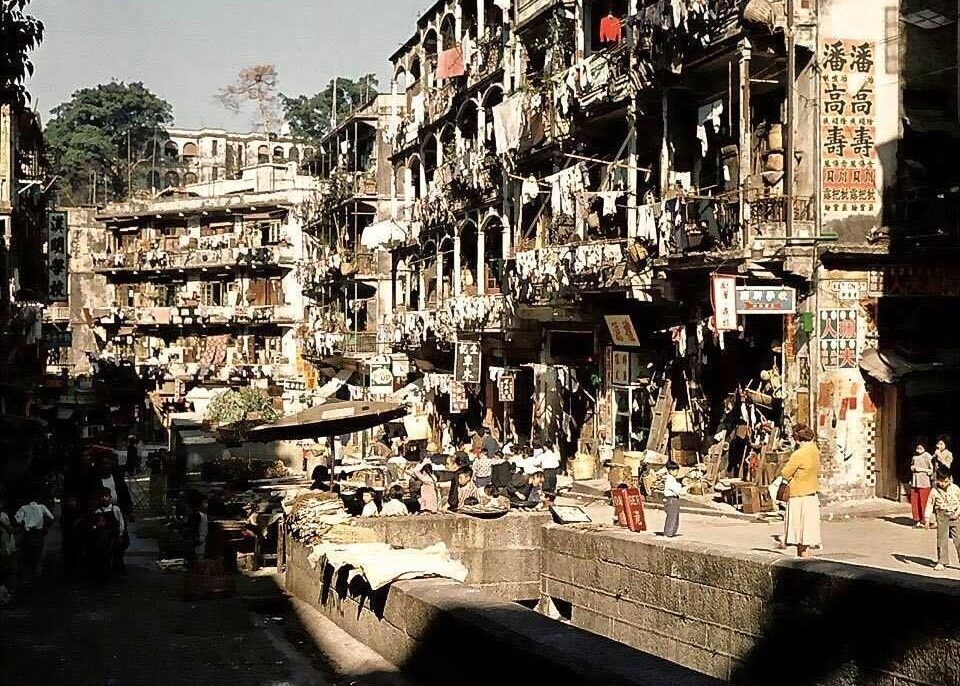
During the First Opium War, a series of fierce military engagements between British forces and the military of the Qing Empire, Hong Kong lay under British occupation. During the four years of British rule in the city from 1839 to 1842, local forces began to direct efforts in fortifying Hong Kong with architecture to manage water – sewage and fresh.
Residents moved to where today Stone Nullah Lane lies to set up businesses and families in the 1830s. With a north-south direction, a narrow and steep stone-constructed watercourse – called a nullah (origins from British-Indian) - was built by British engineers in the early 1840s to effectively manage the flow of fresh water from The Peak and sewage that came from residents’ homes.
The original nullah carried a stream that originated from the concaving and winding hills of Victoria Peak, located above Kennedy Road. The nullah passed directly through what is today’s Stone Nullah Lane, draining out into Victoria Park underneath Wan Chai Road, prior to Hong Kong Island’s expansive land reclamation.

When Hong Kong began to modernize in the early 20th century, Stone Nullah Lane grew in large families and catalyzed Wan Chai’s heart of soybean milk production. Local residents would routinely complain of the stench that came of sewage passing through and the remains of soybeans that were dumped in by local soybean milk producers.
Finally, in 1959, the former nullah – in then ruins and reeking of sewage flowing from offshoots – was transformed into a street with concrete poured over. The watercourse was relocated underground joining the original stream from where streams off The Peak flow down to.
The sewage and water stream that once ran through the street lent its name to the current Stone Nullah Lane – 180 years after the first block was placed on the original nullah.
Explore the local history at the Blue House
The Blue House has become synonymous in recent years with Stone Nullah Lane, with budding historians, Instagrammers, and tourists flocking to number 72A to explore the history of a tenement project that is emblematic of the story of 20th century Hong Kong.
The original site of the Blue House was originally occupied by Wah Toh Hospital built in 1867, serving local residents as the first hospital of its kind in Wan Chai providing traditional Chinese and Western medicines – it was converted as a temple for the God of Medicine after the hospital closed in 1886.
The current cluster of Blue House, Yellow House, and Orange House replaced the decrepit temple, with construction occurring between 1922 and 1927. It housed local Wan Chai workers and families who lived in the cluster tenement housing for years until 1978, when the government took proprietary control of the building to redevelop the area.
The cluster held a martial arts school, a traditional Chinese medicine clinic, the Chamber of Commerce for Fishmongers, soybean milk producers, a school, and countless of local Wan Chai-ers who called Stone Nullah Lane home for decades.
The Blue House got its name in 1997 following a decision by the Water Supplies Department to renovate the exterior of the tenement building with leftover blue paint. It’s exterior of cantilevered balconies pays tribute to the 1920s era of Spanish architecture most common in New Orleans. An oddity seen in Hong Kong.
Today, the Blue House contains the Hong Kong House of Stories, a museum that holds public exhibitions of the history of the tenement cluster, community-guided tours of old Wan Chai, and regular workshops, film viewings, family dinners, and concerts.

Location: Blue House, G/F No.4, 72A Stone Nullah Ln, Wan Chai, Hong Kong
Pray at Wan Chai Pak Tai Temple
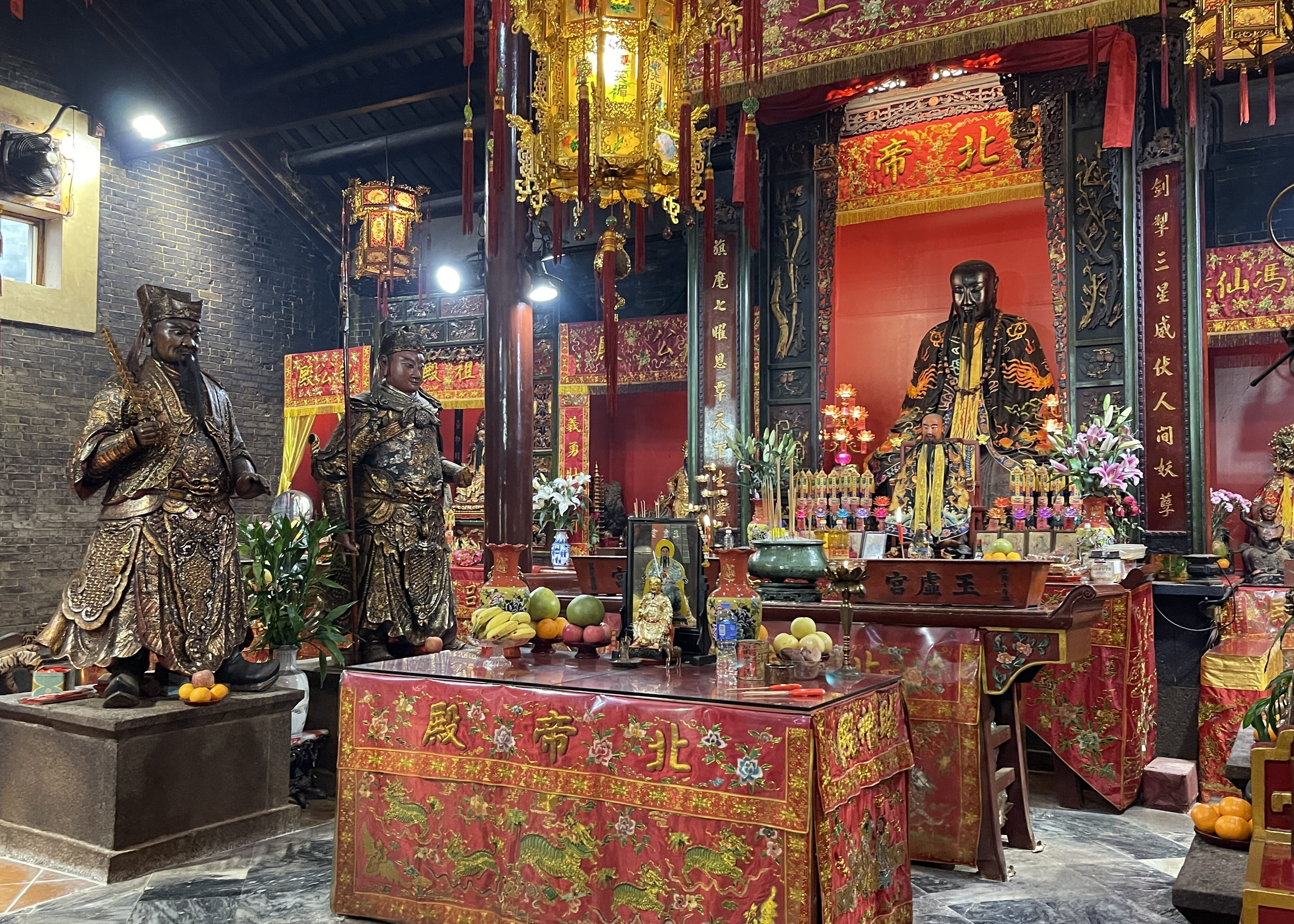
Pak Tai Temple, also known locally as Yuk Hui Temple, is located on Lung On Street, at the top of Stone Nullah Lane to the left. The temple was built by local residents in the first year of the Tongzhi Emperor-reigning Qing dynasty in 1863.
The temple was built and currently maintained to pay tributes to deity Pak Tai, a prince of the Shang Dynasty 3,000 years ago, who received notoriety and supremacy after he defeated the Demon King, an evil presence who wreaked havoc on the world during the Shang Dynasty.
He is worshipped throughout Hong Kong for his power, courage and devotion in his battle against evil. His image of long hair, bare foot and in golden armor is replicated in the Stone Nullah Pak Tai Temple. The temple is also home to a 418-year-old Ming Dynasty statue of Pak Tai.
Entering the main room of the temple is a spectacle in and of itself. The roasty smell and wafts of smoke of incense burning fill the air, a direct contrast to the polluted Wan Chai roads. The gold metal plated armor placed on the deity is delicate and beautiful.
The Pak Tai Temple is one of the biggest temples on Hong Kong Island and sees crowds of worshipers on the third day of the third lunar month, the birthday of Pak Tai.
Location: Pak Tai Temple, Lung On St, Wan Chai, Hong Kong
Savor a Pad Thai at Samsens Wan Chai
Samsens opened their Wan Chai location after years of success with their Sheung Wan location, attracting the attention of local foodies and the senior critiques of the Michelin Guide. Recipes and flavors at Samsens are designed specifically by Chef Adam Cliff and partner Bella Kong, bringing the spice of Thailand to the bellies of Hong Kong
The Wan Chai owners recommend their Wagyu Beef Boat Noodle Soup (HK$138) for a “Samsen Set Lunch,”, thin rice noodles, crispy pork rings, and Thai watercress with a choice of iced lime tea, milk tea, fresh lime soda or Singha. Other crowd-pleasers include Spicy Chopped Duck & Thai Herb Salad (HK$118) and the Crabmeat & Spring Onion Omelette (HK$168) for dinner.
Located next door to the Blue House, Samsen on Stone Nullah Lane has been awarded the Michelin Bib Gourmand every year since its opening in 2016.
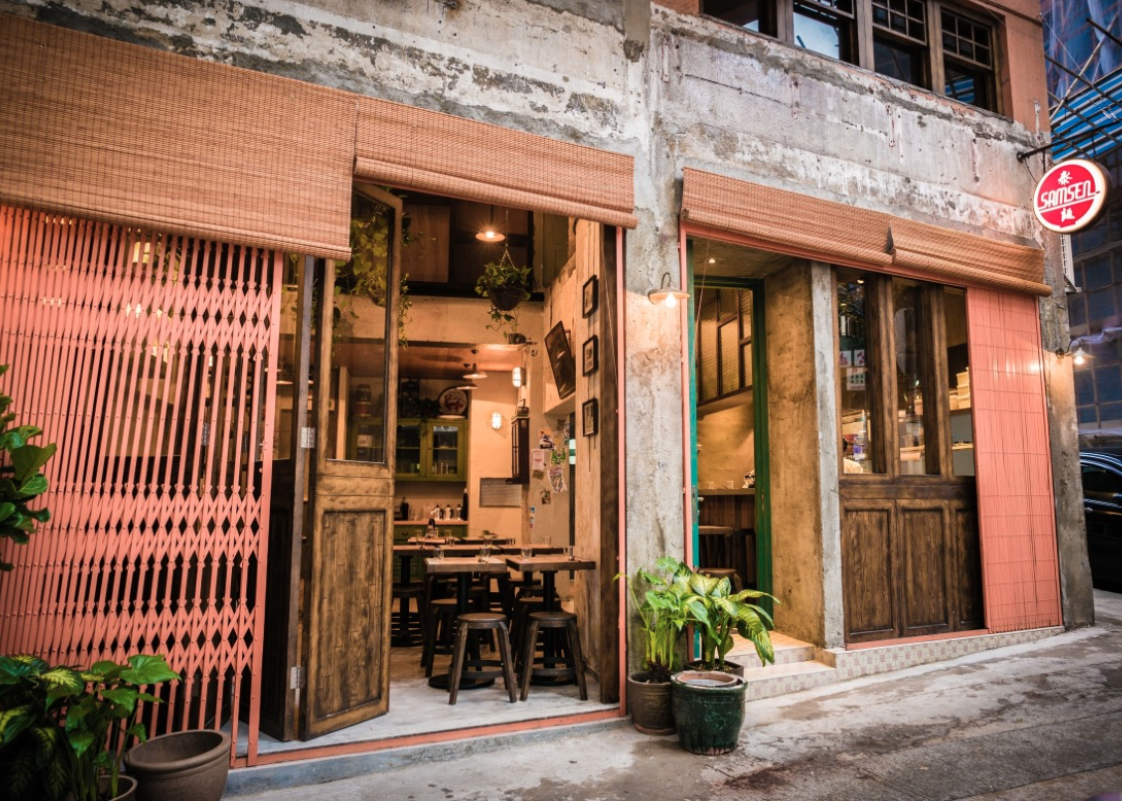
Location: Samsens, 68 Stone Nullah Lane, Wan Chai, Hong Kong
Sample Italian-American cuisine at FINI’s
Located near the foot of Stone Nullah Lane and opposite Blue House, FINI’s is your go-to for authentic New York-Italian flavors, with recipes sourced from the Bronx and ingredients fresh from Italy.
Classic flavors of antipasti, salads, pasta, and pizza can be found here. We recommend the SNT Mac n’ Cheese (cheddar, egg yolk, scallion; HK$88) for salt-tooths who love their carbs for a pasta dish, or The Bronx (homemade mozzarella, sausage, pepperoni, meatball; HK$258), a sizeable 12-inch pizza with cheese and meats cured by FINI’s Italian-trained chefs.
FINI’s specials are one to note. Every week day from 5 PM to 7 PM, FINI’s offers unlimited chicken wings, fries and beer for HK$109 a person. A set lunch of any antipasti, salad, pasta, or pizza plus either tea or coffee is priced at HK$109. Free flow of margaritas with unlimited margherita pizzas is only HK$169 per person for two hours every Monday from 7 PM to 10:30 PM.
Location: FINI’s, 69 Stone Nullah Ln, Wan Chai, Hong Kong
Eat signature char siu rice at Flower Drum
Flower Drum is traditional Cantonese fare and fusion – but with a modern and luxurious twist. Every fine detail of the restaurant draws on Hong Kong iconography and modern approaches to fine dining. Soft lighting, gold and black cutlery, and exposed brick walls save for a comfortable dining experience.
Their daily weekday lunch set only covers 16 distinct items, including dishes from Pakistan, New Zealand, Hong Kong, Guangzhou, and the U.K. You can find captivating fusion dishes such as Mapo Tofu Rice with Lobster Meat (HK$198) and Homemade Pakistan Curry Rice with Golden Pork Tenderloin (HK$168)
A must-have on a workday lunch are their signature Miyazaki Maruni Pork dishes (HK$168). Their Barbecued Pork comes with a sunny-side-up Kyushu egg with steamed price and their Oven-baked Pork is paired with Dutch Vine Tomatoes.
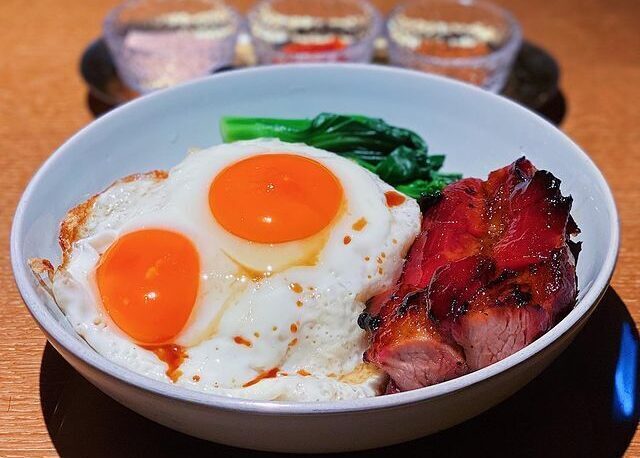
Location: Flower Drum, 2B Linway Court, 69-71 Stone Nullah Lane, Wan Chai, Hong Kong
Treat your pets with acupuncture and Chinese medicine at Yang Sheng Tang
Yang Sheng Tang – located on Kennedy Street to the left of Blue House - merges the medical practices of traditional Chinese medicine and Western veterinary services to treat cats and dogs within the north Hong Kong area. The Centre is owned by Doctors Beck & Stone, a veterinary clinic group with experience in traditional medicine in vet studies.
Most notably with their Stone Nullah Lane location, the centre uses traditional Hong Kong acupuncture services to treat small house dogs with disabilities relating to spine injuries and fractures. The center follows traditional Chinese nutritional combinations, as well as Chinese wellness physiotherapy techniques to comfort pets.
A colorful mural outside Yang Sheng Tang painted by a local Wan Chai artist is hard to miss walking along Stone Nullah Lane.
Location: Hong Kong Veterinary Center, 12A Kennedy St, Wan Chai, Hong Kong
Subscribe to The Beat's newsletter to receive compelling, curated content straight to your inbox! You can also create an account with us for free to start bookmarking articles for later reading.