The Synagogue of Fanling, HaDavar Yeshiva, Evangelical Christians’ Answer to Jerusalem in Hong Kong

Beyond an MTR station in the New Territories and a brisk 30-minute walk into a bright, airy ancient Hakka village, stands a 1st century Jewish synagogue that sees a regular flow of guests every weekend through its doors.
No, Jews in Hong Kong don’t frequent its location; no, a rabbi does not command a sermon there, nor has the synagogue been blessed by a religious Jewish figure or even been designed in a kosher way. This accurate replica of a 1st century Jewish synagogue stands as Hong Kong’s evangelical Christian world’s answer to educating those about Jesus and the Lord – through the lens of Jewish scripts, Hebrew language, and a religious building that a Jew has never visited.
The site in question is HaDavar Yeshiva (for the nations) Centre in Fanling, New Territories, a 1,500-square-foot space dedicated to preaching the gospel of Jesus Christ through Jewish scripture, monuments, relics, and historical material since its opening in December 2016.
Seven thousand-seven hundred miles away from Jerusalem’s Western Wall, HaDavar Yeshiva attempts to represent itself as a “biblical teaching platform” for Hong Kong's evangelical Christians. The name directly translating from Hebrew as a school for studying the word of God, HaDavar provide their community a foundation to study the gospel through the most famous (Christian)-Jew that ever lived and the Jewish country that he lived in: Jesus and Israel.
"We cater to the needs of the naive goy (non-Jew) of the Christian world. We want to transport our modern day Christian listener to understand the dynamics of first century Judea through the teachings of the Hebrew-speaking and Jewish-preaching Rabbi, known as Jesus," co-founder Amelia told The Beat Asia in an interview.
The centre hosts Hong Kong locals by reservation only. Tickets are usually booked up three months in advance for the centre and gifted to visitors for free. Through their physical collection of Biblical cultural and religious relics, HaDavar hope “to transform some Bible-related Jewish culture, language, archaeological and geographic research into tools for a deeper understanding of the Bible.”
Bible courses, Torah study meetings, Hebrew classes, Moses biblical seminars, translation services, and study tours arranged to Israel and Turkey are offered at the centre.
By teaching Hebrew to evangelical Christians, building replica Biblical artifacts, and studying the Jewish scriptures of the Old Testament, HaDavar believe that they are playing an important role in the “Great Commission,” a section in the New Testament’s Gospel of Matthew that stresses the importance of spreading the gospel of Jesus Christ to “disciplines of all the nations” and “baptize” them.
Their prime aim: spread the Lord’s message and convert others to Christianity—but with a Jewish twist.
The centre began with Peter in 2004, today’s founder, tutor, and head of HaDavar. A Hong Konger, Peter led a rebellious life growing up overseas in Canada. From middle school to university, he ran a side hustle of "shopping for his friends for free" after locating the loopholes in the shopping system in Toronto.
Other delinquents heard of his audacity and wanted to hire Peter to work on larger jobs, such as stealing credit cards; he never went that far. The shoplifting episodes suddenly stopped when Peter was eventually arrested, after being discovered by a security guard in a shopping mall.
Peter met his wife, Amelia, after his arrest through mutual friends. He and his wife fell in love in Toronto, had two kids, and connected with Christianity in an effort to repent from his youth criminal past.
"He was a very cleaver young man, always looking for the meaning of life. Defying authority and fate was a way to bring himself back into reality," Amelia told The Beat Asia in a conversation about his teenagehood.
After becoming heavily involved with his local church as a youth organizer, and a mission trip to Vietnam to spread the word of Christianity, Peter and Amelia returned to Hong Kong in June 1995 with a plan to impart his newfound wisdom and love for his religion in his homeland. He studied theology within the confines of his own church denomination at the time in Hong Kong.
Peter's eureka moment came in August 2001, when him and his wife were given an opportunity to attend a religious conference at Kota Kinabalu, Malaysia. One of the speakers in attendance, Dr. Dwight Pryor of the Center For Judaic-Christian Studies in Ohio, U.S., spoke of the fact that Jesus was a Jew, producing a "shock to the system" for Amelia and Peter.
"We couldn't get enough and we drunk it all down," Amelia says, referring to the lessons of Dr. Pryor exploring the Jewish life of Jesus. "After the lectures, we continued to order his teaching tapes."
"We were so excited because the Bible finally made sense."
Smitten by the professor’s' words, Peter found his destiny. In March 2004, Peter resigned from his services at their local church and embarked on their first visit to Israel for a study tour visit to the Holy City of Jerusalem led by the Engedi Resource Centre, led by Steve Naughtily and Wink Thompson.
Their second trip to Israel in August 2005, Peter returned with the purchase of an oil lamp, a Herodian artifact similar to the oil lamps used during the 1st century BCE in Jerusalem’s Second Temple. Over the years, he collected various Biblical cultural relics from his trips to Israel at his house in the New Territories: a retired Torah scripture, pottery, old maps, pottery, Hebrew, Greek, and Chinese books.
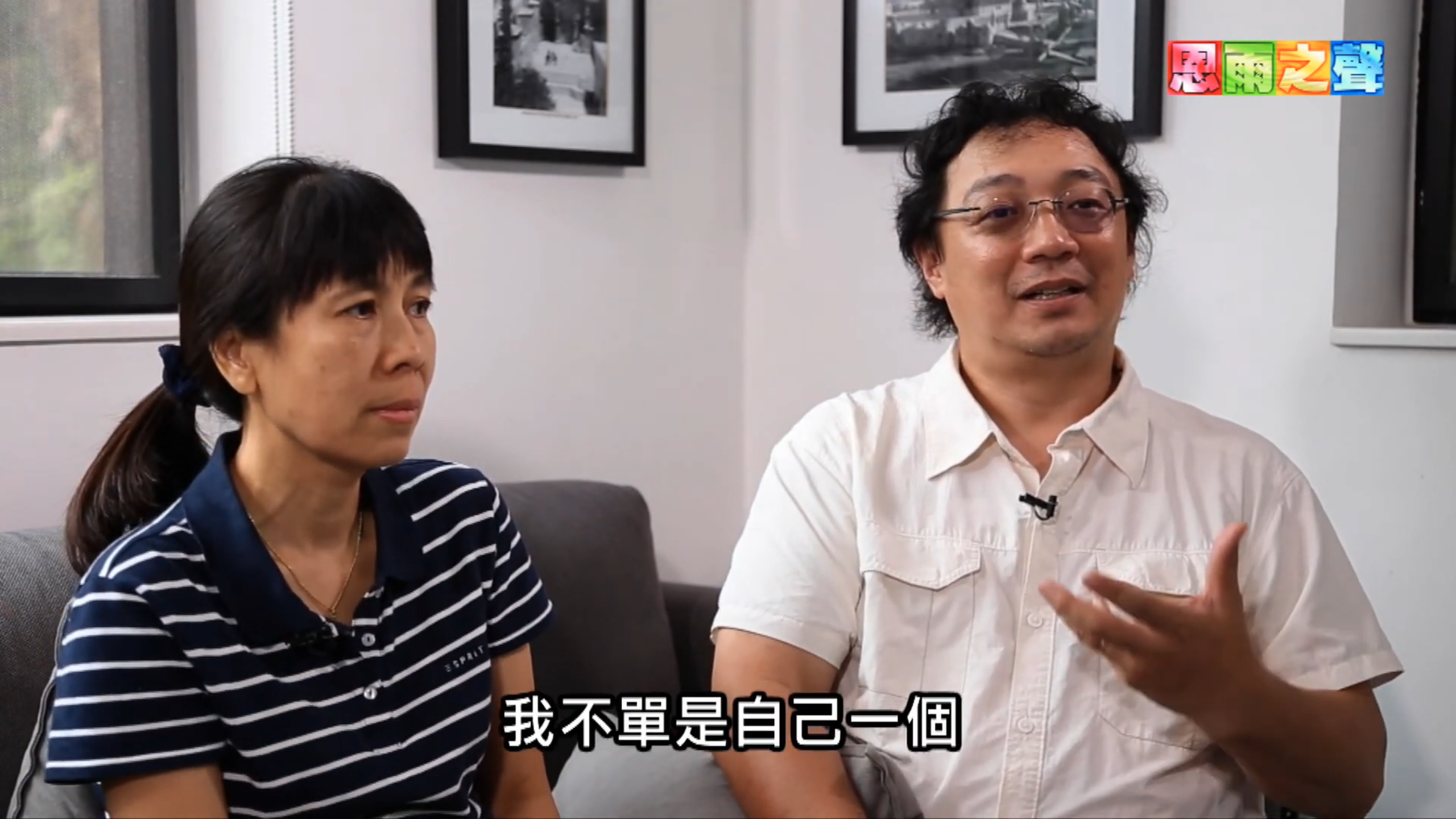
“The cultural relic is like a window that allows believers to have a glimpse of the ancient world of the Bible,” Peter said to Showers of Blessing, an evangelistic ministry in Kwun Tong, in February 2020.
In 2014, to store over 400 cultural and religious relics collected from Israel and beyond, Peter purchased a plot of land in Shunghimtong Village in Fanling, the site of a once blooming Christian Hakka community.
Spread over 7,000 square feet, Peter fundraised for two months, raising HK$20 million in funds and purchased the land in March 2015. The pair renovated the two-story high commune, an old Hakka village house, and planted old Biblical plants within their cultivation site.
The Yeshiva opened in October 2016 by appointment only. Two types of tours are offered at the centre: the biblical artefacts tour and a biblical plants tour.
Representatives for the Israeli Consulate in Hong Kong in November 2016 travelled to HaDavar Yeshiva to visit Amelia and Peter and understand more about their work educating the Christian community in Hong Kong through Jewish scripture. "They understood that our work was not to evangelise, but to educate."
Today’s current museum is divided into five areas: a showroom for relics from the New Testament and the Old Testament, the biblical garden, scroll and scripture room, model room, and the synagogue.
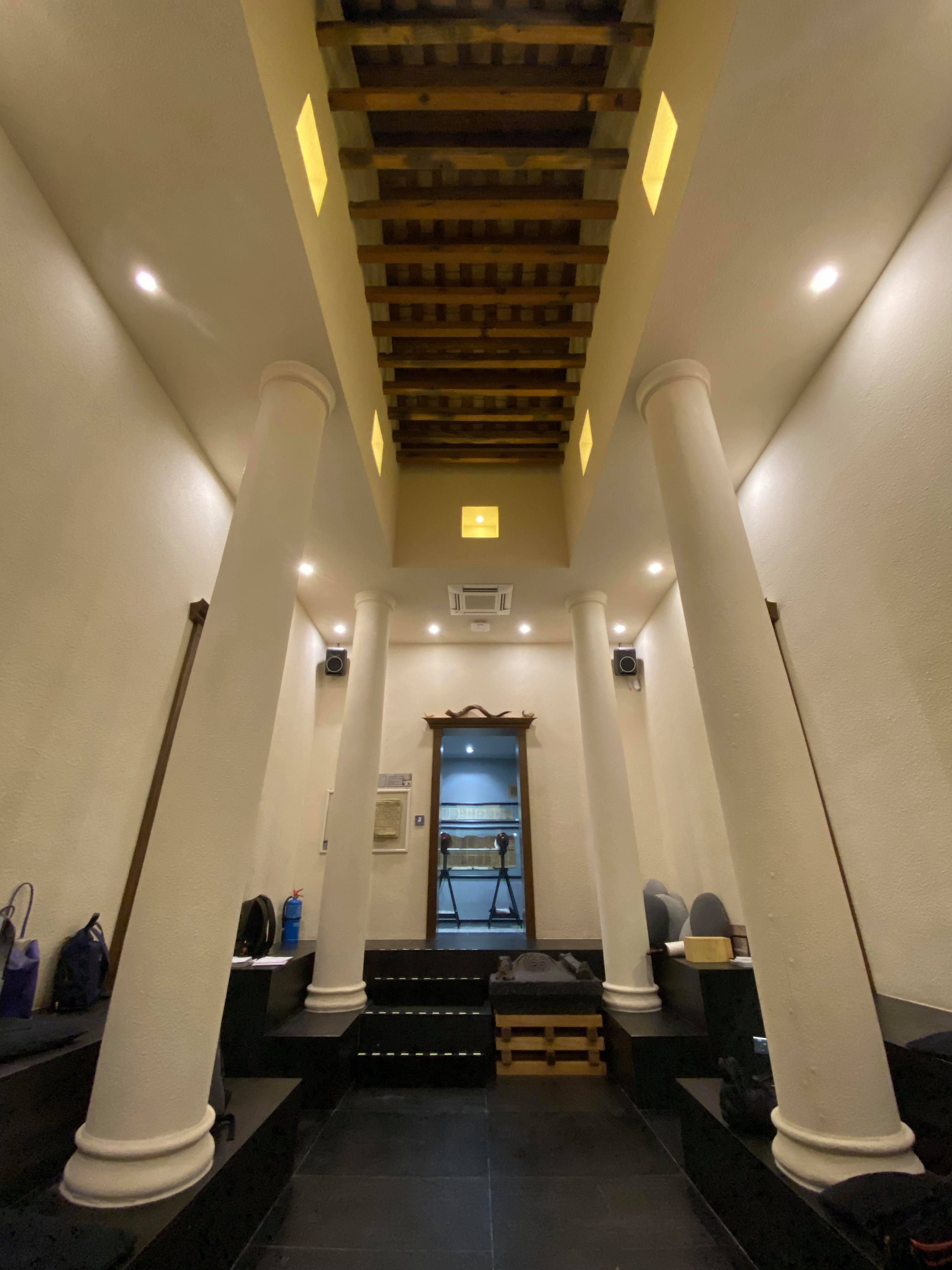
HaDavar Yeshiva’s most prominent feature in their Fanling location is their synagogue room, a detailed replica of a first century synagogue found in Nazareth and. The room is dedicated as a starting point of Peter’s tours for Christian youth and church groups in admission on weekends.
"We want to take people back to the first century [of Israel] to listen to Jesus' teachings as one of his neighbours," Amelia says.
Six beige Roman-styled columns line the rectangular shape of the replica-synagogue. The design of the room itself is simple and elegant, like that of a real synagogue dating the 1st century Jerusalem. No Jewish insignia nor Torah scrolls can be found in the room.
Despite the synagogue not being ordained, authorised, nor ever visited by a Jewish rabbinical authority as a kosher place for Jewish worship, HaDavar’s synagogue operates as a teaching tool, for educating visitors on the content of Jewish prayer.
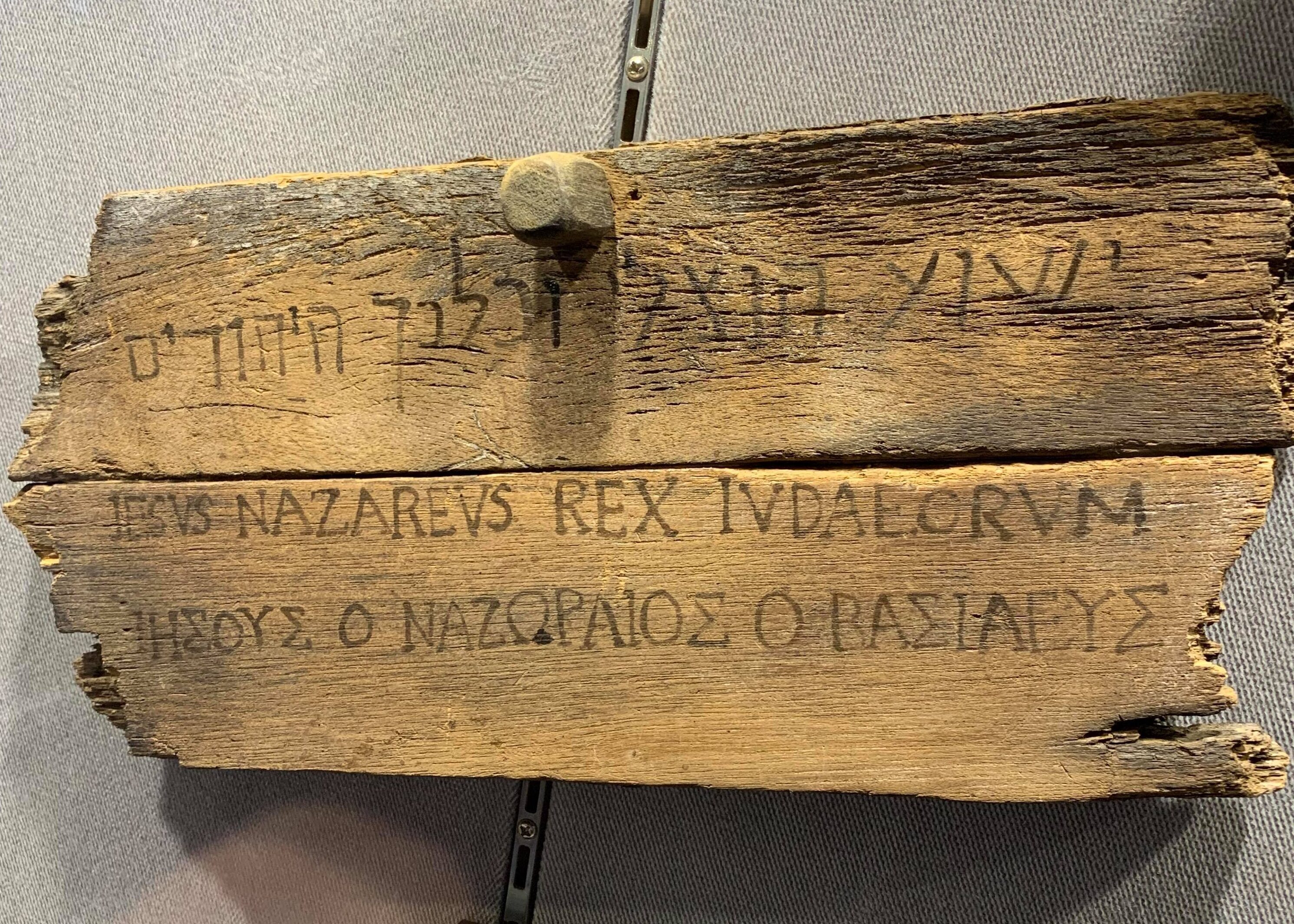
No Ark (an ornamental chamber housing Torah scrolls) can be found in the synagogue. A dedicated room features painstakingly designed Torah scrolls from 1st and 2nd century and real scripture used by Jewish communities in Israel. Relics loaned out and purchased outright by Peter offer an opportunity to study the primary material of the Torah to cross-analyze with Jesus’ teachings in the New Testament to find a common ground. Within the collection, a retired hundred-old Torah scroll, handwritten in Israel, is placed in the centre of the room, estimated to be about "a few thousand US dollars."
The New Testament pavilion features 77 artifacts from the Stone Age to the Roman period, with religious relics once belonging to the former Israeli Prime Minister Menachem Begin’s private collection in Israel.
The opposite Old Testament pavilion holds cultural relics loaned from the Franciscan Museum in Jerusalem, including Syrian statues from 3,700 to 4,000 years ago, ink bottles from 2,000 years ago, and fragments of the Corinthian stigma of the Church of the Holy Sepulcher in Rome from 1,600 years ago. In the same room contains 13 pieces from the Franciscan Museum in Jerusalem on loan to HaDavar.
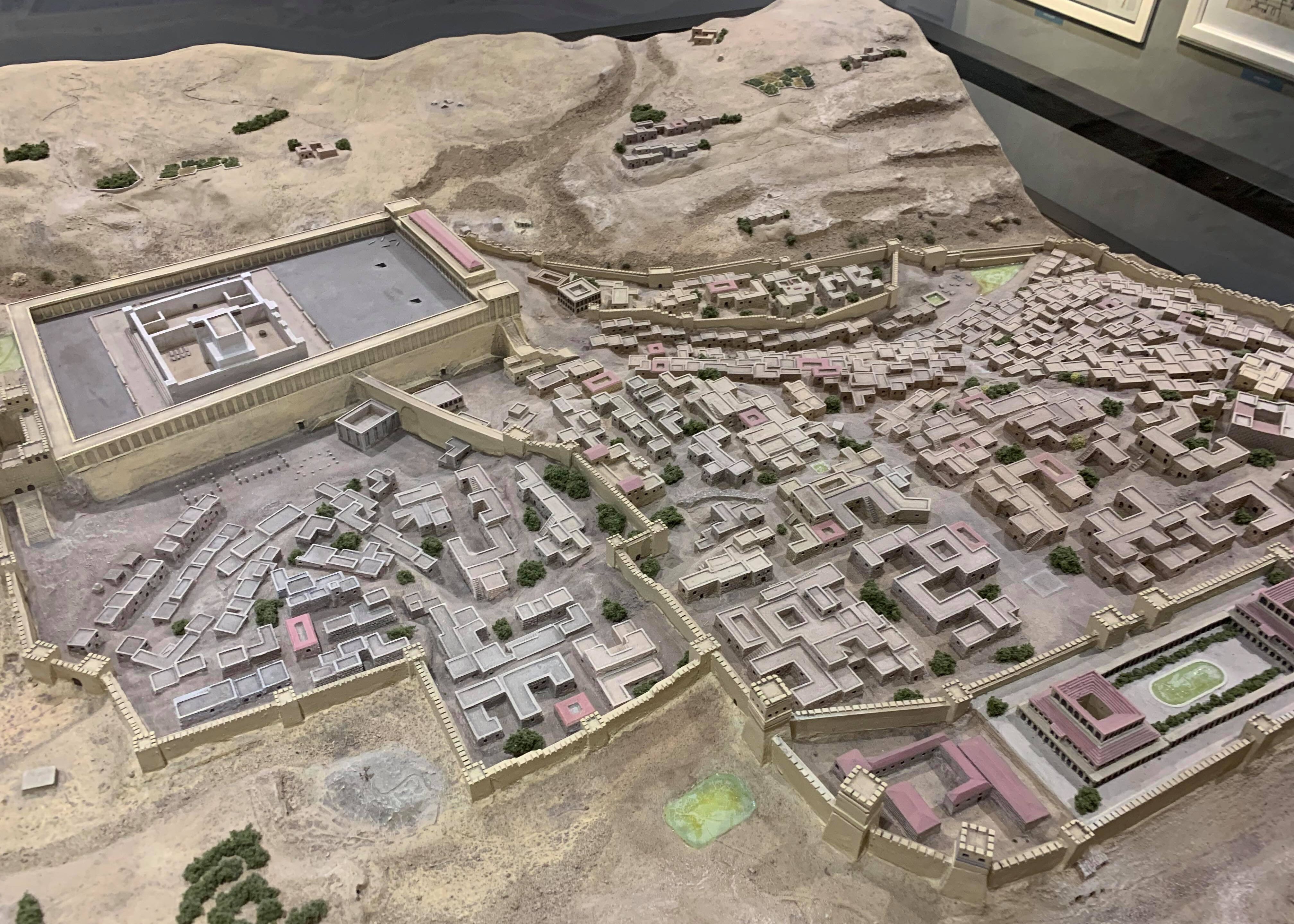
The exhibition room features a 5-foot by 5-foot 1-1000 model replica of Jerusalem in 33AD, the year of Jesus’ crucifixion. The model includes accurate colouring of the Temple Mount, Garden of Gethsemane, and a small gathering of Jesus and his disciplines in a rendition of the Last Supper.
"It's a great teaching tool and explains why the Bible always explains why it always says "go up to Jerusalem and go down to Jericho." We can teach so much on this replica model," Amelia says.
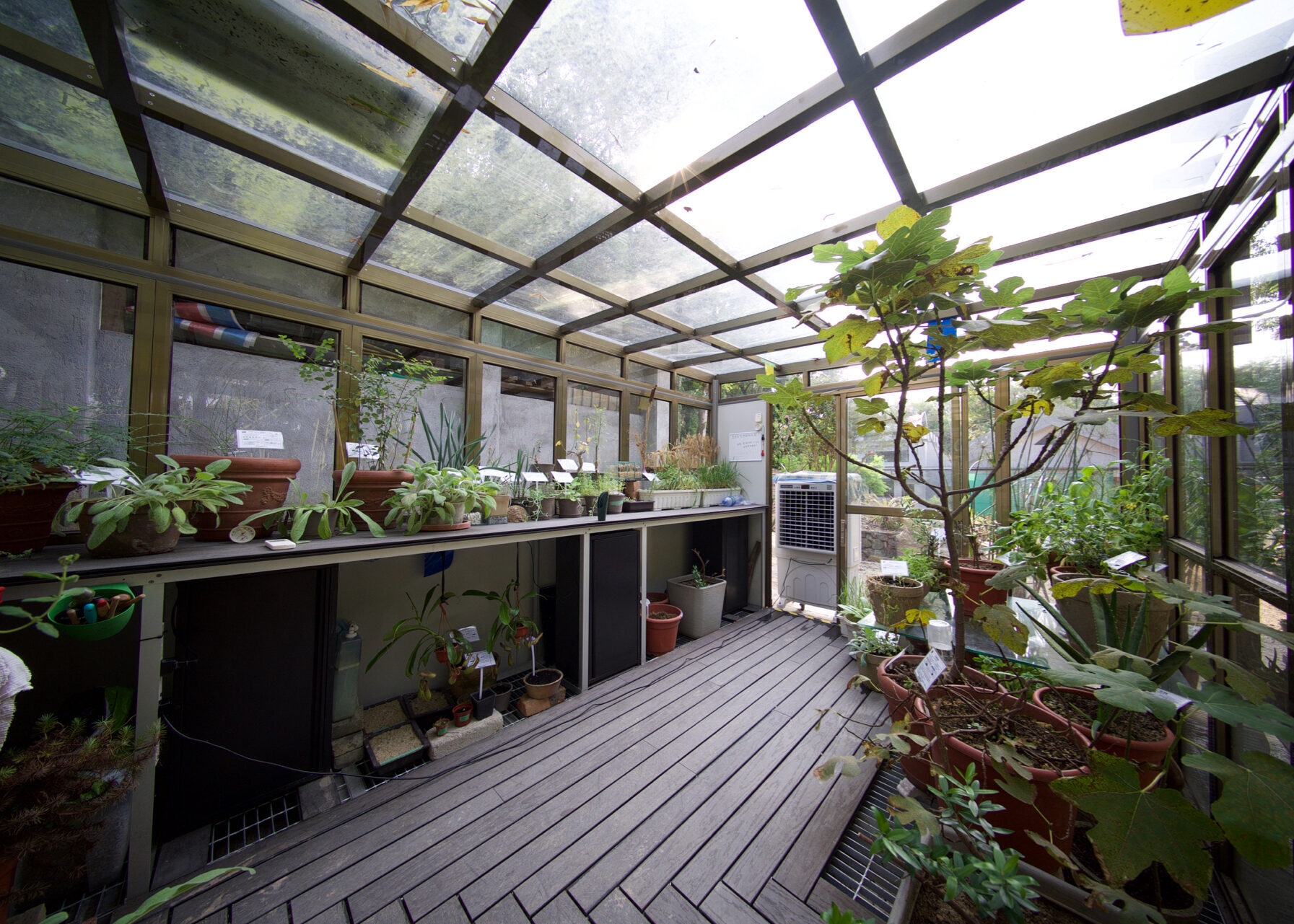
In the centre’s “Bible Garden,” Peter has cross-referenced biblical scripture and biological records to source and plant more than 50 out of 255 plant species mentioned in the Bible in their dedicated observatory, many of which offer teaching lessons to the couple and visitors.
He first began studying and cultivating biblical plants in 2008, where they were placed on the roof of the Fanling residence, before being moved to the centre’s now dedicated biblical garden and greenhouse.
Plants cultivated and grown in the garden include vegetables sourced from the Garden of Gethsemane in Jerusalem where it is claimed that Jesus dined; a Rose of Sharon, a Mediterranean flower that pays tribute to the coast plains of Caesarea where Solomon and Naamah consummated their marriage in the Old Testament; hyssop plant representing “humility” in ancient Jewish culture; and a weeping willow silk tree identical to the one that was planted by Abraham in Beersheba.
The garden houses an olive tree, taken from the clippings of an olive tree within the Garden of Gethsemane.
Hong Kong’s current Jewish population is estimated to be 5,000, with swathes of religious and non-religious Jews hailing from Israel, the U.S., U.K., France, and Argentina. The Jewish Community Centre (JCC) and Ohel Leah Synagogue, located on Robinson Road in the Mid-Levels, make up a considerable proportion of the Jewish population in the city.
A religiously observant modern Orthodox community, Ohel Leah welcomes community outreach and teachings with Christian groups in Hong Kong, but does not traditionally pursue them in regard to hosting Christians for Friday night dinners or Saturday morning prayers.
One group – the evangelical Christian community – is fascinated by the Jewish traditions and history of Hong Kong and beyond; the other – Hong Kong Jewry – is not concerned nor understand the Hong Kong Christian desire to study Judaism.
Whilst no representative from the JCC or Ohel Leah has visited or communicated with HaDavar Yeshiva, the centre has formed an alliance with the Jerusalem School of Synoptic Research, a consortium of Jewish and Christian scholars based in Oklahoma, U.S. studying the New Testament.
The relationship with the centre is trusted and tight as Amelia is "always concerned that we might misrepresent the Lord and his word, the Bible, and his people, the Jewish people."
"We always have teachers to ask when we need reconfirmation on facts or teachings."
Many of Hong Kong’s Jews may never come across HaDavar Yeshiva and the replica of a 1st century Jerusalem synagogue. To some religious observant Jews, the fascination of Judaism from evangelical Christians is a strange phenomenon. For evangelical Christians of Hong Kong, the synagogue, Jewish scriptures, and relics of HaDavar Yeshiva are the most direct and true way to study Jesus and his teachings.
“We’d love to see the day when we can see our Jewish friends can see us, and our Rabbi friends can bless us."
Those interested in visiting HaDavar Yeshiva in Fanling must book at least three months in advance before. At the time of writing, a spokesperson for the centre said that openings for visits in December 2021 open at 9 AM on Oct. 1. Tickets sell fast, she mentioned.
The centre is located only an 18-minute walk from Fanling MTR Station. From Hong Kong Island, take the Tseun Wan Line to Yau Ma Tei Station, interchange for the Kwun Tong Line, change at Kowloon Tong Station and ride the East Rail Line until Fanling MTR station.
Subscribe to The Beat's newsletter to receive compelling, curated content straight to your inbox! You can also create an account with us for free to start bookmarking articles for later reading.