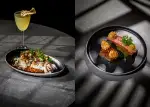
Yes, Chef! Winner of MICHELIN’s Young Chef Award 2026 Kim Gwan-ju of SOL

Asia is one food-crazy continent! We take great care to pick restaurants based on culinary vibes, rankings on international gourmand guides, mentions in magazines, Instagrammability, and added hunger. Yes, Chef! features the region’s chefs’ stories of love and labour in kitchens that have made some of our restaurants the next big thing in Asia.
With a decorated resumé and years of experience behind him, when Chef Kim Gwan-ju helmed modern Korean restaurant SOL's opening as Head Chef, which became MICHELIN Selected shortly after, winning the Young Chef Award at the MICHELIN Guide Hong Kong & Macau 2026 Award Ceremony felt almost inevitable.
But behind the accolade is a chef whose approach to cooking goes beyond precision and prestige — one shaped by perseverance, quiet curiosity, and a deep respect for the craft.

Grounded in French culinary techniques yet deeply connected to his Korean roots, Chef Gwan-ju, alongside SOL's Pastry Chef Kylie Yang are quietly redefining the possibilities of Korean gastronomy.
In only under a year of opening, the restaurant has caught the attention of Hong Kong’s cultured dining scene and has been inducted into the city’s stellar roster of MICHELIN Selected restaurants.
In our latest edition of Yes, Chef!, The Beat Asia caught up with Chef Kim Gwan-ju, the newest awardee of MICHELIN's Young Chef recognition, to talk about what this distinction means to him, to SOL, and what else they have in store.
Congratulations on receiving the Young Chef Award at the MICHELIN Guide Hong Kong & Macau 2026 Ceremony! What was the first thought that crossed your mind when your name was announced?
Since SOL has only been open for less than a year, I was truly overwhelmed. Just being invited to the ceremony and standing among so many chefs I admire was an honor in itself.
When my name was called, my first thoughts were of my team — the people who have worked tirelessly by my side since day one. I felt a rush of gratitude for everyone who has supported us, but to be honest, I was so nervous that I couldn’t find the right words on stage. Looking back, I feel a deep sense of responsibility; I want to ensure that every dish I serve lives up to the prestige of this award.

What does this award mean to you personally and your team at SOL?
I view this as my true beginning in Hong Kong. Moving to a new country and opening a restaurant was a massive challenge, so receiving this recognition feels like a warm welcome. For me, the restaurant, and my team, this award serves as a powerful motivation. It pushes us to keep evolving and reminds us that we are on the right path.
Your background is quite celebrated and distinguished. Can you walk us through your culinary journey?
My journey began at Odette in Singapore. I was so determined to work there that I moved to Singapore without a plan and sent the chef over ten emails until I was given a chance. That became my first full-time role and my foundation for three and a half years.
Afterwards, I spent three years at L’Amant Secret in Seoul before eventually relocating to Hong Kong. Every kitchen has been a classroom for me; I am still constantly learning from my environment and the people around me.
Looking back at your earlier years in the kitchen, what instincts have you learned to trust more — and which ones did you have to unlearn?

When I first entered the world of MICHELIN-starred kitchens, I realized I had to reinvent my work ethic to survive. I had to learn the “instinct of perfection” — the idea that every minute and every tiny detail must be controlled with extreme sensitivity.
I learned that greatness is simply the sum of these small, perfect moments. One thing I had to unlearn was the habit of being easily satisfied. I always tell my team now: “Don’t lie to yourself by thinking ‘this is enough.’”
True quality happens when you refuse to take shortcuts.
SOL has a distinct culinary language — Korean flavors blended with Western techniques. How does the restaurant stand out in Hong Kong’s culinary scene?

Because my training is primarily in French fine dining, our plates may not look like traditional Korean food at first glance. However, the moment you taste the dish, the soul is unmistakably Korean.
My focus is on the deep harmony between the core essence of Korean flavors and the sophisticated architecture of French technique. It is a bridge between two worlds.
What is one of SOL’s signature dishes you would recommend to first-time diners?

I highly recommend our interpretation of Samgye-tang (Korean Ginseng Chicken Soup). The inspiration came to me at Gyeongdong Market in Seoul, where I saw many tourists buying ginseng and medicinal herbs. It made me realize that ingredients common to me can be exotic and special to others.
Our version features a yellow chicken roulade filled with a mousse of breast, thigh, and Neungi (Korean black tiger mushroom). It’s served with black garlic purée, Myeongi-namul (pickled garlic leaves), a ginseng butter sauce, and a concentrated chicken jus.
To honor the tradition of eating soup and rice together, we serve it with buckwheat chicken rice and a traditional broth on the side. I love seeing guests compare the traditional clear soup with the modern, rich butter sauce.
Can you share any new culinary techniques you’re looking to explore? Has there been a moment in your career that reshaped your relationship with cooking?
When I use traditional Korean elements, I am very strict about not deviating from the basics. For instance, if I am pairing a lobster bouillabaisse with Geotjori (fresh kimchi), I follow the traditional kimchi recipe exactly. I believe in keeping the “essence” pure while using French “technology” to elevate the presentation and pairing.
A turning point for me was my time at Odette. I remember feeling envious of how Japanese ingredients were celebrated globally. It sparked an aspiration in me to show the world that Korea also possesses incredible ingredients and ancient skills.
SOL is the realization of that dream.
Hong Kong’s dining scene is incredibly fast-paced. How do you stay grounded while still creatively evolving?

In a city that moves this fast, I believe it is more important to find your own identity than to follow trends. Trends fade, but identity lasts. SOL is still young, but we have a very clear direction. We stay grounded by focusing on daily improvement rather than external noise.
What’s one life hack you’d like to share with aspiring chefs?
It may sound traditional, but attitude is everything. Today, you can find a recipe for anything online, but you cannot download a professional mindset. Many young chefs want to reach the top too quickly. Speed isn’t always a virtue. If you slow down and look closely, you can learn a thousand different things from the same kitchen just by changing your perspective.
Looking ahead, what’s next for you and SOL?

My team and I will simply continue to cook with all our hearts. We will take it day by day. Our goal is to remain a place of discovery where we can introduce the true essence of Korean cuisine through new and exciting lenses. We are just getting started.
To know more about SOL, visit the website and follow them on Facebook and Instagram. Make a reservation here. Follow Chef Kim Gwan-ju on Instagram.
Enjoyed this article? Check out our previous Yes Chef! profiles here.
Get the latest curated content with The Beat Asia's newsletters. Sign up now for a weekly dose of the best stories, events, and deals delivered straight to your inbox. Don't miss out! Click here to subscribe.